
Magzter GOLD ile Sınırsız Olun
Sadece 9.000'den fazla dergi, gazete ve Premium hikayeye sınırsız erişim elde edin
Denemek ALTIN - Özgür
ANALYSIS - Why you should never take health advice from a 100-year-old
BBC Science Focus
|November 2024
Living longer is a goal for many of us. But should we be following the lifestyles of those that live past 100?

API RESPONSE
Centenarians – people who live to be 100 years old and over – were once a rare breed. But they've become increasingly common since the mid-to-late 20th century, thanks to improvements in diet, healthcare, and lifestyle. However, a recent analysis by the Office for National Statistics suggests that the number of centenarians in England and Wales may have peaked. In 2023, there was a 0.5 per cent decrease in centenarians compared to 2022, with the total falling from 14,920 to 14,850. This drop is thought to be tied to the decline of the post-WWI 'baby boom' generation.
How did so many people make it to this ripe old age? And can we learn from them to improve our chances of doing the same? It might seem logical to ask the oldest living people for their secret to longevity, but Dr Bradley Elliott, Senior Lecturer in Physiology at the University of Westminster, explains that this approach alone is unreliable due to a phenomenon known as survivorship bias (drawing conclusions from a group that has survived, while ignoring those who didn't).
Take Jeanne Calment, for example, who holds the Guinness World Record for the longest human lifespan at 122 years and 164 days. She often attributed her remarkable longevity to a relaxed and carefree lifestyle. She married a rich husband and never had to work, loved cycling, and continued to drink wine and smoke at a very old age.
So, should we follow her example? "Some people just get phenomenally lucky," says Elliot. "Studying the oldest individuals can provide insights, but a more reliable approach would be to study people in their 60s over the following decades to identify factors that contribute to longevity." "Health recommendations, such as the NHS guideline for 150 minutes of exercise a week, are based on decades of research. It's a process of gathering the best possible information from multiple angles to make informed health decisions."

Bu hikaye BBC Science Focus dergisinin November 2024 baskısından alınmıştır.
Binlerce özenle seçilmiş premium hikayeye ve 9.000'den fazla dergi ve gazeteye erişmek için Magzter GOLD'a abone olun.
Zaten abone misiniz? Oturum aç
BBC Science Focus'den DAHA FAZLA HİKAYE

BBC Science Focus
HOW FISH COULD SAVE MILLIONS OF PEOPLE'S SIGHT
There's nowhere near enough donors to meet the demand for corneal transplants. A pioneering treatment that relies on fish scales could change that

3 mins
May 2026

BBC Science Focus
Your Wi-Fi is lying to you
Wi-Fi 7's giant speed claims might look impressive, but the realities of our homes – and the laws of physics – mean that real-world performance will never get close
6 mins
May 2026

BBC Science Focus
WHICH ANIMAL IS MOST LIKELY TO ESCAPE FROM THE ZOO?
Have you heard the one about the monkey and the Yorkshire pudding?
2 mins
May 2026

BBC Science Focus
THE BLACK SERVAL
The black serval (Leptailurus serval) is an unusual, melanistic version of the African serval, a medium-sized wild cat that's native to Africa.
2 mins
May 2026
BBC Science Focus
Cryosleep vs hibernation: What's the difference?
When hibernating animals, such as hedgehogs and dormice, disappear for winter, they don't freeze like the Siberian salamander.
1 mins
May 2026

BBC Science Focus
Space brain
The greatest names in science are often said to be 'big-brained', but this cosmic wonder puts them all to shame. Nebula PMR 1 - otherwise known as the 'Exposed Cranium' nebula for its distinctive shape - measures around 3.2 light-years across.
1 min
May 2026

BBC Science Focus
Your most draining relationships are taking years off your life, study suggests
Difficult people don't just zap your energy - they may also accelerate your biological ageing
4 mins
May 2026

BBC Science Focus
DOES EARTH HAVE A HEARTBEAT?
Move over, Ringo Starr.
1 mins
May 2026
BBC Science Focus
WEIGHT-LOSS DRUGS FOR ALL?
The obesity crisis is ruining lives and costing governments trillions. But some healthcare experts think there's now a radical solution: roll out GLP-1 jabs to everyone who needs them for free. Could it work?
9 mins
May 2026
BBC Science Focus
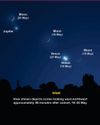
HOW TO SEE VENUS ON APPROACH TO JUPITER
Venus has been slowly moving away from the Sun's glare over the past few weeks, heading into the evening twilight after sunset.
1 mins
May 2026
Listen
Translate
Change font size