Denemek ALTIN - Özgür
Norway Generous parental leave and childcare - so why is the birthrate down?
The Guardian
|May 17, 2025
Norway's generous parental leave, heavily subsidised childcare and high living standards have earned it a reputation as one of the best places in the world to have children. And yet, fewer children than ever are being born in the Nordic country.

Although falling birthrates is a global trend, such is the concern in Oslo that the government has commissioned a birthrate committee to investigate the causes, potential consequences and what could be done to reverse the population's trajectory.
Over the past two decades, Norway's fertility rate has declined from 1.98 children for each woman in 2009 to 1.40 in 2023, a historic low. This is despite a parental leave policy that entitles parents to 12 months of paid leave between them around the time of the birth, plus an additional year each afterwards.
If current fertility trends continue, the sparsely populated country of nearly 5.6 million people could face big problems, with consequences for everything from elderly care to the labour force and even defence.
Factors contributing to the decline include housing costs, people postponing having children into their 30s, fewer people having more than two children, and an increase in those who choose not to have children at all.
The birthrate committee's chair, Rannveig Kaldager Hart, said there had been a "tempo shift" among Norwegians in their 20s and 30s, leading to a fall in overall births.
"The most obvious thing is that there is a really marked fall among young adults in their 20s, both in their early and their late 20s," she said at her University of Oslo office. "And then there was a long-term increase [in births] among adults in their 30s, but now that has stalled or even reversed."
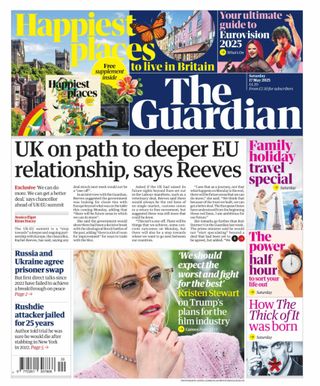

Bu hikaye The Guardian dergisinin May 17, 2025 baskısından alınmıştır.
Binlerce özenle seçilmiş premium hikayeye ve 9.000'den fazla dergi ve gazeteye erişmek için Magzter GOLD'a abone olun.
Zaten abone misiniz? Oturum aç
The Guardian'den DAHA FAZLA HİKAYE
The Guardian
The UK’s pharma deal was essential - but GSK’'s boss was correct about US dominance
That’s gratitude, eh?

3 mins
December 12, 2025
The Guardian
New C of E archbishop accused over handling of 2019 abuse complaint
The Church of England is reviewing a complaint against the incoming archbishop of Canterbury over her handling of an abuse allegation.
2 mins
December 12, 2025

The Guardian
Fans packing darts’ theatre of dreams relish expansion
Arguably the championship distorts the wider sport but the hordes in fancy dress cannot get enough of it
3 mins
December 12, 2025
The Guardian
Ashes to Ashes
Barmy Army's pride and parps show no sign of easing despite Bazball's implosion
4 mins
December 12, 2025
The Guardian
Border clash Fleeing Thais sceptical of Trump's peace drive
Rangsan Angda and many of his neighbours in border areas of Thailand had already packed their bags, fearing that a ceasefire with neighbouring Cambodia would soon collapse.
2 mins
December 12, 2025
The Guardian
WSL to review TV slots after concern over viewership
The league takes stock on whether this was shrewd
2 mins
December 12, 2025
The Guardian
Police seek four men after 'high-value' museum exhibits stolen
More than 600 artefacts from Bristol Museum’s British empire and Commonwealth collection have been stolen in a “high-value burglary”, according to police.
2 mins
December 12, 2025

The Guardian
Net zero by 2050 What will it cost to hit the target and will it be a price worth paying?
Britain’s official energy system operator has attempted to work out what achieving net zero carbon emissions will cost, with its figures showing surging spending in the coming years.
4 mins
December 12, 2025
The Guardian
Border clash
Fleeing Thais sceptical of Trump's peace drive
2 mins
December 12, 2025
The Guardian
Changes to polar bear DNA could help them adapt to global heating, scientists discover
Changes in polar bear DNA that could help the animals adapt to warmer climates have been detected by researchers in what is thought to be the first time a statistically significant link has been found between rising temperatures and changing DNA in a wild mammal species.
2 mins
December 12, 2025
Listen
Translate
Change font size