
Magzter GOLD ile Sınırsız Olun
Sadece 9.000'den fazla dergi, gazete ve Premium hikayeye sınırsız erişim elde edin
Denemek ALTIN - Özgür
How I learned to swim
The Guardian Weekly
|August 18, 2023
As I entered my fifties, my body and my confidence started to falter and fail me. I was told swimming would help keep me fit and strong-minded. But first I had to navigate the aggravation of the slow lane

I ENDED UP AT THE YMCA AS A LAST RESORT. Years of chronic neck and back spasms had stolen all the variety and fun I used to find in working out, especially that amped-up endorphin high. By my early 50s, I had spent thousands of dollars trying to mitigate this pain with alternative treatments, after burning through one routine after another: running, kickboxing, spinning, kung fu, weight training, aerobics, Zumba, walking, children's karate, even alternative therapy such as the Feldenkrais Method. And yet knots clung to my spine like barnacles and flared up after such innocuous activities as doing the dishes or just sitting funny.
Once strong enough to propel me through the air in handsprings, sprint down a track and dodge oncoming players in rugby, my muscles had begun to atrophy by the age of 30. A physiotherapist told me then that it is not uncommon for dancers or gymnasts to remain hyperflexible as they age, but the brain thinks something is amiss when there's too much rubbery movement, so it orders everything into lockdown. It's the brain's way of keeping you safe, even though you feel horribly unsafe because you're in a spasm. I haven't been able to do a sit-up for decades.
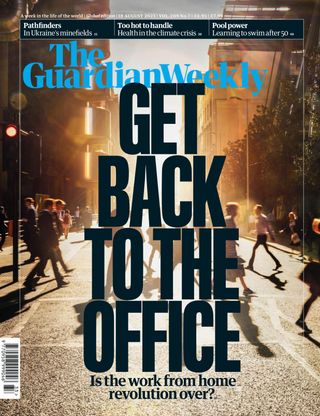

Bu hikaye The Guardian Weekly dergisinin August 18, 2023 baskısından alınmıştır.
Binlerce özenle seçilmiş premium hikayeye ve 9.000'den fazla dergi ve gazeteye erişmek için Magzter GOLD'a abone olun.
Zaten abone misiniz? Oturum aç
The Guardian Weekly'den DAHA FAZLA HİKAYE

The Guardian Weekly
Help at hand: A wave of support after school shooting
When Jim Caruso heard the news of the school shooting in Tumbler Ridge, he knew immediately he needed to be there. He packed his bags and boarded a plane for the community 1,100km away. \"I wanted to be here to bring some level of comfort,\" he said. \"I wanted to hug people, pray for them and, most importantly, to cry with them.\"

3 mins
February 20, 2026

The Guardian Weekly
From rickshaws to running shoes in pursuit of trail glory
Members of a local athletics club who transport passengers for a living are now beating elite athletes in international endurance events
3 mins
February 20, 2026

The Guardian Weekly
AI therapy Patients turn to chatbots for treatment
On a quiet evening in her Abuja hotel, Joy Adeboye, 23, sits on her bed clutching her phone, her mind racing.
2 mins
February 20, 2026
The Guardian Weekly
In these dark times, the World Service must not be allowed to fall silent
“The programmes will neither be very interesting nor very good,” said the then BBC director general John Reith when he launched its Empire Service in December 1932.
2 mins
February 20, 2026

The Guardian Weekly
Everybody wants to be a cat
Genre-hopping bass virtuoso Thundercat discusses Snoop Dogg and Star Wars ahead of the release of his fifth album
7 mins
February 20, 2026

The Guardian Weekly
'Just say no' US politicians offer advice on how to repel Trump
In Munich, Democrats put an end to tradition of the united front to stand among the president's fiercest critics
3 mins
February 20, 2026

The Guardian Weekly
Bird is the word: the secret to serving up perfect roast chicken
What’s the best way to roast a chicken?
2 mins
February 20, 2026

The Guardian Weekly
Sphere we go!
How did an industrial estate in Leipzig end up home to the great Brazilian architect Oscar Niemeyer's final project? Take a seat in his eye-popping restaurant
4 mins
February 20, 2026

The Guardian Weekly
What the repeal of a key climate rule means for America
The Trump administration has dismantled the basis for all US climate regulations, in its most confrontational anti-environment move yet.
2 mins
February 20, 2026

The Guardian Weekly
I could look out the window all day - so no need for curtains
I've never needed to be convinced of the cognitive benefits of looking out the window.
2 mins
February 20, 2026
Translate
Change font size