
Magzter GOLD ile Sınırsız Olun
Sadece 9.000'den fazla dergi, gazete ve Premium hikayeye sınırsız erişim elde edin
Denemek ALTIN - Özgür
GST reform: Relief at home, strength for industry, and resilience abroad
The Business Guardian
|September 22, 2025
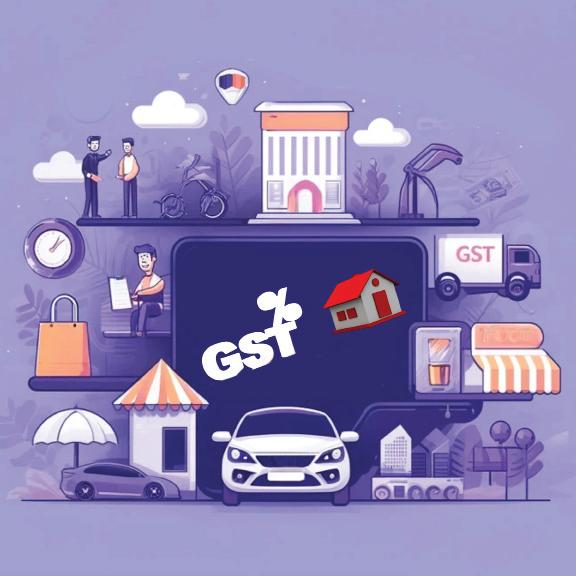
The 56th meeting of the Goods and Services Tax (GST) Council has produced one of the most significant reforms in India’s indirect taxation system since the GST was first rolled out in 2017. By simplifying the rate structure, rationalis-ing anomalies, and offering sweeping relief in critical sectors, the Council has sought to rebalance India's tax regime at a moment when global trade tensions are rising and domestic demand needs fresh momentum.
In this article an attempt has been made to assess its impact on households, on industry, and on India’s position in the global economy. It also considers the fiscal trade-offs and institutional challenges that accompany such an ambitious recalibration.
RECONCILEMENT OF RELIEF FOR HOUSEHOLDS AND LOWERING TAXES ON ESSENTIALS AND
HEALTH SECURITY
The new structure reduces GST on a wide basket of house hold goods like soaps, shampoos, toothpaste, toothbrushes, hair oil, bicycles, and kitchenware have moved into the 5% bracket from earlier rates of 12-18%. Staple foods such as packaged milk, paneer, and Indian breads like roti and paratha are now fully exempt. Processed foods such as chocolates, noodles, pasta, and namkeens have seen tax rates cut from 18% to 5%.
Analysts estimate that urban households could see a decline of 8-10% in monthly expenditure on essential goods by dint of this indirect tax relief.
The most transformative change, however, is in the insurance sector. Until now, all life and health insurance premiums carried 18% GST, adding a significant burden on policyholders. This has now been abolished, making both categories fully tax-exempt. The move is expected to stimulate higher insurance penetration in a country where coverage remains worryingly low.
Currently, India’s insurance penetration is around 4% of GDP, compared to a global average of about 7%. By removing the tax wedge, the Council has lowered barriers for families to purchase protection. Hypothetically, if even 50 million additional families take up health insurance with an average annual premium of Rs 20,000, the market could expand by over Rs 1 lakh crore. The implication is clear that more households covered, fewer families pushed into poverty by medical shocks, and stronger demand for formal insurance products.

Bu hikaye The Business Guardian dergisinin September 22, 2025 baskısından alınmıştır.
Binlerce özenle seçilmiş premium hikayeye ve 9.000'den fazla dergi ve gazeteye erişmek için Magzter GOLD'a abone olun.
Zaten abone misiniz? Oturum aç
The Business Guardian'den DAHA FAZLA HİKAYE

The Business Guardian
'Budget to focus on economic stability and fiscal prudence'
The upcoming Union Budget is expected to prioritise economic stability and fiscal prudence following a year of higher-than-expected growth and lower inflation.

2 mins
January 25, 2026

The Business Guardian
States’ fiscal deficit increases to 3.3% in 2024-25
States’ consolidated gross fiscal deficit increased to 3.3 per cent of gross domestic product (GDP) in 2024-25, after remaining below 3.0 per cent during the previous three consecutive years, Reserve Bank’s annual publication “State Finances: A Study of Budgets” noted.
1 mins
January 25, 2026

The Business Guardian
FIEO clarifies limited impact of EU GSP notification on Indian exports
The Federation of Indian Export Organisations (FIEO) clarified the recent reports concerning the European Union's notification that extends the withdrawal of Generalised System of Preferences (GSP) benefits for specific Indian product categories.
1 mins
January 25, 2026

The Business Guardian
TAXING ONE PRODUCT, IGNORING REST: WHY INDIA’S TOBACCO STRATEGY IS FAILING
On the final day of 2025, the government announced that effective February 1, 2026, tobacco products will attract an additional excise duty over and above the 40% GST rate.
3 mins
January 25, 2026

The Business Guardian
India unveils 'techno-legal' AI governance framework
India’s Office of the Principal Scientific Adviser has released a white paper on AI governance, proposing a “techno-legal” framework to balance innovation and risk.
1 mins
January 25, 2026

The Business Guardian
Pride Hotels gets SEBI nod to raise Rs 1,000 cr via IPO
Hospitality chain Pride Hotels has received regulator Sebi's approval to raise funds through initial public offerings (IPO), an update with the capital markets regulator showed on Friday.
1 mins
January 25, 2026

The Business Guardian
Speculative frenzy catapults silver above $100 per ounce
Silver prices vaulted above $100 an ounce on Friday, extending a remarkable 2025 surge into the new year as retail investor and momentum-driven buying added to a prolonged spell of tightness in physical markets for the precious and industrial metal.
2 mins
January 25, 2026
The Business Guardian
FIEO clarifies limited...
The organisation states that “many specific tariff lines within these broad categories continue to be eligible for EU GSP benefits, subject to applicable rules of origin and conditions.”
1 min
January 25, 2026
The Business Guardian
Nvidia CEO in Shanghai amid China regulatory headwinds
Nvidia CEO Jensen Huang is in Shanghai, a person briefed on the matter said on Saturday, as the U.S. chip giant faces fierce competition from local rivals and scrutiny from Chinese authorities.
1 min
January 25, 2026
The Business Guardian
'Budget being prepared under...
“It’s important that I think we get a deal with the US, and a deal with Europe will also be very encouraging because Europe is a very large continent,” Joshi remarked.
1 min
January 25, 2026
Listen
Translate
Change font size