
Magzter GOLD ile Sınırsız Olun
Sadece 9.000'den fazla dergi, gazete ve Premium hikayeye sınırsız erişim elde edin
Denemek ALTIN - Özgür
End of a radical papacy born in the South
Mail & Guardian
|M&G 25 April 2025
Pope Francis, born Jorge Mario Bergoglio in Buenos Aires in 1936, died on Easter Monday, 21 April 2025, aged 88.
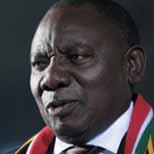
The symbolism was impossible to ignore: the head of the Catholic Church died at the heart of its most sacred weekend — Easter, the ancient commemoration of suffering, death and resurrection. In a faith built on ritual and meaning, this death echoed with a deeper clarity.
His papacy, too, had been a resurrection of sorts — of justice, humility and the throne of Peter held by a man who began his work as a priest in the shanty towns, the villas miserias, of Buenos Aires.
Francis was not perfect. He led an institution that has committed and concealed horrors across centuries. The Church under his watch still denied the ordination of women, still faltered in dealing with abuse, still allowed its conservative flank to rail against queerness, migrants and liberation theology.
But what Francis did do, more than any pope in living memory, was to refuse the version of Catholicism that ingratiates itself with the powerful while abandoning the poor.
To understand his significance, one must understand the institution he inherited. The papacy is not just a spiritual role. It is one of the longest-standing political offices in the world. For more than a millennium, the Catholic Church has held land, crowned emperors, bankrolled crusades and blessed colonial conquest. It helped codify European empire and white supremacy under the cross.
Even in the 20th century, parts of the Church hierarchy sided with fascism. The Vatican signed a concordat with Nazi Germany in 1933, and senior clerics remained complicit in Franco's Spain and Mussolini's Italy. Pope Pius XII, Francis's wartime predecessor, was widely criticised for his silence during the Holocaust.

Bu hikaye Mail & Guardian dergisinin M&G 25 April 2025 baskısından alınmıştır.
Binlerce özenle seçilmiş premium hikayeye ve 9.000'den fazla dergi ve gazeteye erişmek için Magzter GOLD'a abone olun.
Zaten abone misiniz? Oturum aç
Mail & Guardian'den DAHA FAZLA HİKAYE
Mail & Guardian
The unfinished business of freedom
Fifty years after Soweto, children in this country can still be denied access to school because of an unfinished bridge, inadequate or poorly built classrooms and public funds diverted into corrupt hands

6 mins
M&G 12 June 2026
Mail & Guardian
be silent
Her journey into theatre began far from the professional stages of Newtown.
4 mins
M&G 12 June 2026
Mail & Guardian
The Rockefellers, the Vanderbilts and the hidden power of life cover
Life insurance is often misunderstood, seen as a middle-class product to replace income after death. But for the wealthy, life cover isn’t about death. It's about design.
3 mins
M&G 12 June 2026
Mail & Guardian
We call them youth; they were children
Every June we return to the children of 1976.
4 mins
M&G 12 June 2026
Mail & Guardian
Living Forward: Ensuring continuity when it matters most
Planning for the future is often framed around growth, building wealth, expanding businesses, and securing financial independence. Far less attention is given to what happens next: how that wealth is preserved, structured and ultimately transferred.
4 mins
M&G 12 June 2026
Mail & Guardian
A generation pushed against the wall
The onus was on young people to ensure a bright future for themselves or forever become hewers of wood and fetchers of water
3 mins
M&G 12 June 2026
Mail & Guardian
What the Soweto Uprising still demands of us
Historian Noor Nieftagodien warns that annual celebrations have replaced genuine reckoning with the causes, character and unfinished consequences of June 16th
6 mins
M&G 12 June 2026

Mail & Guardian
The Arc betrayed
The 1975 and 1976 generation’s grandchildren are educated, mobile, fluent and comfortable. They are also alienated, anxious and disconnected from the history that made their comfort possible
8 mins
M&G 12 June 2026
Mail & Guardian
This isn't what Hector died for
Five decades after the watershed 1976 youth uprisings, the country is still pondering ways of repaying the huge debt of gratitude it owes the brave learners who took on the might of apartheid — unarmed but unafraid.
2 mins
M&G 12 June 2026
Mail & Guardian
Meaning of June 16 lost
Fifty years later and 32 years since liberation, we have a situation that can be described only as a betrayal of our youngsters
2 mins
M&G 12 June 2026
Listen
Translate
Change font size