
Magzter GOLD ile Sınırsız Olun
Sadece 9.000'den fazla dergi, gazete ve Premium hikayeye sınırsız erişim elde edin
Denemek ALTIN - Özgür
TRACKING CULTURE
THE WEEK India
|April 12, 2026
Indian Railways as represented in our books and movies
THE SINGLE LARGEST institution etched in the popular consciousness as representative of the nation's history might be the Indian Railways.
So powerful has been the impact of pop culture representations of the Railways on the Indian psyche that the train called Toofan Express became virtually rechristened in public memory as Toofan Mail, after the release of Jayant Desai's Toofan Mail (1934) and Aspi Irani's The Return of Toofan Mail (1942). And who can forget that a shot of the Victoria Terminus (later the Chhatrapati Shivaji Maharaj Terminus) in Indian cinema, even as a passing spectacle, is enough to signify Bombay, not least because of its depiction in Manmohan Desai's legendary Coolie (1983). The first steam engine hissed into Thane from Bombay's Bori Bunder on April 16, 1853. Since then, the Railways has carried the nation's dreams on its iron wheels for nearly 175 years. India may be divided by states, languages, and religions, but it is united by its Railways.
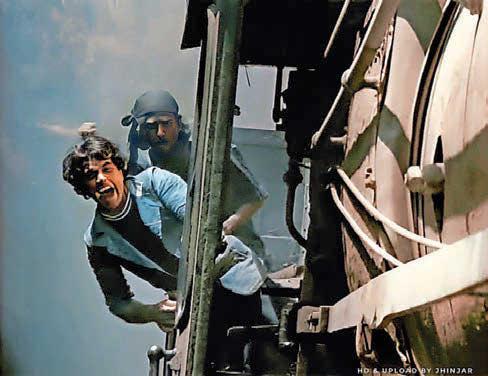
Among some of the greatest moments of railway iconography is Ramesh Sippy's breathtaking railway chase sequence in Sholay (1975). Like the famed bookstalls of A.H. Wheeler's and Higginbotham's, the dak bungalows of Rudyard Kipling's stories, R.K. Narayan's fictional town of Malgudi or Ruskin Bond's countless fictional and semi-fictional towns in the Himalayan foothills, Sholay's township of Ramgarh would probably have never existed without the Railways.
Since the unforgettable trains of Dilwale Dulhania Le Jayenge (1995)—first in Europe and England, and then in Punjab—began globalising Indian consciousness, Indian popular culture has indeed come far in recreating fascinating railway spaces, as seen in Ghadar: Ek Prem Katha (2001), Saathiya (2002), Gangs of Wasseypur: Parts 1 & 2 (2012),
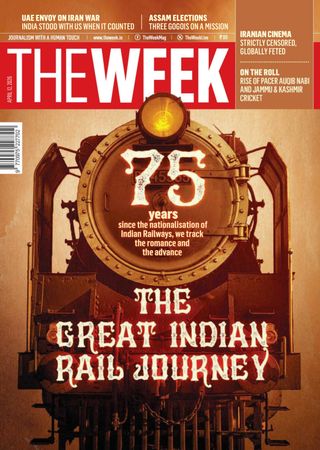

Bu hikaye THE WEEK India dergisinin April 12, 2026 baskısından alınmıştır.
Binlerce özenle seçilmiş premium hikayeye ve 9.000'den fazla dergi ve gazeteye erişmek için Magzter GOLD'a abone olun.
Zaten abone misiniz? Oturum aç
THE WEEK India'den DAHA FAZLA HİKAYE

THE WEEK India
MOTHER LODE
Why Mother Mary is having a moment in pop culture

4 mins
May 03, 2026

THE WEEK India
LECTURES OVER LAGER
What happens when a professor walks into a bar?
4 mins
May 03, 2026

THE WEEK India
Violence has almost disappeared; ideology hasn't vanished
INTERVIEW - B. Shivadhar Reddy director general of police, Telangana
2 mins
May 03, 2026

THE WEEK India
Reserved, yet deferred
The constitutional amendment bill might have given the BJP an immediate campaign issue, but the government will be under pressure. The opposition has tasted blood
5 mins
May 03, 2026

THE WEEK India
PoSH, a question
Serious concerns over corporate India's workplace harassment framework
4 mins
May 03, 2026

THE WEEK India
Her seat at the table
To understand why the women's reservation bill took so long-and why its passage, even in this form, carries genuine weight-one has to begin in 1975
7 mins
May 03, 2026

THE WEEK India
Ladies' seats? Why not from 543?
Sigmund Freud died without answering it.
2 mins
May 03, 2026

THE WEEK India
Healing beyond medicine
At THE WEEK's Ayush conclave, conversations brought about a layered understanding of the opportunities and challenges in integrating traditional knowledge with modern science
10 mins
May 03, 2026

THE WEEK India
Tehran to Delhi—echoes of defiance
Ironic—should I say Iranic—that a country whose language is so sophisticated that it does not even bother with gendered pronouns, referring to everyone (and everything) with the same universal “oo” has become the site of an invasion ostensibly to “save” its women from oppression by the boorish and bumbling west.
2 mins
May 03, 2026

THE WEEK India
Front organisations can function if they do not support armed insurgency
The CPI (Maoist) insurgency appears significantly weakened.
2 mins
May 03, 2026
Listen
Translate
Change font size