
Magzter GOLD ile Sınırsız Olun
Sadece 9.000'den fazla dergi, gazete ve Premium hikayeye sınırsız erişim elde edin
The Minority Report
Outlook
|May 01, 2025
The challenge to waqf reform is how to build consensus on State oversight of waqf properties without violating minority rights
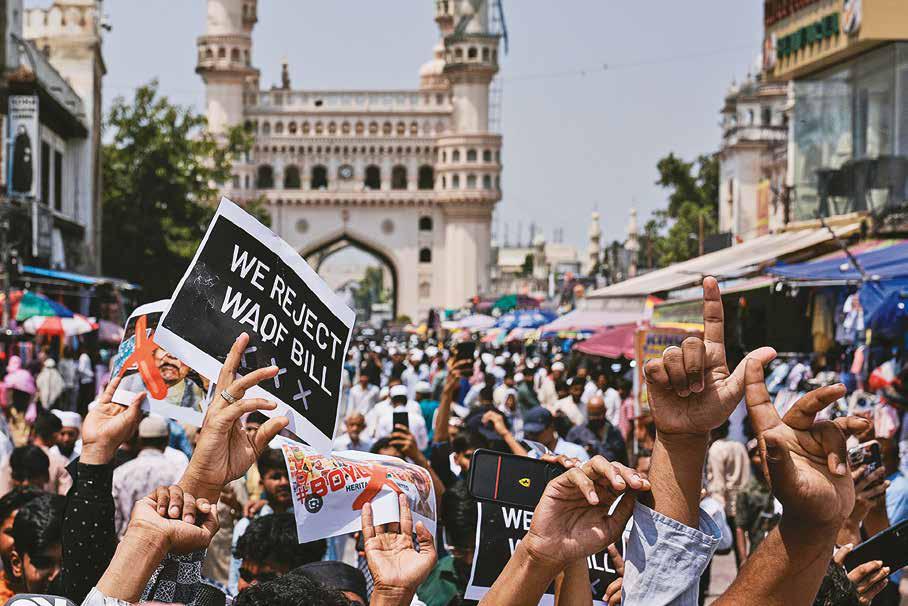
WAY back in 1929, Mohandas Karamchand Gandhi wrote in Young India that “numerical strength savours of violence when it acts in total disregard of any strongly felt opinion of minority”. Dr. B.R. Ambedkar stated resolutely in the Constituent Assembly debates that “rights of minorities should be absolute rights. They should not be subject to consideration as to what another party (read nation) may like to do to minorities within its jurisdiction”. In the West, John Stuart Mill warned that representative democracy, with all its political and moral trappings, is susceptible to the “tyranny of the majority”, and so in the interest of democratic principles, nations must determine the limits of collective interference in the life of the individual.
The rights of the minority can be hollowed out by the acts of transgressions committed by governments and by those of the social majority, engendering both social and political tyranny. The three political philosophers; Gandhi, Ambedkar and Mill, quoted above, find themselves on common ground arguing for institutionalisation of minority rights as sinews of democratic equality and a good republic. The Waqf Act, 2025, de-institutionalises the minority rights as enshrined in the Indian Constitution, violates several provisions of fundamental rights, including the principles of secularism, threatens the moral consciousness to fraternity and tolerance in India, and panders to the “majoritarianism” of the Hindutva project in the name of “one country, one people, and one nation”.
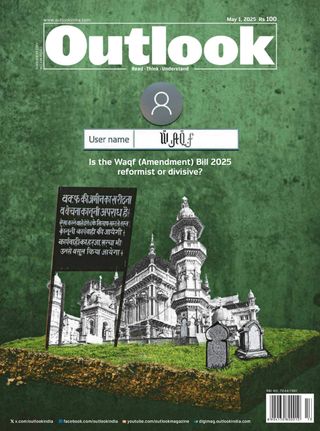

Bu hikaye Outlook dergisinin May 01, 2025 baskısından alınmıştır.
Binlerce özenle seçilmiş premium hikayeye ve 9.000'den fazla dergi ve gazeteye erişmek için Magzter GOLD'a abone olun.
Zaten abone misiniz? Oturum aç
Outlook'den DAHA FAZLA HİKAYE

Outlook
The Big Blind Spot
Caste boundaries still shape social relations in Tamil Nadu-a state long rooted in self-respect politics

8 mins
December 11, 2025

Outlook
Jat Yamla Pagla Deewana
Dharmendra's tenderness revealed itself without any threats to his masculinity. He adapted himself throughout his 65-year-long career as both a product and creature of the times he lived through
5 mins
December 11, 2025

Outlook
Fairytale of a Fallow Land
Hope Bihar can once again be that impossibly noisy village in Phanishwar Nath Renu's Parti Parikatha-divided, yes, but still capable of insisting that rights are not favours and development is more than a slogan shouted from a stage
14 mins
December 11, 2025

Outlook
The Lesser Daughters of the Goddess
The Dravidian movement waged an ideological war against the devadasi system. As former devadasis lead a new wave of resistance, the practice is quietly sustained by caste, poverty, superstition and inherited ritual
2 mins
December 11, 2025

Outlook
The Meaning of Mariadhai
After a hundred years, what has happened to the idea of self-respect in contemporary Tamil society?
5 mins
December 11, 2025

Outlook
When the State is the Killer
The war on drugs continues to be a war on the poor
5 mins
December 11, 2025

Outlook
We Are Intellectuals
A senior law officer argued in the Supreme Court that \"intellectuals\" could be more dangerous than \"ground-level terrorists\"
5 mins
December 11, 2025

Outlook
An Equal Stage
The Dravidian Movement used novels, plays, films and even politics to spread its ideology
12 mins
December 11, 2025

Outlook
The Dignity in Self-Respect
How Periyar and the Self-Respect Movement took shape in Tamil Nadu and why the state has done better than the rest of the country on many social, civil and public parameters
5 mins
December 11, 2025

Outlook
When Sukumaar Met Elakkiya
Self-respect marriage remains a force of socio-political change even a century later
7 mins
December 11, 2025
Listen
Translate
Change font size