Denemek ALTIN - Özgür
Maps and Minds
Outlook
|June 11, 2025
Maps have divided transnational ethnic groups Nagas, Zos, Bhutias, Bengalis and Nepalis, among others, but the Naga or the Zo mind does not accept the boundaries on government maps
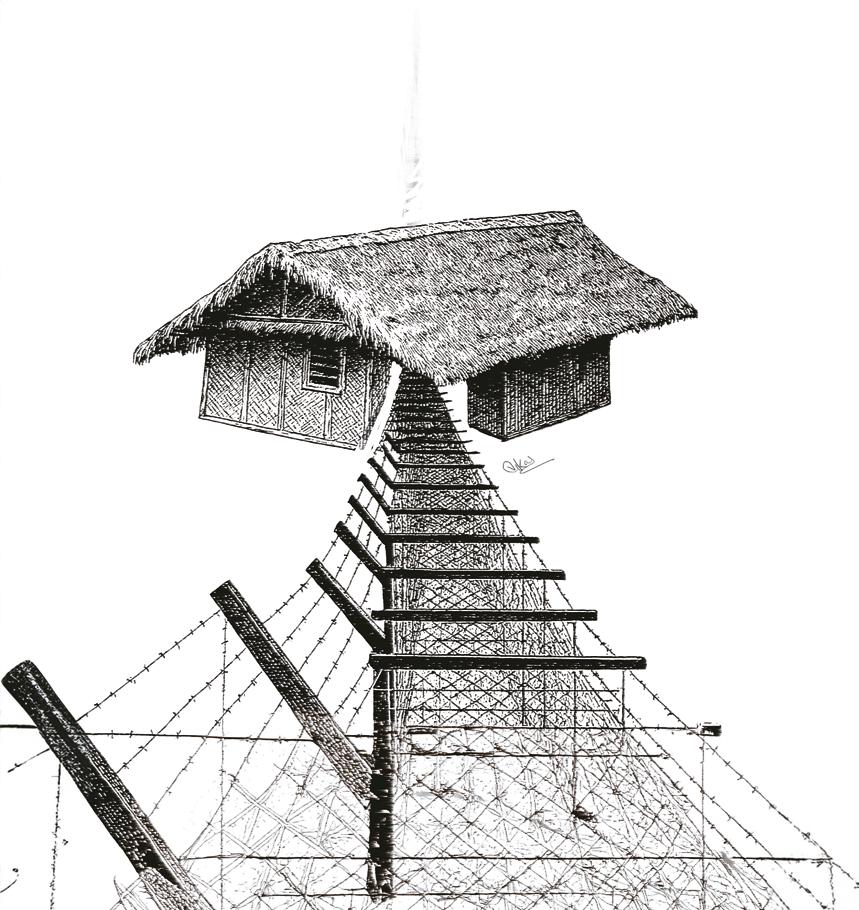
TONYEI Phawang and his family eat in Myanmar and sleep in India. Daily. Their dining room lies in Myanmar, bedroom in India, and the kitchen, should there be a physical border between the nations, would have the boundary running through it.
The 1,643-km India-Myanmar border still exists largely on maps. Except for a 10-km stretch recently fenced, the rest remains open, demarcated by small concrete pillars at some points. The border passes through Longwa, a hilltop village that has become a tourist attraction due to its uniqueness. The border cuts the village and about 150 of its 700-odd houses, including Phawang's, into two. The western part lies in Mon district or Nagaland and the eastern part in the Naga Self-Administered Zone in the Sagaing region of Myanmar. Apart from a pillar demarcating national boundaries, there is no physical divide.
No border exists in the people's minds either. The Longwa Tourist Guest House that local youth Mansheih Wangnao runs has some rooms in India, some others in Myanmar. Their Baptist church falls mostly in Myanmar. Even the Mon-Longwa road zigzags through the border, moving in and out of Myanmar. Their farmlands lie across both countries. The school has teachers and students from both countries. Phawang, the Angh or chief of the Konyak tribe of the Naga ethnic group, is the 10th generation hereditary chief of Longwa. He wields his authority on both sides of the border. In fact, his customary authority applies in 31 Konyak villages in Myanmar and only five Konyak villages in India.
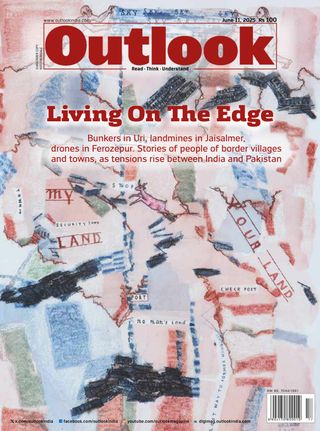

Bu hikaye Outlook dergisinin June 11, 2025 baskısından alınmıştır.
Binlerce özenle seçilmiş premium hikayeye ve 9.000'den fazla dergi ve gazeteye erişmek için Magzter GOLD'a abone olun.
Zaten abone misiniz? Oturum aç
Outlook'den DAHA FAZLA HİKAYE

Outlook
Get the Right Partner
The broking industry is now in a price-war phase, but cost is no longer the key differentiator. The choice will depend on how you plan to use a broking platform

4 mins
July 06, 2026

Outlook
Balanced Fertilizer Push for India
As India faces fertilizer import shocks; Deepak Shah, Chairman of CCFI calls for shift to high NUE solutions for food security and growth.
2 mins
July 06, 2026
Outlook
India’s Anaemia Paradox
From disputed estimates to hidden causes, India’s anaemia story is entering a new phase, one that could reshape how the country understands and addresses a condition affecting millions
5 mins
July 06, 2026

Outlook
Record Placements Anchor PIMR Legacy
Prestige Institute of Management and Research, Indore (Deemed to be University): Anchoring Three Decades of Academic Vanguard and Frontier Leadership
3 mins
July 06, 2026
Outlook
Clinical Excellence in High precision Radiation Therapy
Driven by the conviction that healing begins with humanity, radiation oncologist Dr. Amit Jain has impacted countless lives
2 mins
July 06, 2026

Outlook
A Paradise Worth Protecting
Ancient rainforests, endemic and rare mammals, birds and reptiles, exotic species of trees, breathtaking corals and indigenous tribes... Great Nicobar is home to all this and a lot more
5 mins
July 06, 2026
Outlook
Your Future Starts Here
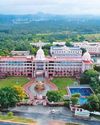
Adichunchanagiri University (ACU), nurturing visionary thinkers, global leaders, and bold entrepreneurs who are ready to drive impact in a fast-evolving digital economy
3 mins
July 06, 2026

Outlook
Building a Sustainable Airport Ecosystem in Bengaluru
At Kempegowda International Airport Bengaluru (BLR Airport), sustainability is a guiding philosophy shaping infrastructure, operations, growth, resilience and workplace culture.
4 mins
July 06, 2026
Outlook
Intelligent Imaging for Smarter Healthcare
Dilip Bhosale, shares with Outlook, how Agfa Radiology Solutions is leveraging advanced digital technologies, workflow automation and global expertise to shape the future of diagnostic imaging in India in conversation with Aditi Chakraborty
2 mins
July 06, 2026

Outlook
Advancing the Future of Oncology in Eastern India
A champion of accessible and patient-centred cancer care, Dr Soma Mukhopadhyay is leading NCRI Hospital towards new standards of excellence in oncology
2 mins
July 06, 2026
Listen
Translate
Change font size