Denemek ALTIN - Özgür
FLODDED OUT
Reader's Digest Canada
|October 2022
As the climate crisis turns communities into danger zones, one Alberta town is left behind
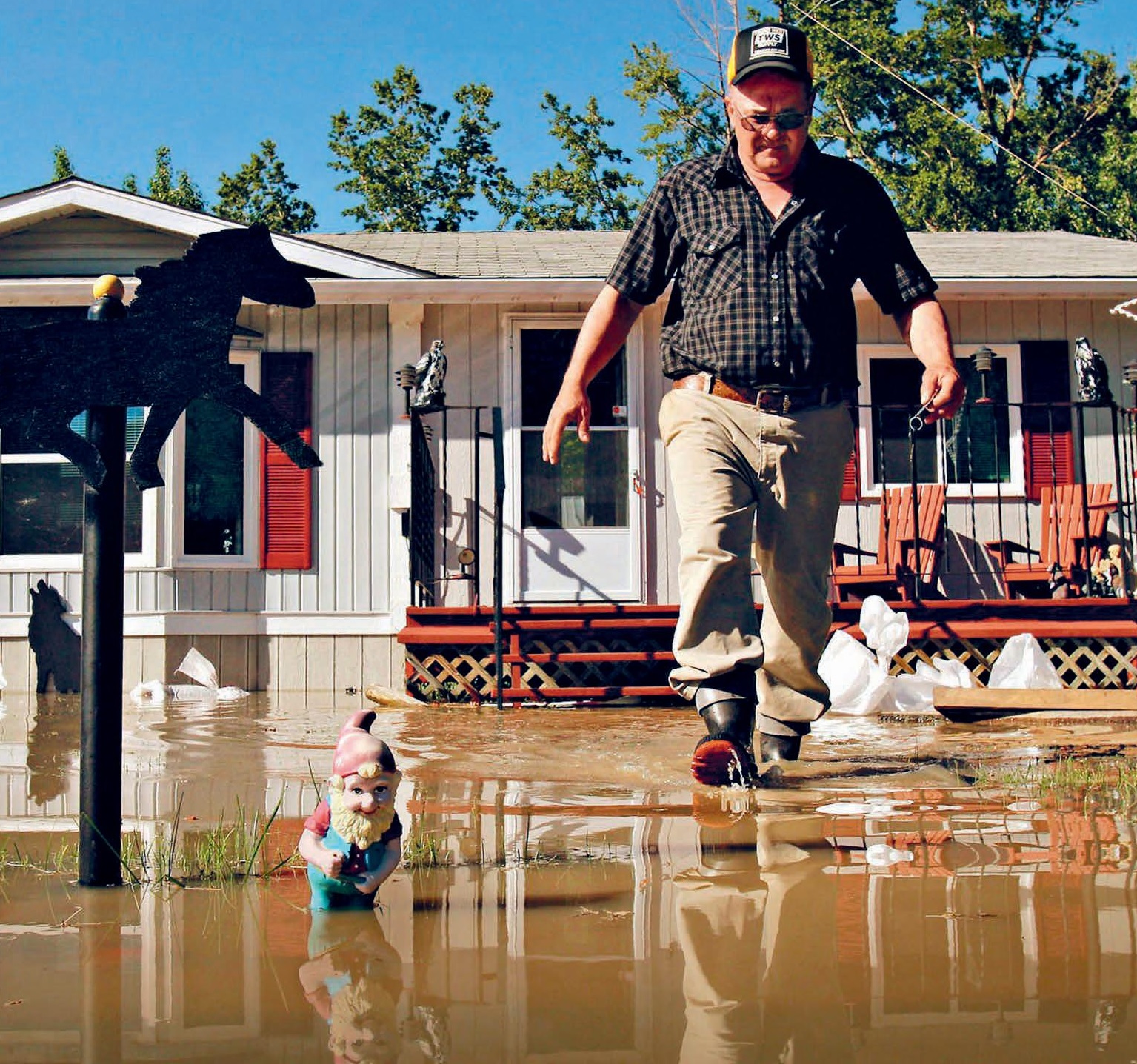
DRIVING INTO THE VALLEY housing the little spit of land that is the tiny community of Lehigh, Alta., feels like entering another world. Wide-open prairie drops suddenly into a landscape more suited to a moon of Jupiter.
The valley was shaped by the forces of climate and change: water cascaded from glacial lakes as the ice age slowly whimpered away. Rivers, rain, snow and wind carved channels into the land. The process left a deep and long scar.
Nestled in that valley, the town of Drumheller stretches along a flood plain encompassing several communities. Among them is Lehigh, a oncebustling hamlet of coal miners and their families, now reduced to a smattering of homes spread out over a small, flat plain. All of them hug the temperamental Red Deer River.
The area is prone to flooding, and almost all of the inhabited areas are identified by the provincial government as flood zones. Drumheller was walloped in 2005 and again in 2013, but the recorded history of flooding dates back over a century. The situation is only expected to get more intense.
Climate projections show that the area will face more extremes in the near future. A warmer climate can hold more water and dump it at will. Lehigh will face an inundation.
Drumheller is not alone. Whether it's due to sea level rise, wildfires or land sliding into the sea as permafrost melts, communities across Canada are grappling with similar problems: climate change has made areas that were once livable-even desirable into danger zones.
Across the country, flooding is considered the biggest climate change risk, consuming more than 75 per cent of federal disaster assistance, according to a 2020 policy brief from the think tank Centre for International Governance Innovation.


Bu hikaye Reader's Digest Canada dergisinin October 2022 baskısından alınmıştır.
Binlerce özenle seçilmiş premium hikayeye ve 9.000'den fazla dergi ve gazeteye erişmek için Magzter GOLD'a abone olun.
Zaten abone misiniz? Oturum aç
Translate
Change font size