Denemek ALTIN - Özgür
The Philosophy of William Blake
Philosophy Now
|December 2025 / January 2026
Mark Vernon looks at the imaginative thinking of an imaginative artist.
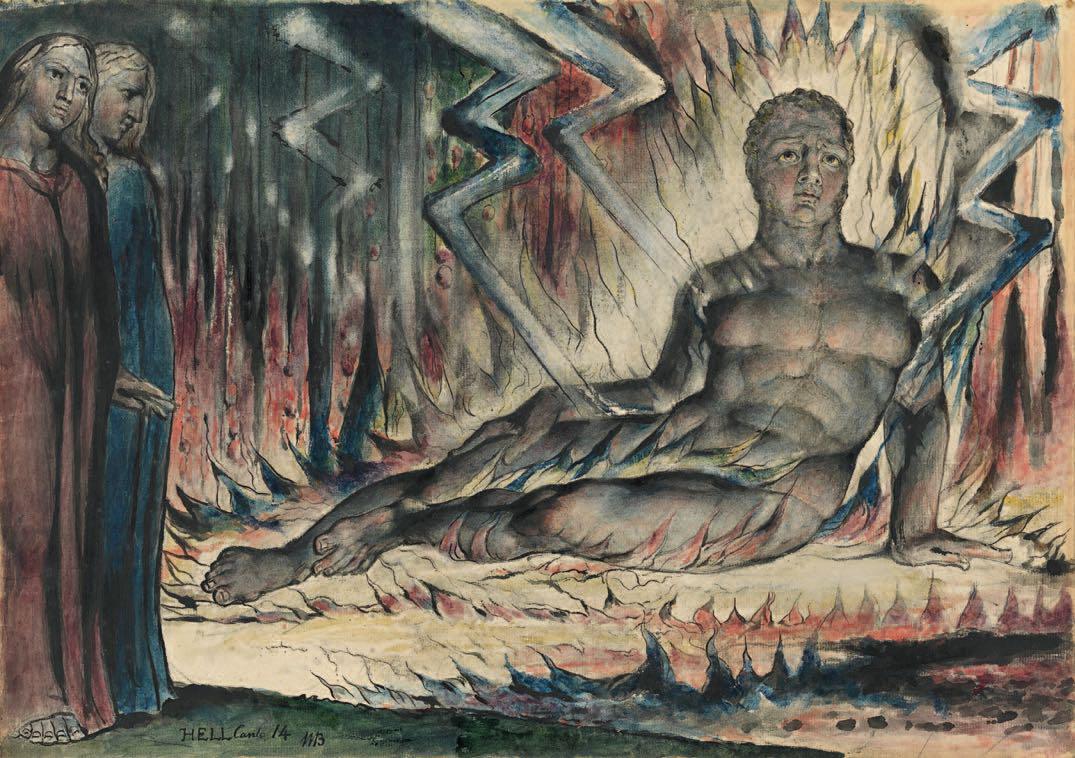
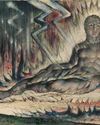
The painter, poet, and engraver, William Blake (1757-1827) is not usually categorized as a philosopher, but I think otherwise. He engaged with the great thinkers of his day — particularly the three he regularly references as an intellectual triumvirate: Bacon, Newton, and Locke. Moreover, I reckon his ideas could be transformative now.
Blake was born in Georgian England. The era was politically and socially tumultuous, witnessing Britain losing thirteen of its colonies in North America, developing its empire in India, and spending decades at war with France. During the same period men stopped wearing stockings in favour of trousers, and the words ‘nihilism’, ‘objective’, ‘regular’, and ‘history’ were either coined or took on the meanings they have now.
Shifts in language are a sign that much was happening philosophically as well. Blake knew the work of Erasmus Darwin, grandfather of Charles, and illustrated one of Erasmus’s protoevolutionary works, The Botanic Garden (1791). Evolutionary ideas were in the air, and empiricism was one of the watchwords of the times, alongside the phrase ‘trial and error’. Blake joined in with that spirit, being a great experimenter with materials. His workshop, in which he engraved, printed, and coloured with his wife Catherine, must have looked like a chemist’s laboratory — and smelt like one, too. Acids washing over metals left an arid tang in the air.

Bu hikaye Philosophy Now dergisinin December 2025 / January 2026 baskısından alınmıştır.
Binlerce özenle seçilmiş premium hikayeye ve 9.000'den fazla dergi ve gazeteye erişmek için Magzter GOLD'a abone olun.
Zaten abone misiniz? Oturum aç
Philosophy Now'den DAHA FAZLA HİKAYE
Philosophy Now
Bilbo Theorizes About Wellbeing
Eric Comerford overhears Bilbo and Gandalf discussing happiness.

9 mins
December 2025 / January 2026

Philosophy Now
What Women?
Marcia Yudkin remembers almost choking at Cornell
11 mins
December 2025 / January 2026
Philosophy Now
Islamic Philosophers On Tyranny
Amir Ali Maleki looks at tyranny from an Islamic perspective.
4 mins
December 2025 / January 2026

Philosophy Now
Peter Singer
The controversial Australian philosopher defends the right to choose to die on utilitarian grounds
5 mins
December 2025 / January 2026

Philosophy Now
Another Conversation with Martin Heidegger?
Raymond Tallis talks about communication problems.
7 mins
December 2025 / January 2026

Philosophy Now
Letters
When inspiration strikes, don't bottle it up. Email me at rick.lewis@philosophynow.org Keep them short and keep them coming!
17 mins
December 2025 / January 2026
Philosophy Now
The Philosophy of William Blake
Mark Vernon looks at the imaginative thinking of an imaginative artist.
9 mins
December 2025 / January 2026

Philosophy Now
Philosophical Haiku
Peering through life’s lens God in nature is deduced: The joy of being.
1 mins
December 2025 / January 2026

Philosophy Now
Philosophy Shorts
More songs about Buildings and Food' was the title of a 1978 album by the rock band Talking Heads. It was about all the things rock stars normally don't sing about. Pop songs are usually about variations on the theme of love; tracks like Rose Royce's 1976 hit 'Car Wash' are the exception. Philosophers, likewise, tend to have a narrow focus on epistemology, metaphysics and trifles like the meaning of life. But occasionally great minds stray from their turf and write about other matters, for example buildings (Martin Heidegger), food (Hobbes), tomato juice (Robert Nozick), and the weather (Lucretius and Aristotle). This series of Shorts is about these unfamiliar themes; about the things philosophers also write about.
2 mins
December 2025 / January 2026
Philosophy Now
Hedonic Treadmills in the Vale of Tears
Michael Gracey looks at how philosophers have pursued happiness.
8 mins
December 2025 / January 2026
Listen
Translate
Change font size