
Magzter GOLD ile Sınırsız Olun
Sadece 9.000'den fazla dergi, gazete ve Premium hikayeye sınırsız erişim elde edin
Denemek ALTIN - Özgür
A Crisis of Attention
Philosophy Now
|August/September 2025
Paul Doolan attends to our culture of attention demanding.
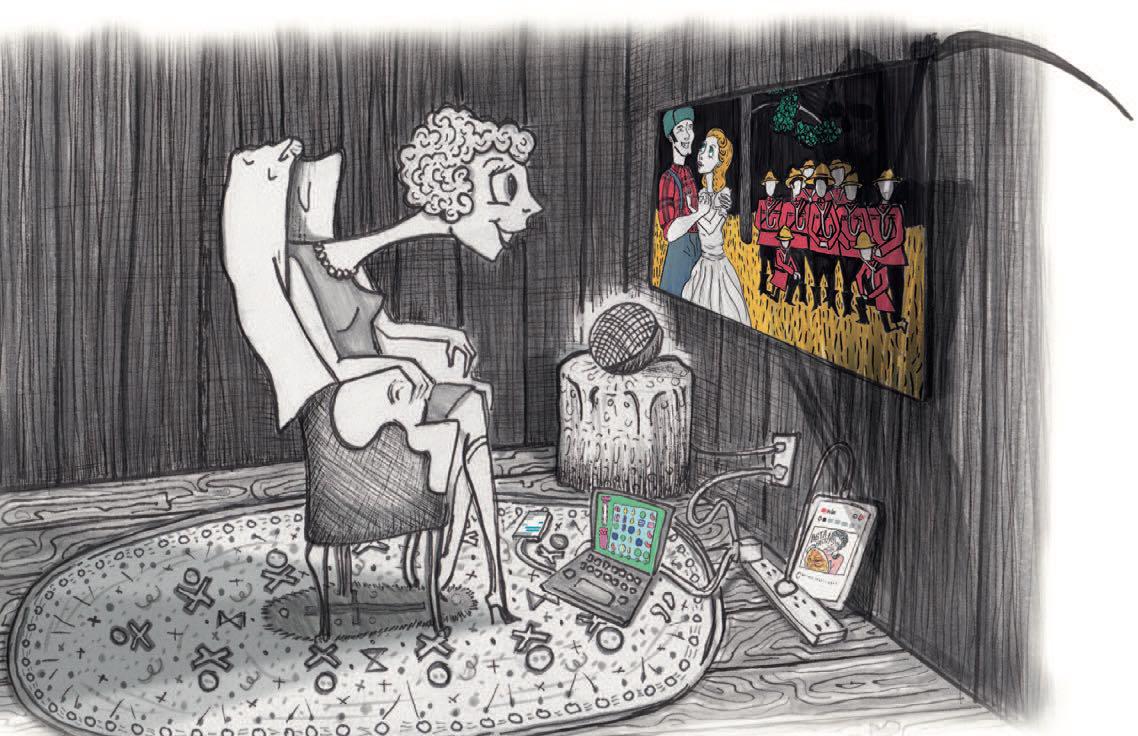
Listen' is composed of the same letters as 'silent'. Listening to another person means falling silent while the other speaks, opening yourself up to what they have to communicate. The philosopher Byung-Chul Han describes this as 'a special receptivity' (The Disappearance of Rituals, 2020). Kieran Setiya argues that the path to strong relationships comes through cultivating the art of listening; forging new friendships often begins with the simple act of paying attention to the other person (Life is Hard, 2022). Too often, however, we fail to gift the other our attention or our time. I'll admit that personally, this rings too true. I am a master of some widely practiced anti-listening habits: leaping into the pauses left by my interlocutor; finishing their sentence; rehearsing my own response while acting like I'm listening; replying in a way that shifts the focus of attention onto me... I'm guilty of them all. These days, it seems like we don't have the time to pay attention.
The economist Herbert Simon characterised attention as a scarce resource: “In an information-rich world, the wealth of information means a dearth of something else; a scarcity of whatever it is that information consumes. What information consumes is ... the attention of its recipients. Hence a wealth of information creates a poverty of attention” (Designing Organizations for an Information-Rich World, pp.40-41, 1971). So when we pay attention, what we’re paying for is information.
In this uneven exchange our attention is limited but the supply of information is limitless. So we need to be wise when we decide what we’re going to spend our limited currency on; after all, the quality of information varies enormously.

Bu hikaye Philosophy Now dergisinin August/September 2025 baskısından alınmıştır.
Binlerce özenle seçilmiş premium hikayeye ve 9.000'den fazla dergi ve gazeteye erişmek için Magzter GOLD'a abone olun.
Zaten abone misiniz? Oturum aç
Philosophy Now'den DAHA FAZLA HİKAYE

Philosophy Now
Nosferatu
Stefan Bolea considers two very different artistic approaches to love and death.

6 mins
April/May 2025

Philosophy Now
Heidegger's Ghost
Raymond Tallis wonders where Heidegger's body went when he was philosophising.
7 mins
April/May 2025

Philosophy Now
Is Comedy Good For Us?
Damaris Stock has a laugh with Plato and friends.
10 mins
April/May 2025
Philosophy Now
In Defense of Idleness
Wendell O'Brien says, 'Just Don't Do It'.
10 mins
April/May 2025
Philosophy Now
Leaving Nothing to Chance by Carl Knight
LEAVING NOTHING TO Chance (2025) by Carl Knight, is an informed, proficient and lucid defence of luck egalitarianism.
3 mins
April/May 2025

Philosophy Now
Star Maker by Olaf Stapledon
THE 1937 SCIENCE FICTION novel Star Maker was written by philosophy professor Olaf Stapledon in the dark days as Europe awaited the onslaught of Nazi Germany. This casts a shadow over the whole book.
6 mins
April/May 2025
Philosophy Now
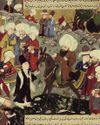
Love & Emptiness in the Sufi Tradition
Medha Ninad Tambe meditates on Rumi, love and self-negation.
7 mins
April/May 2025

Philosophy Now
The Hedgehog's Dilemma: A Metaphor About the Challenges of Human Intimacy
Krishna Chaubey explains Arthur Schopenhauer's poignant thought experiment.
4 mins
April/May 2025
Philosophy Now
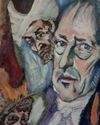
The Mirror & the Flame
Rebwar Fatah imagines Attar's & Hegel's shared path.
4 mins
April/May 2025
Philosophy Now
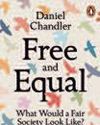
Free and Equal by Daniel Chandler
DANIEL CHANDLER, AN economist and philosopher based at the London School of Economics, begins Free and Equal: What Would a Fair Society Look Like? (2023) by asking an intriguing question. How is it, he wonders, that the most influential political philosopher of the last century has had almost no practical impact on politics or policy? The philosopher in question is John Rawls, whose magnum opus was A Theory of Justice (1971).
5 mins
April/May 2025
Listen
Translate
Change font size