Denemek ALTIN - Özgür
Human-Machine Interface
Circuit Cellar
|August 2025
The Intersection of People and Technology
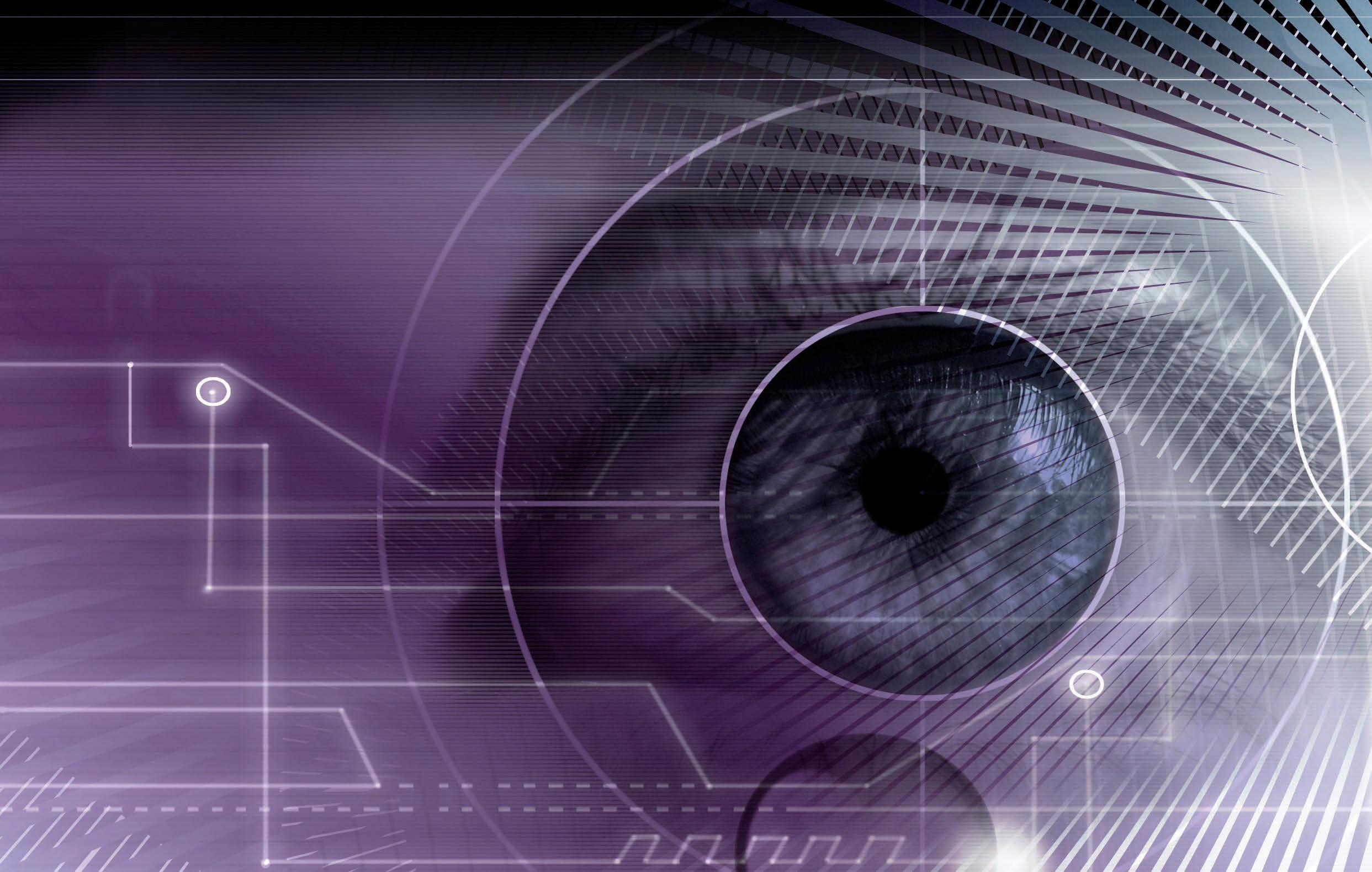
Computers aren't useful until they interract with the world. The interfaces between user and computer, and between computer and the "real world" take many forms that are changing rapidly. Understanding the interface between human and machine can help you build more effective and powerful embedded solutions.
Human-machine interfaces (HMIs) are where people and technology meet—and ideally, collaborate. At its simplest, an HMI is any system or device that allows a person to interact with a machine, whether it’s a touchscreen on a coffee maker, a game controller, or the dashboard in your car. It’s rare for the HΜΙ component of a system to be the developer's favorite: just ask a FORTRAN programmer how much they love the FORMAT statement. However, HMI frequently dominates the usefulness of a system and therefore cannot be lightly overlooked.
As with almost every aspect of computing, Artificial intelligence (AI) is fundamentally reshaping human-machine interfaces, especially in embedded applications where size, power, and context constraints demand smarter and more adaptive systems. Historically, HMIs relied on static rules and predefined input-output mappings. But with the integration of AI—particularly machine learning and neural networks—these interfaces are evolving into dynamic, responsive systems that learn from user behavior, adapt to their environment, and personalize interactions in real time.
In embedded systems, where computational and energy resources are limited, edge AI has become a game changer. Instead of sending all data to the cloud for processing, AI-enabled embedded devices such as the NVIDIA Jetson Nano or Google's Coral TPU now perform inference locally. This enables low-latency decision-making, reduced network load, and real-time responsiveness—critical for applications including autonomous drones, wearable medical monitors, or industrial robotics.
BEYOND THE BUTTON

Bu hikaye Circuit Cellar dergisinin August 2025 baskısından alınmıştır.
Binlerce özenle seçilmiş premium hikayeye ve 9.000'den fazla dergi ve gazeteye erişmek için Magzter GOLD'a abone olun.
Zaten abone misiniz? Oturum aç
Circuit Cellar'den DAHA FAZLA HİKAYE

Circuit Cellar
Inside the Tech: E-Bikes Explained
The Future of Product Developement Nature

5 mins
March 2026
Circuit Cellar
Mesh for Embedded Control
Mesh Networks Are Rewiring Embedded Systems
11 mins
March 2026

Circuit Cellar
A System That Detects, Tracks, and Deters Deer
Using Computer Vision, an Arduino, and a Raspberry Pi 5
14 mins
March 2026

Circuit Cellar
Analog Meets Digital
Part 4: Eliminating Mains Interference with an ADC
19 mins
March 2026

Circuit Cellar
Datasheet: Linux-Based SBCs
SBCs Running Linux Bring Enterprise Power to the Network's Edge
8 mins
March 2026
Circuit Cellar
Running Model Trains Without Human Input
A Raspberry Pi Pico Controls Two Trains
9 mins
March 2026

Circuit Cellar
Connector Requirements for High-Voltage Healthcare Applications
Simplifying Safety and Security
9 mins
March 2026
Circuit Cellar
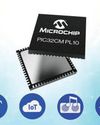
PIC32CM PL10 MCUs Expand Microchip's ARM Cortex-MO+ Portfolio
Building on decades of experience, Microchip Technology has added PIC32CM PL10 MCUs to its PIC32C family of ARM Cortex-M0+ core devices. PL10 MCUs feature a rich set of Core Independent Peripherals (CIPs), 5V operation, touch capabilities, integrated toolsets and safety compliance.
1 mins
March 2026

Circuit Cellar
From Buffer Overflows to Control Flow Attacks
This article extends the January 2026 article by showing a buffer overflow attack that changes a return value. I also discuss the use of the GCC stack protection feature, and demonstrate that it's not always a bulletproof protection method, even if it is better than doing nothing.
7 mins
March 2026
Circuit Cellar
Another Matter-Enabled MCU: the ESP32-C6
The list of MCUs that support the Matter protocol continues to get longer. In this column, Brian goes in-depth on one of the newer Matter-enabled MCUs and shows just how it compares to some of the alternatives now on the market.
21 mins
March 2026
Listen
Translate
Change font size