
Magzter GOLD ile Sınırsız Olun
Sadece 9.000'den fazla dergi, gazete ve Premium hikayeye sınırsız erişim elde edin
Cycle-Resolution Timing Enhances Embedded-System Performance
Circuit Cellar
|August 2025
The right real-time operating system (RTOS) is crucial for optimizing embedded system performance, reliability, and power efficiency.

Cycle-Resolution Timing is an advanced scheduling technique used in SEGGER’s RTOS embOS-Ultra that offers significant benefits in terms of precision, efficiency, and power consumption.This article shows how Cycle-Resolution Timing works, how it compares to RTOSs using traditional methods, and the advantages it offers for embedded-system development.
KNOW YOUR EMBEDDED-SYSTEM ARCHITECTURE
Before diving into the specifics of Cycle-Resolution Timing, it is important to understand how traditional RTOSs work.
Bare-metal and super-loop architecture: In many simple embedded systems, developers use a bare-metal and/or super-loop architecture, where a system continuously runs a in a loop, checking for events and executing tasks. This approach is simple, but it has limitations:
Task management is carried out manually, which can quickly become complex as the system grows.
Power consumption is high because the system runs continuously, even when no tasks are scheduled.
Debugging and scaling are difficult when tasks become more complex or time sensitive.
While this approach is sufficient for small systems, it doesn’t provide the level of precision or energy efficiency needed in more complex or resource-constrained embedded systems.
Traditional RTOS approaches: A typical RTOS improves on the super-loop model by managing tasks with system-tick interrupts. These interrupts, usually set at regular intervals (e.g., every millisecond), serve as a time base for scheduling tasks. While this approach allows for multitasking, it still has limitations:
- System ticks occur regardless of whether a task is pending, which can waste processor time and increase power consumption.
- Time-based tasks must be scheduled based on the system tick intervals, which can reduce precision in task execution.
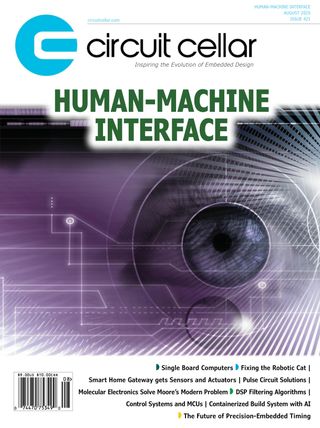

Bu hikaye Circuit Cellar dergisinin August 2025 baskısından alınmıştır.
Binlerce özenle seçilmiş premium hikayeye ve 9.000'den fazla dergi ve gazeteye erişmek için Magzter GOLD'a abone olun.
Zaten abone misiniz? Oturum aç
Circuit Cellar'den DAHA FAZLA HİKAYE
Circuit Cellar
The Future of Sensors in Safety Systems Sensing the Stop
How Magnetic Sensors Are Enabling the Next Generation of Braking Systems

5 mins
December 2025

Circuit Cellar
Alif Semiconductor Elevates Generative AI at the Edge with New Support for ExecuTorch Runtime in Its Ensemble MCUs
Alif Semiconductor, the leading global supplier of secure, connected, power efficient Artificial Intelligence and Machine Learning (AI/ML) microcontrollers (MCUs) and fusion processors, announced that developers can now use the ExecuTorch Runtime, a quantization extension of the popular PyTorch ML framework, for AI applications built to run on its Ensemble E4/E6/E8 series of MCUs and fusion processors.
1 min
December 2025

Circuit Cellar
Encrypted MQTT Protocol for Critical Sectors
Mechanisms, Challenges, and Best Practices
3 mins
December 2025

Circuit Cellar
Datasheet: Small Size, Big Power
Smaller Microcontrollers Bring New Possibilities
9 mins
December 2025

Circuit Cellar
Analog Devices Launches ADI Power Studio and New Web-Based Tools
Analog Devices, Inc. (ADI), a global semiconductor leader, announced the launch of ADI Power Studio, a comprehensive family of products that offers advanced modeling, component recommendations, and efficiency analysis with simulation.
1 mins
December 2025
Circuit Cellar
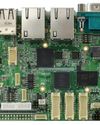
Compact IBR300 2.5" SBC Powered by NXP i.MX 93 from IBASE
IBASE Technology, Inc., a leading provider of rugged embedded computing platforms, announced the release of the IBR300, a 2.5\" RISC-based single board computer (SBC) powered by the NXP i.MX 93 processor with dualcore ARM Cortex-A55 (up to 1.7GHz) and a Cortex-M33 MCU.
1 min
December 2025
Circuit Cellar
Sensors in the Spotlight
The Next Decade of Embedded Sensor Systems
12 mins
December 2025

Circuit Cellar
Bob's Wrap Up
In Bob's last article with Circuit Cellar, he attempts to wrap up a career of more than 50 years as an embedded systems engineer and 14 years with Circuit Cellar. He looks at each of his 58 articles by category and provides some recommendations for his fellow engineers.
7 mins
December 2025

Circuit Cellar
Designing Embedded Software Architectures That Last
I've reviewed hundreds of firmware projects over the years, and one thing always stands out: the most successful projects have a clear, deliberate architecture.
10 mins
December 2025

Circuit Cellar
Broadcom Introduces Industry's First Wi-Fi 8 Silicon Ecosystem Powering the AI Era
Broadcom, Inc. unveiled the first Wi-Fi 8 silicon solutions for broadband wireless, targeting residential gateways, enterprise access points, and smart mobile clients.
1 mins
December 2025
Listen
Translate
Change font size