Denemek ALTIN - Özgür
LOADED
The New Yorker
|May 20, 2024
We used to think the rich had a social function. What are they good for now?

Around the start of the twenty-first century, the Oxford sociologist Jonathan Gershuny noticed a change in the way the privileged behaved: the leisure class that the economist Thorstein Veblen had described during the Gilded Age seemed no longer to exist. The farther up people were on the income ladder, the harder they worked. “Busyness,” Gershuny concluded, was “the badge of honor for the new superordinate working class.” These days, even the highest-profile billionaires tend to be a little grimfaced. Mark Zuckerberg, Jeff Bezos— they practice judo throws, but do they ever smile? Recently, the Wall Street Journal reported on the minting of a new mega-billionaire, the eighty-sixyear-old Texas wildcatter Autry Stephens, who, in February, sold his company and its meticulously assembled Permian drilling rights for twenty-six billion dollars. Stephens had driven to his office every day for forty-five years, lately in an old Toyota Land Cruiser. Was he looking forward to enjoying his extraordinary gains? Not really—he would miss the grind. “There is certainly some sadness on my part,” Stephens said.
Why work this hard? Doesn’t a life of ease beckon? Aren’t there polo ponies to raise? The traditional rationale is to provide comforts to those you love. “Familia, id est substantia,” the fifteenth- and sixteenth-century southern-European jurists argued—in other words, the family is the patrimony. But, at Stephens’s level, the logic dissolves.
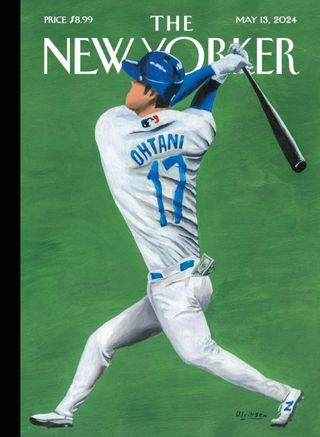

Bu hikaye The New Yorker dergisinin May 20, 2024 baskısından alınmıştır.
Binlerce özenle seçilmiş premium hikayeye ve 9.000'den fazla dergi ve gazeteye erişmek için Magzter GOLD'a abone olun.
Zaten abone misiniz? Oturum aç
The New Yorker'den DAHA FAZLA HİKAYE
The New Yorker
DEPT. OF ETCHING
One recent weekday morning, the British painter Peter Doig arrived at a bonded warehouse—a cavernous brick building—about a mile south of the River Thames, but not subject to the import taxes of the United Kingdom.

3 mins
January 19, 2026

The New Yorker
SUBWAY VIGILANTE
Revisiting the New York shooting that defined an era
17 mins
January 19, 2026

The New Yorker
MOM AND DAD: THE PERFORMANCE REVIEW
Mom, Dad, thanks for being on time this year. Dad, I can see by your T-shirt that it was a challenge. So you've already exceeded expectations.
3 mins
January 19, 2026
The New Yorker
Patrick Radden Keefe on Truman Capote's “In Cold Blood”
In 1972, on “The Tonight Show,” Johnny Carson asked Truman Capote about capital punishment. Capote had written, in unsettling detail, about the hanging of two killers, Dale Hickock and Perry Smith. Carson said, of the death penalty, “As long as the people don't have to see it, they seem to be all for it”; if executions occurred “in the public square,” Americans might stop doing them. Capote wasn't so sure. His hands laced together professorially, he murmured, in his baby-talk drawl, “Human nature is so peculiar that, really, millions of people would watch it and get some sort of vicarious sensation.”
3 mins
January 19, 2026
The New Yorker
BOOTS ON THE GROUND
There aren't many moments in Donald Trump's political career that could be called highlights.
4 mins
January 19, 2026

The New Yorker
CALL OF THE WILD
When calamity strikes in America's busiest national park, who comes to the rescue?
35 mins
January 19, 2026

The New Yorker
UNDER THREAT
The Danes were America's most loyal ally. Now they feel targeted—and terrified.
22 mins
January 19, 2026

The New Yorker
CONTAGION
A Broadway revival of Tracy Letts's “Bug.”
6 mins
January 19, 2026

The New Yorker
ANNALS OF TECHNOLOGY: HEY THERE!
How WhatsApp took over the global conversation.
25 mins
January 19, 2026
The New Yorker
M.I.P. IN CHAINS
Whatever else you think about invading a country and capturing its President, there's no getting around the inconvenience of imprisoning Nicolás Maduro in New York City.
7 mins
January 19, 2026
Listen
Translate
Change font size