Denemek ALTIN - Özgür
BOOKS - FORGET IT
The New Yorker
|May 20, 2024
A neuropsychologist says that we're thinking about memory all wrong.

Can Forgetting Help You Remember?
Four times a year, I attend the Yizkor service at synagogue. Yizkor in Hebrew denotes “remembrance,” and the official name of the service, Hazkarat Neshamot, means a “remembering of souls.” During the service, I call to mind loved ones who have died—parents, grandparents, uncles, aunts, close friends—reliving shared times that were cherished, and some that were fraught. I think about what I learned from these people, several of whom were in my life from my first moments of awareness. I recall being taught to swim by my father, hearing my pious Russian grandmother’s tearful account of the Kishinev pogrom, standing by my father’s bedside as a medical student in an underequipped community hospital as he suffered a fatal heart attack. The Yizkor service at my synagogue ends with the Kaddish, the mourner’s prayer, and with a call to perform deeds of loving-kindness in memory of the departed.
Many religions and cultures have rituals structured around remembrance, a fact that suggests how central the ability to remember is to our sense of self, both as individuals and as communities. But how accurate are our memories, and in what ways do they truly shape us? And why does some of what we remember come to us easily, even unbidden, while other things remain maddeningly just out of reach, seeming to slip even further away the more we struggle to summon them?
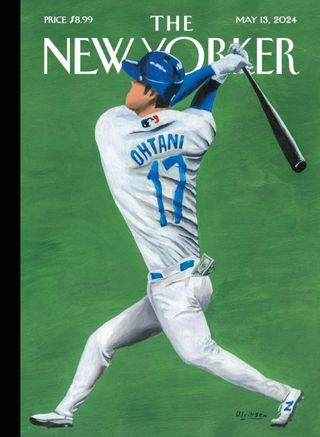

Bu hikaye The New Yorker dergisinin May 20, 2024 baskısından alınmıştır.
Binlerce özenle seçilmiş premium hikayeye ve 9.000'den fazla dergi ve gazeteye erişmek için Magzter GOLD'a abone olun.
Zaten abone misiniz? Oturum aç
The New Yorker'den DAHA FAZLA HİKAYE
The New Yorker
DEPT. OF ETCHING
One recent weekday morning, the British painter Peter Doig arrived at a bonded warehouse—a cavernous brick building—about a mile south of the River Thames, but not subject to the import taxes of the United Kingdom.

3 mins
January 19, 2026

The New Yorker
SUBWAY VIGILANTE
Revisiting the New York shooting that defined an era
17 mins
January 19, 2026

The New Yorker
MOM AND DAD: THE PERFORMANCE REVIEW
Mom, Dad, thanks for being on time this year. Dad, I can see by your T-shirt that it was a challenge. So you've already exceeded expectations.
3 mins
January 19, 2026
The New Yorker
Patrick Radden Keefe on Truman Capote's “In Cold Blood”
In 1972, on “The Tonight Show,” Johnny Carson asked Truman Capote about capital punishment. Capote had written, in unsettling detail, about the hanging of two killers, Dale Hickock and Perry Smith. Carson said, of the death penalty, “As long as the people don't have to see it, they seem to be all for it”; if executions occurred “in the public square,” Americans might stop doing them. Capote wasn't so sure. His hands laced together professorially, he murmured, in his baby-talk drawl, “Human nature is so peculiar that, really, millions of people would watch it and get some sort of vicarious sensation.”
3 mins
January 19, 2026
The New Yorker
BOOTS ON THE GROUND
There aren't many moments in Donald Trump's political career that could be called highlights.
4 mins
January 19, 2026

The New Yorker
CALL OF THE WILD
When calamity strikes in America's busiest national park, who comes to the rescue?
35 mins
January 19, 2026

The New Yorker
UNDER THREAT
The Danes were America's most loyal ally. Now they feel targeted—and terrified.
22 mins
January 19, 2026

The New Yorker
CONTAGION
A Broadway revival of Tracy Letts's “Bug.”
6 mins
January 19, 2026

The New Yorker
ANNALS OF TECHNOLOGY: HEY THERE!
How WhatsApp took over the global conversation.
25 mins
January 19, 2026
The New Yorker
M.I.P. IN CHAINS
Whatever else you think about invading a country and capturing its President, there's no getting around the inconvenience of imprisoning Nicolás Maduro in New York City.
7 mins
January 19, 2026
Listen
Translate
Change font size