Denemek ALTIN - Özgür
Reviving South Africa's grasslands
Farmer's Weekly
|October 10-17, 2025
Eastern Cape villagers explain the challenges they face when it comes to rangeland degradation to Mhlangabezi Slayi, a research fellow for the Centre for Global Change at the University of Fort Hare.
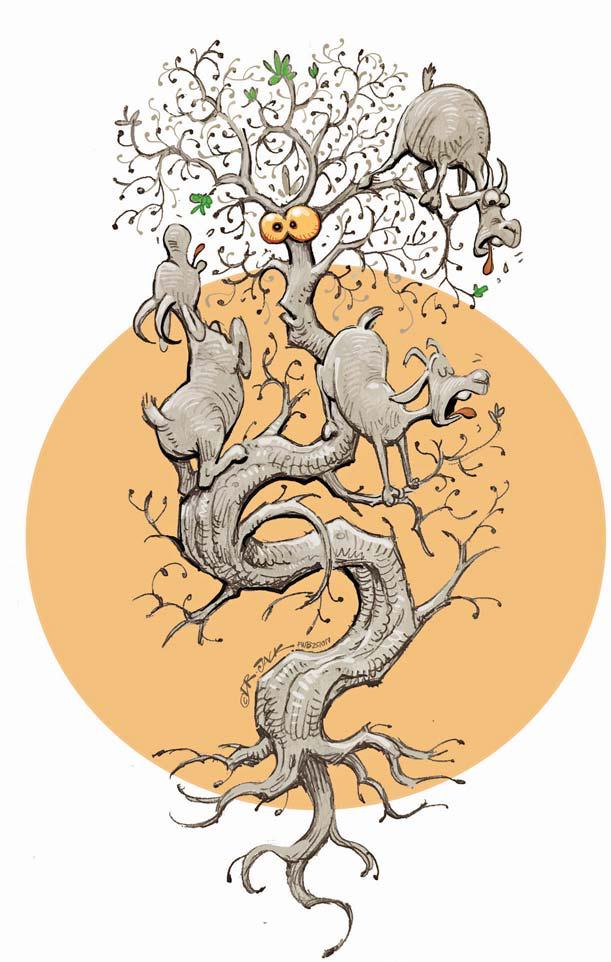
South Africa's Eastern Cape province has several million hectares of open land in rural areas, not privately owned but held in trust by the state on behalf of communities. The people who live there use it mainly for grazing livestock, subsistence farming and sometimes hunting.
A common misperception is that the grassy, rolling hills will take care of themselves. But these rangelands degrade for many reasons, making them unusable for the small-scale and landless farmers who need communal land for their animals.
Agricultural scholar Mhlangabezi Slayi researches practical ways of preserving rangeland ecosystems so that farmers can continue to graze livestock there. In his latest study, he worked with 150 people from rural Eastern Cape villages to find out how they planned to restore the rangelands closest to them.
WHAT ARE THE EASTERN CAPE RANGELANDS?
The Eastern Cape has extensive communal rangelands made up of grasslands, shrubs and scattered trees. These areas form the backbone of rural life. They provide grazing for cattle, sheep and goats, which some families rely on for milk, meat and income. People also gather fuelwood, medicinal plants and building materials from these rangelands.
Altogether, communal rangelands in the Eastern Cape cover more than seven million hectares, an area roughly the size of Ireland or Sierra Leone. In many rural villages, over 80% of households depend directly on these lands for their daily survival. They serve not only as grazing fields but also as social and cultural spaces integral to people's identities and traditions.
WHAT'S GONE WRONG?
The rangelands in the Eastern Cape are not as self-sustaining as many assume. They suffer from degradation caused by a combination of natural and human pressures.

Bu hikaye Farmer's Weekly dergisinin October 10-17, 2025 baskısından alınmıştır.
Binlerce özenle seçilmiş premium hikayeye ve 9.000'den fazla dergi ve gazeteye erişmek için Magzter GOLD'a abone olun.
Zaten abone misiniz? Oturum aç
Farmer's Weekly'den DAHA FAZLA HİKAYE

Farmer's Weekly
Cash flow budgets: keeping farmers in control of liquidity, risk, and their survival
Profit doesn't guarantee a farm's survival - cash does. Cobus du Plessis explains why cash flow budgets are one of the most important yet underused financial tools on South African farms.

5 mins
February 27 - March 06, 2026

Farmer's Weekly
The toast of the Navy
The incredible story of the World War II-era Great Dane dog Nuisance being enlisted in the Royal Navy is well documented. Graham Jooste shared some entertaining anecdotes involving the canine shipmate.
6 mins
February 27 - March 06, 2026
Farmer's Weekly
Healthier soils deter destructive locusts
Locust swarms remain a serious global threat, capable of devastating crops, livelihoods and local economies across vast regions.
1 min
February 27 - March 06, 2026
Farmer's Weekly
Wheat crisis dominates Grain SA regional meetings
As the ongoing wheat crisis continues to erode producers' margins, emotions ran high at Grain SA's regional meeting in Moorreesburg in the Western Cape.
2 mins
February 27 - March 06, 2026

Farmer's Weekly
A FARMER'S EXPERIENCE
Street Wallet has been a game-changer for Mario Athanasopoulos, hydroponic production consultant and owner of Green City Farms.
1 mins
February 27 - March 06, 2026
Farmer's Weekly
Kesieberg Merino Stud Production Sale
The Kesieberg Merino Stud Production Sale was held on the farm Leeuwfontein on 4 February on behalf of Willie and Herman Henning.
1 min
February 27 - March 06, 2026
Farmer's Weekly
Not cheaper, just different: what you should know about farming in Mozambique
Although Mozambique is often viewed as a cheaper, easier farming location than South Africa, cost comparisons tell a more complex story. But while cross-border production presents real challenges, it also offers opportunities for complementary trade, diversification and regional food security, particularly when it comes to subtropical crops such as bananas.
10 mins
February 27 - March 06, 2026
Farmer's Weekly
The all-rounder anchoring South Africa's beef value chain
Louis Steyl, CEO of the Bonsmara Cattle Breeders' Society of South Africa, spoke to Octavia Avesca Spandiel about how the versatile Bonsmara breed anchors the country's beef value chain, delivering balanced performance, reproductive and feed efficiency, and carcass traits across extensive and intensive systems.
6 mins
February 27 - March 06, 2026

Farmer's Weekly
THE HITCHING POST
I'm a 60-year-old white woman who loves camping, animals, the outdoors, and watching sport.
2 mins
February 27 - March 06, 2026
Farmer's Weekly
Foot-and-mouth disease in pigs
Recently, the radio news mentioned an outbreak of foot-and-mouth disease (FMD) in pigs in South Africa.
2 mins
February 27 - March 06, 2026
Listen
Translate
Change font size