Denemek ALTIN - Özgür
A shorter growth cycle for higher lettuce profits
Farmer's Weekly
|November 25, 2022
Lettuce is beholden to an inconsistent market, with demand often dependent on the weather. Sustainable production therefore requires careful management of supply and demand. Equally important, as farmer Jakkie Mellet explained to Lindi Botha, is a shorter, more productive, growth cycle.

Sterkspruit farm, near Lydenburg in Mpumalanga, is situated at the very top of Long Tom Pass, 2 150m above sea level. Its position holds significant benefits for owner Jakkie Mellet: it is isolated from other farms, keeping it relatively safe from the potential spread of pests and diseases, and it is often wreathed in mist, which creates a microclimate ideal for the farm’s potato seed production.
On the other hand, the rocky nature of the land, being on the mountain top, means that only a fraction of the property can be cultivated.
Faced with this dilemma, Mellet sought alternative crops that could complement his potato seed operation. Cherries, berries and kiwi fruit were all considered, but only the last was feasible. Then, three years ago, he was approached by Woolworths to produce lettuce during the hotter summer months, when most of the retailer’s usual suppliers around Gauteng stop production. “Lettuce is a cool-weather crop and it likes mild summer temperatures,” explains Mellet. “Farmers who typically deliver to Woolworths can keep up production in winter, but the summers are too hot, as the lettuce bulks up and starts to seed.
“Climate plays a crucial role in lettuce production, and it just so happens that the climate for potato seed production is also suited to growing lettuce: high altitude and high rainfall.”
Sterkspruit has annual rainfall of 950mm, mostly in summer. Summer temperatures peak around 30°C because of the farm’s position on top of the mountain. Moreover, the cold air travels down, keeping the evenings warm enough for production.


Bu hikaye Farmer's Weekly dergisinin November 25, 2022 baskısından alınmıştır.
Binlerce özenle seçilmiş premium hikayeye ve 9.000'den fazla dergi ve gazeteye erişmek için Magzter GOLD'a abone olun.
Zaten abone misiniz? Oturum aç
Farmer's Weekly'den DAHA FAZLA HİKAYE

Farmer's Weekly
More about growing vegetable seedlings in trays
By considering various factors and tailoring care to specific vegetable needs, you can produce healthy, robust seedlings ready for transplanting into the garden, writes Shane Brody.

2 mins
March 27 - April 3, 2026

Farmer's Weekly
Prodigy of agriculture and land is now a presidential envoy
Wandile Sihlobo will be armed by state powers to accelerate any decision-making that the Presidency deems crucial to grow the sectors of agriculture and land
2 mins
March 27 - April 3, 2026

Farmer's Weekly
Notes from the Western Cape agricultural roadshow
We spent time last week engaging with agribusinesses and farmers in the Western Cape. The primary agricultural focus of the province is various fruits, citrus, table grapes, wine, wheat, barley, livestock, and aquaculture, among many value chains.
3 mins
March 27 - April 3, 2026

Farmer's Weekly
AGOA's promise fades under new US tariffs
Although the African Growth and Opportunity Act has been extended for another year, new US reciprocal tariffs have largely erased its duty-free benefits. Recent modelling shows sharp declines in African exports to the US, particularly in apparel-dependent economies such as Lesotho and Madagascar.
4 mins
March 27 - April 3, 2026
Farmer's Weekly
Egon Zunckel: a lifetime of learning from the soil
The Zunckel name is synonymous with no-till farming in South Africa. Egon Zunckel, a pioneer in the field and a passionate advocate for soil health, shared with Lindi Botha the lessons he has learnt over the years about building resilient soils and sustainable farming systems.
10 mins
March 27 - April 3, 2026
Farmer's Weekly
Researchers explore new tools to combat herbicide resistance
Research by students from Stellenbosch University aimed at combatting herbicide resistance was highlighted during a recent technical trial information day hosted by the Western Cape Department of Agriculture.
6 mins
March 27 - April 3, 2026

Farmer's Weekly
Lepas leaps into South Africa as the latest Chery-owned brand
Lepas has become Chinese carmaker Chery's latest local subbrand with the introduction of the L4 compact SUV. The Citizen's Charl Bosch reports.
2 mins
March 27 - April 3, 2026
Farmer's Weekly
La Rhone Limousins: a small mixed herd turned renowned stud
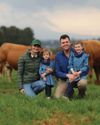
The Western Cape is not typically known for cattle farming, particularly in its fruit-growing regions. Yet nestled among the orchards below the mountains of Tulbagh is a Limousin stud that has made a name for itself. AJ du Toit of La Rhone Limousins spoke to Henning Naudé about producing high-quality genetics now found on farms in all nine provinces.
6 mins
March 27 - April 3, 2026
Farmer's Weekly
Nitrogen: no easy fix
Products that claim to herald a nitrogen revolution that will boost global food production are nothing more than snake oil, say scientists.
4 mins
March 27 - April 3, 2026

Farmer's Weekly
Potato soup
Rich, creamy, and indulgent, this soup is the ultimate in comfort food.
1 mins
March 27 - April 3, 2026
Translate
Change font size