Denemek ALTIN - Özgür
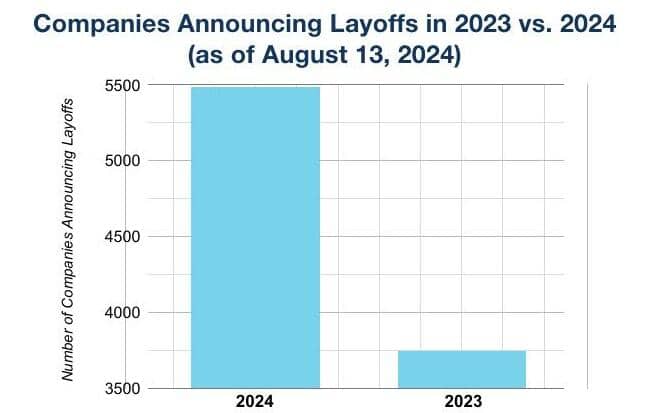
The Ripple Effect Of Recent Layoffs
DataQuest
|september 2024
The recent wave of layoffs across various industries has sent shockwaves through the global workforce. From tech giants to traditional corporations, companies have been forced to downsize in response to economic challenges, market shifts, and technological advancements. This article delves into the far-reaching implications of these layoffs, examining their impact on individuals, communities, and the broader economy, with a particular focus on how these trends are reshaping engineering education.

THE HUMAN TOLL
The most immediate and devastating consequence of layoffs is the personal impact on individuals and their families. losing a job can lead to:
Financial Hardship: Job loss often results in a sudden loss of income, making it difficult to meet basic needs like housing, food, and healthcare.
Emotional Distress: Layoffs can trigger feelings of anxiety, depression, anger, and loss of self-esteem.
Social Isolation: Unemployment can lead to social isolation and a sense of disconnection from the community.
As Harikrishna Khandavilli, Head of Engineering at Continental Automotive India, emphasizes, “Uncertainty can increase the pressure on a student, can definitely diminish motivation. Self-care, focusing on a healthy lifestyle prioritizing one’s health is more important than anything else.”
COMMUNITY AND ECONOMIC IMPACTS
Layoffs also have significant implications for communities and the broader economy:
Reduced Consumer Spending: When people lose their jobs, they tend to reduce their spending. This can have a ripple effect on local businesses, leading to decreased sales and potential closures.
Increased Homelessness: Unemployment can contribute to increased homelessness as individuals struggle to afford housing.
Strain on Social Services: Local governments may experience increased demand for social services like food banks and unemployment assistance.
Economic Downturn: Mass layoffs can contribute to a broader economic downturn, as reduced consumer spending and business activity can slow growth.

Bu hikaye DataQuest dergisinin september 2024 baskısından alınmıştır.
Binlerce özenle seçilmiş premium hikayeye ve 9.000'den fazla dergi ve gazeteye erişmek için Magzter GOLD'a abone olun.
Zaten abone misiniz? Oturum aç
DataQuest'den DAHA FAZLA HİKAYE

DataQuest
Engineering India's Al-First Data Centres at Hyperscale
Rohan Sheth explains how AI and HPC are reshaping India's data centres, from density and cooling to power economics, sustainability, and hyperscale decision criteria.

4 mins
February 2026

DataQuest
From copilots to colleagues: Why agentic AI is forcing enterprises to rethink control, trust, and culture
As AI agents shift from assisting to acting, enterprises must redesign governance, data controls, and security guardrails so autonomy stays auditable, reversible, and trusted.
2 mins
February 2026

DataQuest
Reclaiming Control in the AI Era: A Conversation with Kalyan Kumar, CPO, HCLSoftware
Enterprises are reassessing cloud-first strategies as AI becomes core to operations. HCLSoftware's Kalyan Kumar explains why sovereignty, choice and control now shape decisions.
5 mins
February 2026

DataQuest
When infrastructure learns: The rise of the Al-native core
AI-native infrastructure is moving from concept to operational reality, reshaping how organisations build, govern, and scale intelligence across their digital core.
6 mins
February 2026

DataQuest
Bridging the gap between connectivity and compute at scale
As AI scales in India, data centres are evolving into high-density, low-latency platforms that unify connectivity, compute, and sustainability at national scale.
4 mins
February 2026

DataQuest
PUE is not a grapefruit metric, anymore
So what are the new high-hanging fruits for data centre strategists today? And are players going after them?
4 mins
February 2026

DataQuest
Even if Al demand fades, India need not worry - about data centres
For every megawatt (MW) of installed colocation capacity, users here generate approximately 13.2 PB of data monthly- compared to 0.3 PB for Australia and just 0.01 PB for Singapore. India's data centre growth is not dependent on one tech lever. Plus, it is phased and modular and not kneejerk. Manoj Paul explains these contours in detail.
7 mins
February 2026

DataQuest
AI infrastructure and systemic risk
What has been the biggest change in data centre industry-specially after AI workloads? Is Al-bubble a big risk for data centre infra- how much will it affect data centres if something cracks?
1 min
February 2026

DataQuest
Inside the Shift to High-Density, Al-Ready Data Centres
CtrlS' Vipin Jain discusses what it truly takes to build AI-ready data centres in India, balancing high density, liquid-ready cooling, resilience, and ESG accountability.
4 mins
February 2026

DataQuest
Sustainability is now the headline, not a footnote
Sanjay Agrawal, Head Presales and CTO at Hitachi Vantara India and SAARC opines that the conversation is moving beyond headline metrics like PUE toward a broader view of how data lifecycle management and infrastructure efficiency reduce the overall environmental footprint. Let's see why and how- while also touching upon adjacent (or not-so-adjacent) factors like redundancies, availability and AI-readiness
3 mins
February 2026
Listen
Translate
Change font size