
Magzter GOLD ile Sınırsız Olun
Sadece 9.000'den fazla dergi, gazete ve Premium hikayeye sınırsız erişim elde edin
Denemek ALTIN - Özgür
Rise of Chinese companies in global medtech sector
BioSpectrum Asia
|BioSpectrum Asia May 2025
The global medical technology (medtech) sector is undergoing a profound transformation, driven significantly by the rapid and strategic ascent of Chinese companies. The long-held narrative of China solely as a manufacturer of low-cost goods is dangerously outdated. Today, Chinese medtech firms are not merely competing on the global stage; they are increasingly setting the pace in innovation, enhancing product quality, and expanding their international reach. This shift necessitates a strategic reassessment by established players and presents both significant opportunities and complex challenges for the entire healthcare ecosystem. This article dissects the key drivers behind China's medtech surge, analyses their global expansion strategies, evaluates their competitive positioning, and provides an outlook on the future landscape.

China's impact on the global medtech trade is undeniable. From accounting for less than 3 per cent of global trade in medtech products in 2000, China's share exploded to 12.4 per cent by 2021, representing nearly $40 billion in exports. This surge coincides with a decline in the market share of traditional leaders like the United States. Domestically, China's medical device market has become the world's second-largest, supported by over 32,000 medical device manufacturers generating approximately $160 billion by the end of 2023. This phenomenal growth isn't accidental; it's the result of a deliberate national strategy coupled with dynamic market forces.
Key drivers fueling China's medtech rise
Several interconnected factors are propelling Chinese medtech companies onto the global stage:
1. Strategic government orchestration: The Chinese government plays a pivotal role through ambitious industrial policies like "Made in China 2025", which explicitly prioritises the medtech sector. This policy aims for high levels of domestic production (70 per cent for mid-to-high-end devices by 2025) and seeks to cultivate globally competitive champions. Support mechanisms are extensive, including substantial financial incentives (direct subsidies, tax breaks - like the 100 per cent super tax deduction for R&D costs, below-market loans), preferential procurement policies ("Buy China" initiatives potentially offering price advantages for domestic goods), streamlined regulatory pathways for innovative devices, and active export promotion. Government support for listed medtech firms, as a percentage of revenue, significantly outpaces that in Organisation for Economic Co-operation and Development (OECD) countries.
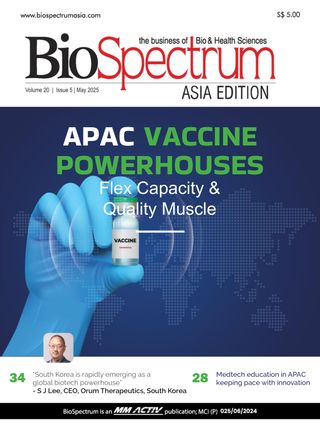

Bu hikaye BioSpectrum Asia dergisinin BioSpectrum Asia May 2025 baskısından alınmıştır.
Binlerce özenle seçilmiş premium hikayeye ve 9.000'den fazla dergi ve gazeteye erişmek için Magzter GOLD'a abone olun.
Zaten abone misiniz? Oturum aç
BioSpectrum Asia'den DAHA FAZLA HİKAYE
BioSpectrum Asia
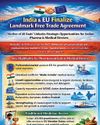
India–EU FTA Paves Way for Expanded Healthcare Trade
On January 27, 2026, after years of negotiations, India and the European Union announced a landmark Free Trade Agreement.

4 mins
BioSpectrum Asia March 2026
BioSpectrum Asia
PreferCo and Glatt to open CoE for precision fermentation bioprocess scale-up in India
In a major boost to Government of India's BioE3 push, German major Glatt and India-based startup PreferCo have announced the launch of \"PreferCo-Glatt Centre of Excellence (CoE) for Bioprocess Scale-Up\" in Hyderabad's Genome Valley.
1 min
BioSpectrum Asia March 2026

BioSpectrum Asia
Women's Health Surge in APAC
The rising burden of diseases such as ovarian cancer, breast cancer, cervical cancer, infertility, etc. is emerging as the key driver of the women's healthcare market across the globe. While North America led the women healthcare market in 2025, Asia Pacific (APAC) is expected to witness the fastest growth this year onwards. As a result, governments across the APAC region, are recognising the importance of women's health and are launching initiatives, particularly under female leaders, to improve access to healthcare services. Moreover, a number of women-led startups are now developing new solutions to address this growing burden of women-associated diseases in the APAC region. Let's take a closer look.
6 mins
BioSpectrum Asia March 2026

BioSpectrum Asia
Hanchor Bio receives US FDA Orphan Drug Designation for HCB101 in gastric cancer
Taiwan-based biotech startup HanchorBio, Inc. has announced that the US Food and Drug Administration (FDA) has granted Orphan Drug Designation (ODD) to HCB101 for the treatment of gastric cancer.
1 min
BioSpectrum Asia March 2026

BioSpectrum Asia
Daiichi Sankyo names Dr John Tsai as Global Head of R&D
Japan-based Daiichi Sankyo Company has appointed Dr John Tsai to succeed Dr Ken Takeshita, who is stepping down as Global Head of R&D, effective April 1, 2026.
1 min
BioSpectrum Asia March 2026

BioSpectrum Asia
"The global trend is moving beyond centralised hubs toward distributed networks and domestic capability"
King Faisal Specialist Hospital & Research Centre (KFSHRC) and US-based Germfree Laboratories have announced a strategic partnership to develop Saudi Arabia's first fully integrated, modular Advanced Therapy Medicinal Product (ATMP) Manufacturing Campus.
4 mins
BioSpectrum Asia March 2026

BioSpectrum Asia
SEOUL'S RISKY DRUG PRICING RESET
Drug pricing has once again moved to the centre of policy debate in South Korea, with the government recently stepping back from its proposed generic drug pricing reform.
2 mins
BioSpectrum Asia March 2026

BioSpectrum Asia
Takeda and Iambic sign $1.7 B deal to advance AI driven design of small molecules
Iambic, a US-based clinical-stage life science and technology company developing novel medicines using its artificial intelligence (AI)-driven discovery and development platform, has announced a multi-year technology and discovery collaboration agreement with Japan-based Takeda Pharma that will use Iambic's industry leading AI drug discovery models to advance a select set of high-priority small molecule programmes, initially in Takeda's Oncology and Gastrointestinal and Inflammation therapeutic areas.
1 min
BioSpectrum Asia March 2026

BioSpectrum Asia
S.Biomedics announces partnership with Catalent to develop and manufacture TED-A9
US-based Catalent and South Korea-based S.Biomedics have announced a strategic partnership to support the development and manufacturing of TED-A9, S.Biomedics' allogeneic pluripotent stem-cell-derived ventral midbrain-specific dopaminergic precursor cell therapy being developed for the treatment of Parkinson's disease.
1 min
BioSpectrum Asia March 2026
BioSpectrum Asia
China revises drug administration regulations to spur innovation
China has revised regulations concerning drug administration in a bid to promote drug innovation, strengthen management of online sales of medicines and reinforce drug safety supervision.
1 min
BioSpectrum Asia March 2026
Listen
Translate
Change font size