Denemek ALTIN - Özgür
Enhancing shrimp production with pre-, pro- or postbiotics
AgroSpectrum
|August 2025
The animal feed industry has long explored the benefits of yeast and bacteria - either as parts or in their complete form - to enhance animal production. Since the 1960s, probiotics and prebiotics have been primarily used to improve performance, such as live yeast supplementation to boost milk production in dairy cows, or mitigate the effects of many pathogens; for instance, β-glucans stimulate macrophage phagocytic activity or mannan oligosaccharides (MOS) agglutinating type I fimbriae bacteria to prevent their adhesion to intestinal cells.
-
However, over the past decade, the potential of fermented yeast and bacteria, known as postbiotics, has been more fully understood. While prebiotics and probiotics generally have a specific or limited range of functions, postbiotics offer a broad spectrum of benefits that contribute to the overall well-being, immunity, and resilience of animals.
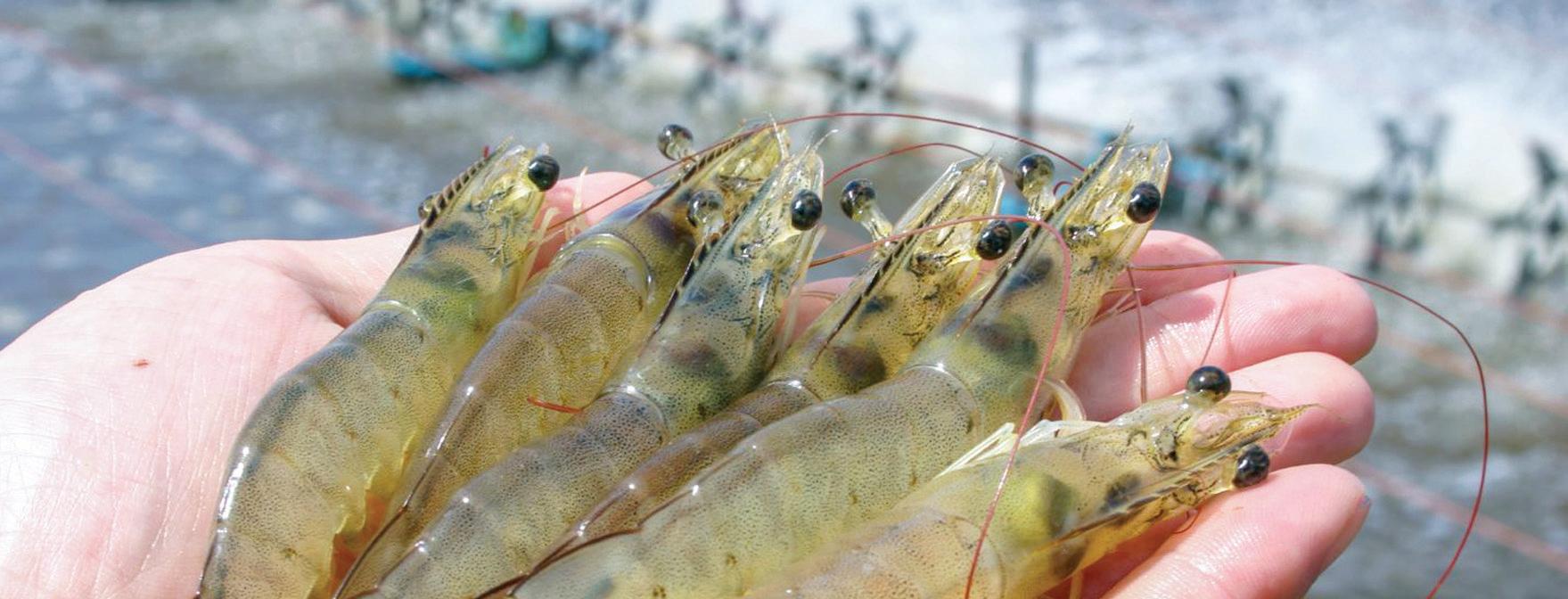
This article aims to provide a comprehensive understanding of the differences between prebiotics, probiotics, and postbiotics. The distinction between postbiotics from yeast and from bacteria is described. Some recent data on the effect of Lactobacillus rhamnosus and L. farciminis postbiotics on the performance, immune parameters and agglutination of Vibrio in white shrimp are described.
Definitions and modes of actions of prebiotics, probiotics, and postbiotics
The term prebiotic was introduced by Gibson and Roberfroid (1995), who defined prebiotics as "a nondigestible food ingredient that beneficially affects the host by selectively stimulating the growth and/or activity of one or a limited number of bacteria in the colon."
Prebiotics are often parts of or complete cell membranes of non-eukaryotic cells. Examples include fructooligosaccharides (FOS), galactooligosaccharides (GOS), mannan oligosaccharides (MOS), β-glucans, peptidoglucans, inulin, etc. Prebiotics are mostly produced by growing a microorganism in large quantities and then using enzymes to cut off certain parts. There is little fermentation activity in this process. Probiotics are beneficial microorganisms that support gut health by competing with harmful bacteria, strengthening the gut barrier, and producing antimicrobial compounds. They enhance digestion, immunity, and metabolism, influencing the gut-brain axis and detoxifying harmful substances.
Some of the most commonly used probiotics in animals are Lactobacillus and

Bu hikaye AgroSpectrum dergisinin August 2025 baskısından alınmıştır.
Binlerce özenle seçilmiş premium hikayeye ve 9.000'den fazla dergi ve gazeteye erişmek için Magzter GOLD'a abone olun.
Zaten abone misiniz? Oturum aç
AgroSpectrum'den DAHA FAZLA HİKAYE
AgroSpectrum
Gearing Up for Resilient Kharif 2026 Season
As India approaches the Kharif 2026 season, its agricultural narrative reflects a measured evolution-from the imperatives of food security to a more refined emphasis on nutrient resilience and ecological balance. The past year reveals a supply chain growing increasingly nimble amid global uncertainty. Urea, the system's backbone, saw requirements exceed 100 LMT in Kharif 2025 and rise further to 156.80 LMT in Rabi 2025-26, supported by steady domestic output. This stability sustained productivity across key agrarian centres such as Madhya Pradesh and Maharashtra, even as DAP availability tightened during Kharif.

5 mins
AgroSpectrum India May 2026

AgroSpectrum
"We aim to expand climate-aligned infrastructure in communities where regular sourcing relationships already exist"
In an exclusive AgroSpectrum interview with Rajesh Jain, Co-founder of Ayekart and Ayekart RISE Foundation, the SUGAM-CSS programme is highlighted as a strategic extension of the foundation's mission to reduce post-harvest losses and strengthen rural livelihoods through renewable energy-powered micro cold storage.
4 mins
AgroSpectrum India May 2026

AgroSpectrum
How Women Are Reshaping India's Agri Value Chain
Despite comprising nearly 80 per cent of the agricultural workforce in several Indian states, participation of women has historically been concentrated at the labour end: sowing, weeding, harvesting, often as unpaid family workers with little say in what is grown, where it is sold, or at what price. That script is now being rewritten. Across the country, a shift is underway from women as farm labour to women as agripreneurs, enterprise managers, and value-chain decision-makers. What makes this shift different from earlier empowerment narratives is that it is increasingly driven, not by welfare alone, but by institutional design, market infrastructure and technology.
3 mins
AgroSpectrum India May 2026

AgroSpectrum
"AI-based analytics, predictive maintenance, IoT-enabled equipment, and high-efficiency process control are shaping the industry"
Bühler India is known for its technological innovation and sustainability within the Bühler Group's global operations since its inception in 1993.
4 mins
AgroSpectrum India May 2026

AgroSpectrum
"We leverage digitised workflow data to streamline access to financing, making it faster and more transparent"
In an exclusive AgroSpectrum interview, Deepak Gandhi, Director - Exports & Pre-Shipment at Drip Capital, highlights how invoice financing bridges the structural working capital gap faced by India’s seafood exporters by unlocking up to 80% of receivables quickly, enabling continuous operations.
4 mins
AgroSpectrum India May 2026

AgroSpectrum
How Artificial Intelligence Is Transforming Global Food Systems
Recently, I was watching a documentary with my children about leafcutter ant colonies when my ears perked up as the narrator described the ants as farmers.
3 mins
AgroSpectrum India May 2026

AgroSpectrum
How India's Climate and Farm Economy Are Rewriting the Science of Single Malt Whisky
India's single malt whisky boom is often framed through the lens of global awards, premiumisation, and export ambition. But the real story is unfolding far from tasting rooms and distillery tours. It begins in the fields, where barley, long treated as a modest winter crop, is being quietly repositioned as the foundation of a high-value, globally competitive industry.
4 mins
AgroSpectrum India May 2026
AgroSpectrum
India's Acreage vs. Efficiency Conundrum
While India's total geographical area is 328 million hectare, approximately 145 million hectare is actually cultivable.
6 mins
AgroSpectrum India May 2026

AgroSpectrum
Gearing Up for Resilient Kharif 2026 Season
As India approaches the Kharif 2026 season, its agricultural narrative reflects a measured evolution-from the imperatives of food security to a more refined emphasis on nutrient resilience and ecological balance.
5 mins
AgroSpectrum India May 2026
AgroSpectrum
Metal to Tech Leap: India's Digital Pivot
India's farm mechanisation sector is shifting from traditional metal-based machinery to digital technologies like IoT sensors, Al-driven precision tools, drones, and autonomous equipment, driven by labour shortages, sustainability needs, and government initiatives such as the Digital Agriculture Mission.
15 mins
AgroSpectrum India May 2026
Listen
Translate
Change font size