Denemek ALTIN - Özgür
THE LOST RAPTOR
BBC Wildlife
|September 2025
Rewilding projects are happening across the land, but there's one species on a quiet rewilding mission of its own
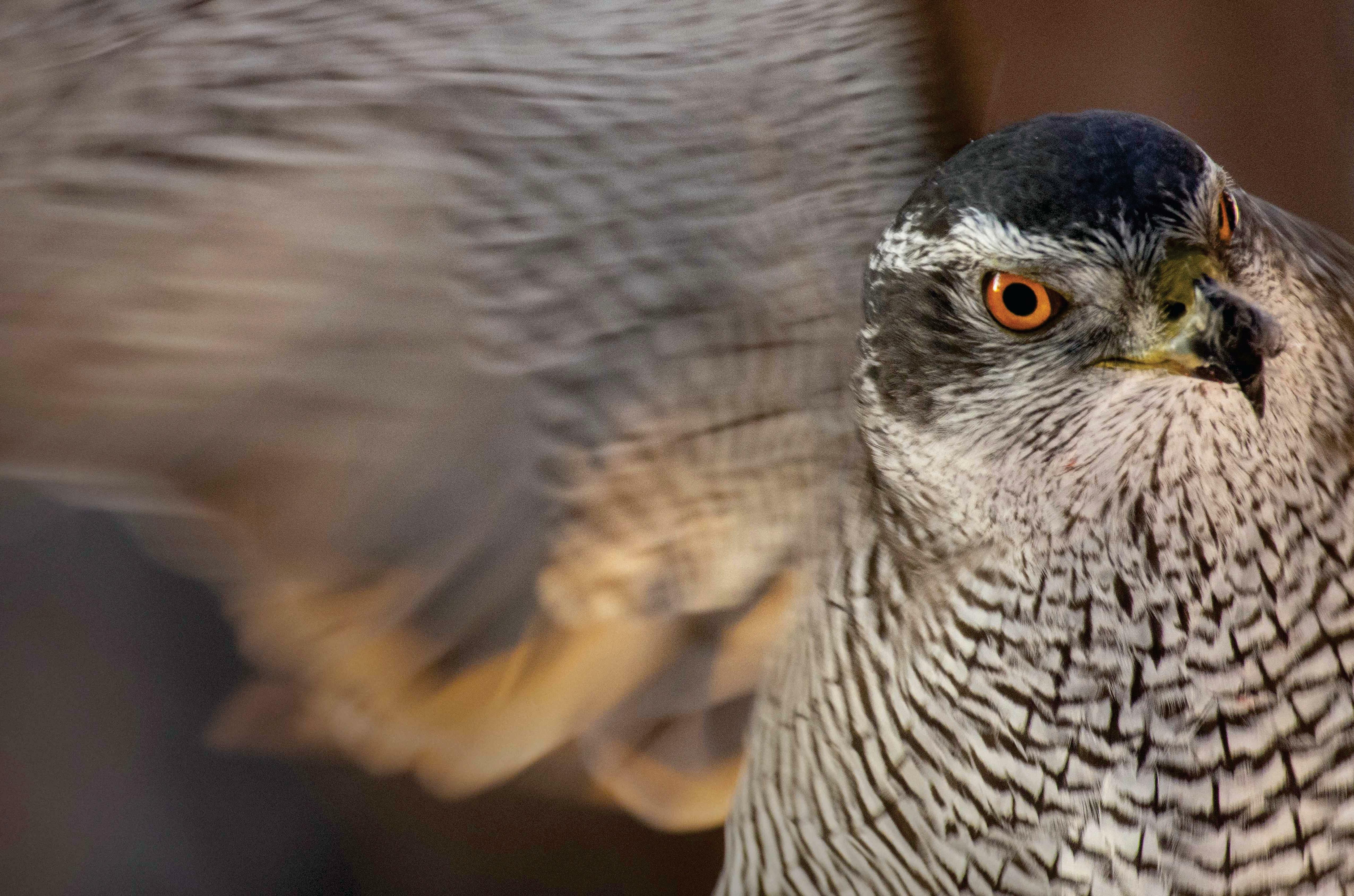
FOR AS LONG AS I COULD REMEMBER, the northern goshawk had been elusive, existing just at the edge of everything.
This ‘grey ghost’ haunted my imagination. In the early 1970s - which was just as I was beginning to fall in love with nature, and with birds of prey in particular – the goshawk made a clandestine return to Britain’s most remote forests. From the age of five I had a treasured possession, a Hamlyn paperback titled simply Birds of Prey, which highlighted these birds in all their wonderful variety. A pair of northern goshawks at their nest graced the front cover, glaring and red-eyed. It's clear that even in the company of other great raptors, this species, Astur gentilis, was always special.
Yet at the edge of things the goshawk would remain, the fabled 'phantom' apparently incapable of surviving outside those distant, undisturbed forests, on which, I was repeatedly told, it depended.
As I grew older, I searched those places whenever possible, particularly Kielder in Northumberland. Kielder is Europe's largest plantation of trees and a reputed goshawk stronghold, where the fugitive had established a reasonable population. I passed through many times and always stopped for a recce. I liked the idea that this forest held goshawks, even if I never saw them myself.
Then, one day in 2008, my horizons broadened. After a lifetime of estrangement, I finally came face to face with a goshawk. I was on a tall stepladder, peering into the dingy recesses of a junk warehouse in York. The unmistakeable glare of a goshawk greeted me from a glass case, and the surprise nearly knocked me off my perch.
Two years later, I finally encountered the real thing, in a small public park in east Berlin. This time, the goshawk was alive, vividly alive, even glowing, it seemed. The haunting had become a spell.

Bu hikaye BBC Wildlife dergisinin September 2025 baskısından alınmıştır.
Binlerce özenle seçilmiş premium hikayeye ve 9.000'den fazla dergi ve gazeteye erişmek için Magzter GOLD'a abone olun.
Zaten abone misiniz? Oturum aç
BBC Wildlife'den DAHA FAZLA HİKAYE
BBC Wildlife
"I was terrified the elephant would ram us"
African elephant in Kenya

2 mins
January 2026
BBC Wildlife
ALL YOU EVER NEEDED TO KNOW ABOUT THE Fennec fox
THE FENNEC FOX IS THE SMALLEST fox in the world, with a body length that can be as little as 24cm.
3 mins
January 2026
BBC Wildlife
INTO THE PLASTISPHERE
A unique synthetic ecosystem is evolving in our oceans – welcome to the plastisphere
7 mins
January 2026
BBC Wildlife
“More than half of all animal life exists in a parasitic relationship, and all life lives in symbiosis”
Our survival depends on species evolving to live together - but some relationships take dark turns
7 mins
January 2026
BBC Wildlife
Are animals able to dream?
SLEEP IS A MYSTERIOUS THING. FOR A long time, we weren't sure why we do it.
1 mins
January 2026
BBC Wildlife
Does a cuckoo know it's a cuckoo?
ABSURD LITTLE BIRDS ACROSS THE world lay their eggs in the nests of other species, leaving the hapless parents to raise a changeling at the expense of their own offspring.
2 mins
January 2026
BBC Wildlife
Orcas killing young sharks
Juvenile great whites are easy prey for orca pod
1 mins
January 2026
BBC Wildlife
Ocean goes on tour
Acclaimed film touring the UK, backed by live orchestra and choir
1 min
January 2026
BBC Wildlife
Feisty bats hunt like lions
Winged mammals use a 'hang and wait' strategy to take down large prey
1 mins
January 2026
BBC Wildlife
SNAP-CHAT
Richard Birchett on magical merlins, wily coyotes and charging deer
2 mins
January 2026
Listen
Translate
Change font size