
Magzter GOLD ile Sınırsız Olun
Sadece 9.000'den fazla dergi, gazete ve Premium hikayeye sınırsız erişim elde edin
SHAKE IT OFF
BBC Wildlife
|April 2025
When it comes to impressing the females, peacocks know how to put on a show
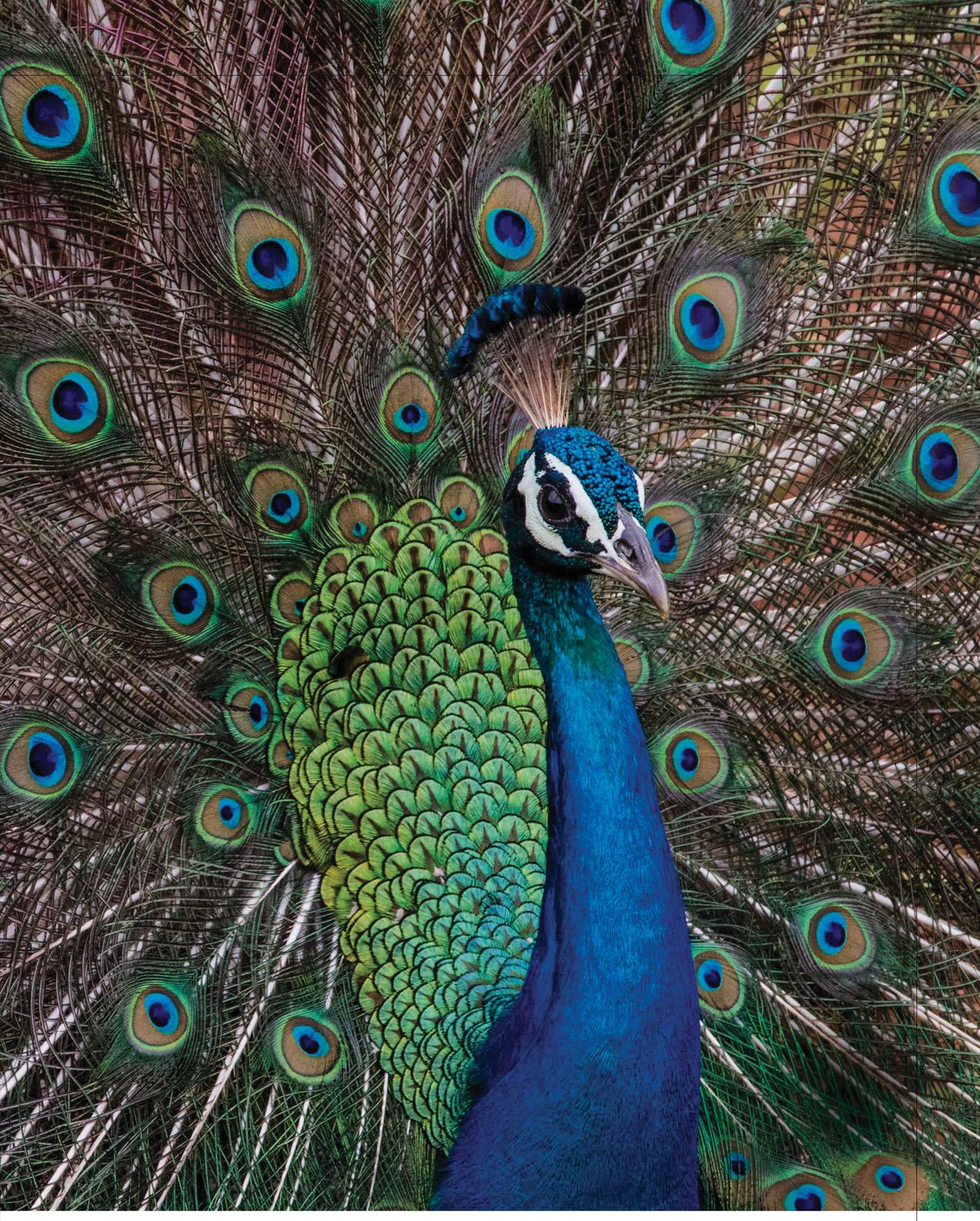
IF YOU WERE TO RANK THE 11,276 BIRDS currently known on Earth on a scale of recognisability, the Indian peafowl surely deserves a place in the top 10. In the wild, peafowl are found across most of the Indian subcontinent, including Sri Lanka. But thanks to widespread introductions across Europe, the Antipodes, the USA and South Africa, you might not have to travel too far to catch up with the males' extravagant looks and astonishing display.
Being a sexually dimorphic species, the males (peacocks) are very differently plumed to the females (peahens). Sporting an electric-blue neck and head, topped with a small crest, the male is best known for his impressive train, which extends for more than a metre beyond his rump.
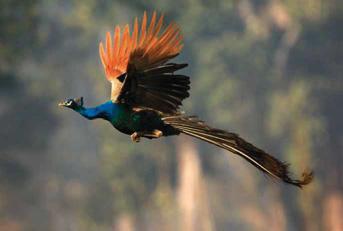 These plumes are only fully formed when the males reach sexual maturity, at around three years of age, and are in fact elongated upper tail covert feathers.
They contain a multitude of colourful eyespots and terminate in a distinctive fishtail. The males are still able to fly, despite the obvious encumbrance, but usually only do so when heading into their lofty tree-roosts at dusk.
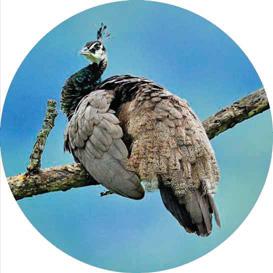
The females, in contrast, lack this elaborate accessory and are predominantly brown, which helps them to safely blend into their surroundings while incubating their clutches and rearing young.

Bu hikaye BBC Wildlife dergisinin April 2025 baskısından alınmıştır.
Binlerce özenle seçilmiş premium hikayeye ve 9.000'den fazla dergi ve gazeteye erişmek için Magzter GOLD'a abone olun.
Zaten abone misiniz? Oturum aç
BBC Wildlife'den DAHA FAZLA HİKAYE
BBC Wildlife
"I was terrified the elephant would ram us"
African elephant in Kenya

2 mins
January 2026
BBC Wildlife
ALL YOU EVER NEEDED TO KNOW ABOUT THE Fennec fox
THE FENNEC FOX IS THE SMALLEST fox in the world, with a body length that can be as little as 24cm.
3 mins
January 2026
BBC Wildlife
INTO THE PLASTISPHERE
A unique synthetic ecosystem is evolving in our oceans – welcome to the plastisphere
7 mins
January 2026
BBC Wildlife
“More than half of all animal life exists in a parasitic relationship, and all life lives in symbiosis”
Our survival depends on species evolving to live together - but some relationships take dark turns
7 mins
January 2026
BBC Wildlife
Are animals able to dream?
SLEEP IS A MYSTERIOUS THING. FOR A long time, we weren't sure why we do it.
1 mins
January 2026
BBC Wildlife
Does a cuckoo know it's a cuckoo?
ABSURD LITTLE BIRDS ACROSS THE world lay their eggs in the nests of other species, leaving the hapless parents to raise a changeling at the expense of their own offspring.
2 mins
January 2026
BBC Wildlife
Orcas killing young sharks
Juvenile great whites are easy prey for orca pod
1 mins
January 2026
BBC Wildlife
Ocean goes on tour
Acclaimed film touring the UK, backed by live orchestra and choir
1 min
January 2026
BBC Wildlife
Feisty bats hunt like lions
Winged mammals use a 'hang and wait' strategy to take down large prey
1 mins
January 2026

BBC Wildlife
SNAP-CHAT
Richard Birchett on magical merlins, wily coyotes and charging deer
2 mins
January 2026
Listen
Translate
Change font size