Denemek ALTIN - Özgür
REACH FOR THE SKY
BBC Wildlife
|February 2025
In the 1970s, the bald eagle was on the verge of extinction. Thanks in part to the pioneering work of one young biologist, this magnificent bird has made a spectacular comeback.
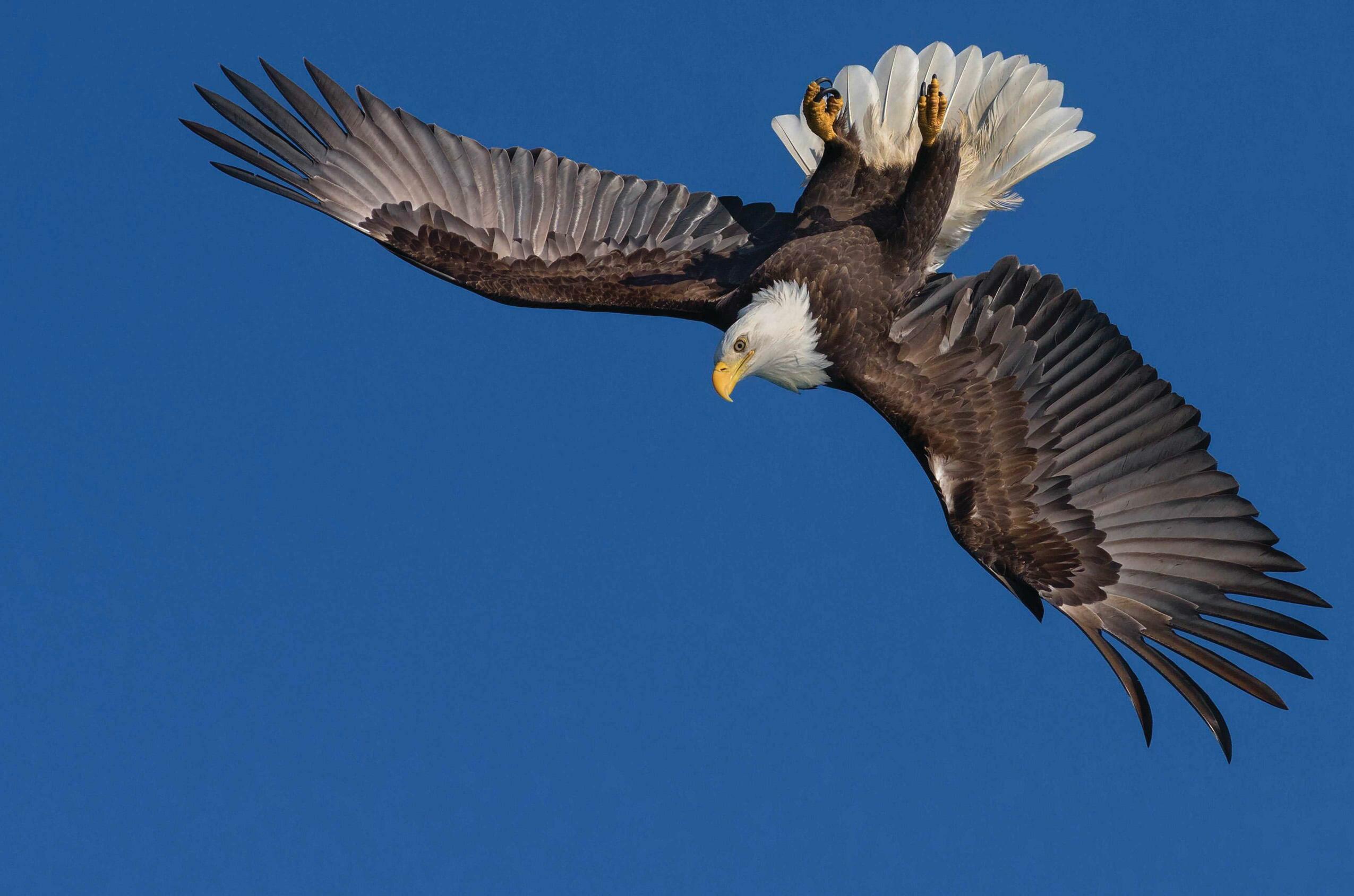
SAILING THROUGH THE AIR WITH ITS COLOSSAL, 2m wings outstretched, white head and yellow beak contrasting with its dark body, there’s no mistaking one of North America’s most iconic birds: the bald eagle.
The USA’s national bird has had a rollercoaster ride. Many people are familiar with the species’ astounding recovery following a small start, something but one chapter in this incredible success story usually flies under the radar. A young woman, alone in the woods, hand-feeding a vulnerable pair of eagle chicks.
Before she had embarked on her unusual role as eagle foster-mother, Tina Morris, a graduate from Cornell University, knew little about these birds. “I have to admit,” she recalls, “there were many times when I thought: ‘what on Earth am I doing here? How exactly am I going to manage this?’”
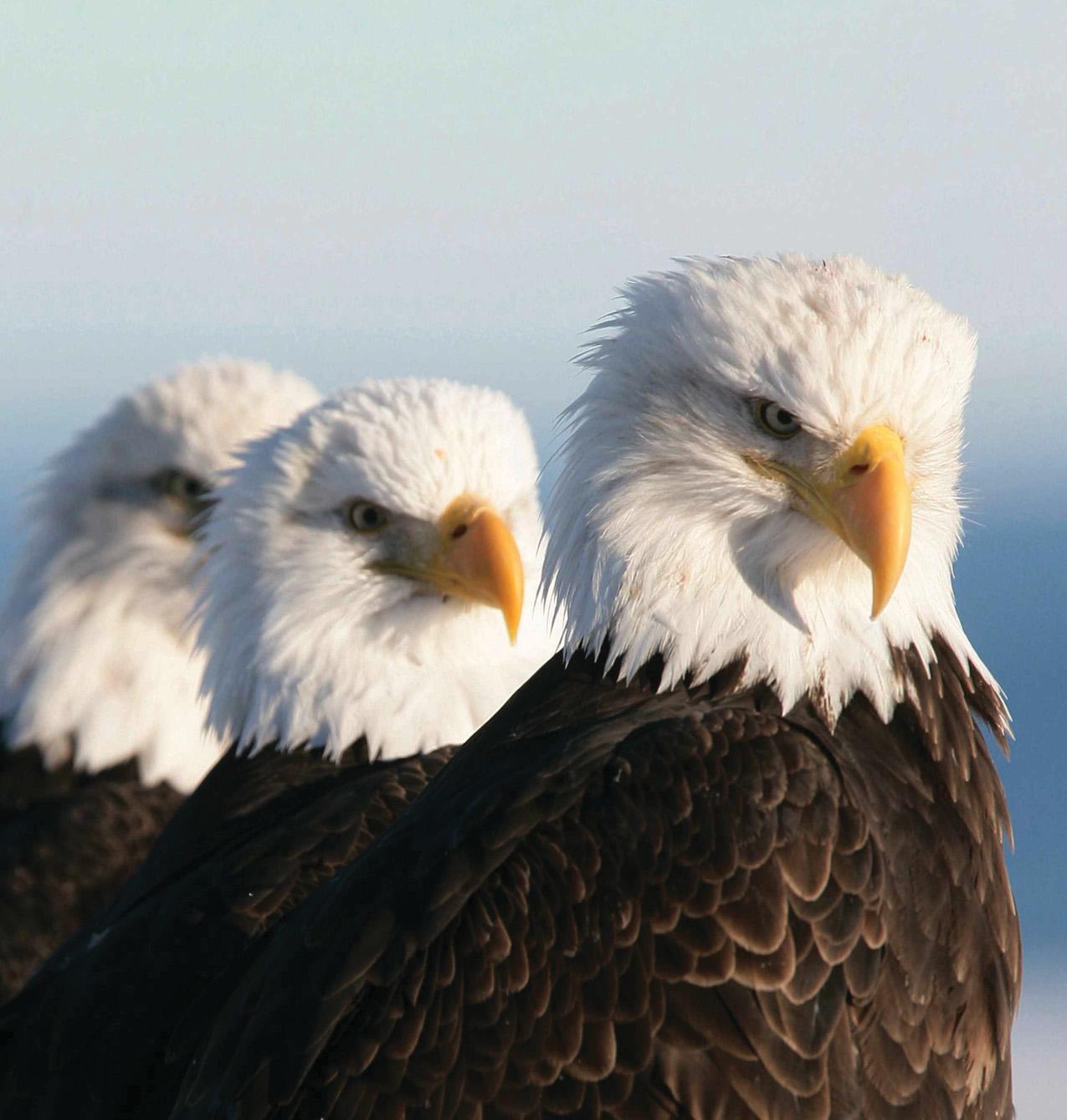 Her work was a vital intervention. Once abundant across the US, the bald eagle was nearly eradicated by the mid-1900s as a result of hunting, habitat destruction and, most significantly, the pesticide DDT, a cheap and effective chemical that had been widely used in agriculture and as a malaria control since the 1940s.
DDT was a disaster for bald eagles. It wasn’t toxic in itself, but the damage had already been done. The chemical lingers in the environment for many years, becoming increasingly concentrated as it travels up the food-chain. It washed into rivers and was absorbed by fish, which were then eaten by eagles and other birds of prey. The contamination had catastrophic consequences for the birds’ reproduction. When female laid her eggs, the chemical caused the shells to become so weak that they couldn’t withstand their parents’ weight, becoming crushed during incubation.
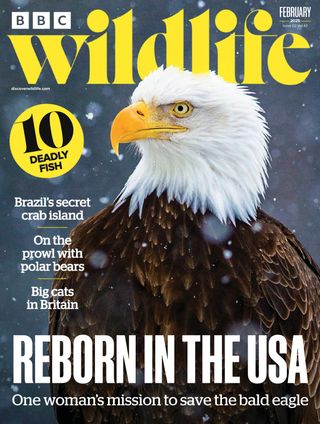

Bu hikaye BBC Wildlife dergisinin February 2025 baskısından alınmıştır.
Binlerce özenle seçilmiş premium hikayeye ve 9.000'den fazla dergi ve gazeteye erişmek için Magzter GOLD'a abone olun.
Zaten abone misiniz? Oturum aç
BBC Wildlife'den DAHA FAZLA HİKAYE
BBC Wildlife
Animal welfare
FURTHER TO EM GENOVESE'S LETTER (Your Letters, Spring 2026), I would like to signpost the charity Wild Welfare to readers.

2 mins
May 2026
BBC Wildlife
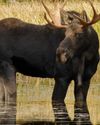
"The hooves pounded up the trail behind us"
Moose in Colorado
3 mins
May 2026
BBC Wildlife
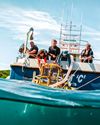
SEAGRASS SAVIOURS
Sometimes, saving the planet requires a bright idea, some practical know-how and a bit of tinkering
6 mins
May 2026
BBC Wildlife
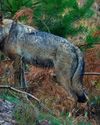
WALL TO WILD
After the fall of the Berlin Wall, reunified Germany became a new landscape not only for people, but for wildlife too 'M SITTING IN A FOREST IN Brandenburg, northeast Germany, looking over a large clearing.
7 mins
May 2026
BBC Wildlife
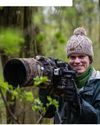
SNAP-CHAT
Samuel Bloch on wild horses, crazy capercaillies and sleeping on the job
2 mins
May 2026
BBC Wildlife
Old trees key to resilience
Study finds mature trees trump youthful ones
1 min
May 2026
BBC Wildlife
ONE STEP BEYOND
There's a lot more to these quirky seabirds than their eye-catching limbs
2 mins
May 2026
BBC Wildlife
RETURN OF A LEGEND
Once teetering on the very brink of extinction, the elusive Scottish wildcat is prowling the Highlands once more, thanks to a bit of help
7 mins
May 2026

BBC Wildlife
Urban scavengers help curb carbon
New study reveals the extent of emissions saved as city animals feast on food waste
2 mins
May 2026
BBC Wildlife
Merlin on the brink
The diminutive raptor is one of many species facing extinction in Britain, suggests new report
1 mins
May 2026
Listen
Translate
Change font size