
Magzter GOLD ile Sınırsız Olun
Sadece 9.000'den fazla dergi, gazete ve Premium hikayeye sınırsız erişim elde edin
Denemek ALTIN - Özgür
Building a better fruit cage
The Country Smallholder
|August 2023
Fiona and Hugh Osborne extensively use fruit and vegetable cages to protect valuable crops.

As soon as we started growing significant quantities of fruit and vegetables, we found that lots of other creatures liked them too! We lost entire crops of cabbages to caterpillars, berries to birds and even strawberries to mice and voles. Whilst we found it possible to pick off occasional caterpillars, the the more crops we grew, the harder that job became. Running around waving our arms at birds eating our blackcurrants wasn’t effective for even a small number of bushes and canes. As we expanded our activities, we realised that we needed to take action as our losses were unsustainable. We did talk to farmer friends as to what they used. At the time insecticides were widespread in protecting brassicas. Whilst that seemed an easy solution, we were slightly alarmed about the warning on some long-lasting treatments such as “If you use this stuff, you must plant out using gloves as it’s dangerous if you get it on your skin”. The idea of not touching the food that we intend to eat later because of the toxicity of the treatment just wasn’t for us so we decided to look for other solutions. Ultimately, we settled on physical barriers in the form of fruit and vegetable cages.
ROW COVERS
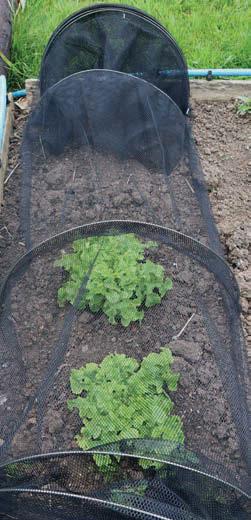
Our first experiments in crop protection followed the approaches common to most gardeners and allotmenteers, net supported on hoops to cover annual crops of cabbages, cauliflowers and over young lettuces and peas to keep the dratted wood pigeons off! These systems work well and have the great advantage of being cheap, simple to install and easy to move from place to place.

Bu hikaye The Country Smallholder dergisinin August 2023 baskısından alınmıştır.
Binlerce özenle seçilmiş premium hikayeye ve 9.000'den fazla dergi ve gazeteye erişmek için Magzter GOLD'a abone olun.
Zaten abone misiniz? Oturum aç
The Country Smallholder'den DAHA FAZLA HİKAYE
The Country Smallholder
Making sure you put enough nutrition into your dairy goat to support her milk production
Sarah Day, nutritionist for Small Holder Feed offers feeding advice for your dairy goats to help them be happy, healthy and milky animals.

6 mins
March 2026

The Country Smallholder
Welcoming the very start of the spring season
Henrietta Balcon makes the most of the new crop rhubarb
2 mins
March 2026
The Country Smallholder
Starting with Pigs - before you start
Linda Aldous outlines what you need to do before anything porcine arrives on your smallholding
3 mins
March 2026
The Country Smallholder
Insurance to protect livestock - and your peace of mind
Looking ahead to a busy 2026 for Pedigree Sales, farmers and breeders will be preparing their livestock for the upcoming markets
2 mins
March 2026
The Country Smallholder
Getting Your Electric Fence Spring-Ready: Expert Q&A
As Spring arrives, it’s the perfect time to give your electric fence some attention. Based on questions we discuss regularly here at www.electricfencing.co.uk, here’s a list of the checks you should be carrying out now, and why they matter.
2 mins
March 2026
The Country Smallholder
Check your kit for the busy seasons ahead
Agricultural journalist, and machinery writer Jane Brooks, joins us for her regular look at the world.
4 mins
March 2026
The Country Smallholder
Flock together: is now the right time to add more hens?
Andy Hill explains how to integrate birds into a flock without feathers flying
4 mins
March 2026
The Country Smallholder
The secrets behind maximising incubator hatch rates
Buying quality point of lay hens can be an expensive proposition these days (even if you can find a local source of the breed that you want). Incubating fertilised eggs can save a great deal of money and make many more breeds accessible. If you already keep poultry that includes a cockerel, an incubator means that you can hatch their eggs either to increase your flock or to sell. Hugh & Fiona Osborne have been using incubators for many years and have learned that getting a good hatch means attention to detail.
7 mins
March 2026
The Country Smallholder
Making choices for your chicks
Victoria Roberts BVSc MRCVS says Natural and Artifical Incubation are not an either/or choice
5 mins
March 2026
The Country Smallholder
An appetite for asparagus
Our Experts answer your questions
1 mins
March 2026
Translate
Change font size