Denemek ALTIN - Özgür
Spice Route
Down To Earth
|June 16, 2018
Found in high altitude forests, lichens are an important ingredient of almost all spice mixes of India

A COUPLE OF years ago, I went to Narayan Bagar, a small hamlet in Chamoli district of Uttarakhand to look for a vehicle to take me to Ghesh village, one of the last villages that lead to the alpine pastures of Bagji. It was a pleasant cold evening in western Himalayas and I saw residents returning back from forests with fuelwood, fodder and leaf litter. They also had sacks full of something that they were very possessive about. Responding to my curious enquiries, one resident said, “jhula hai madam ji”. Jhula is the local name for lichens that grow profusely in the area. Over the next few days I tried to find out more about the extraction and trade of lichens from small mountain hamlets of Garhwal. Lichens are sold in the market under various trade names including jhula, mukku, makku, chadila and dagadphool. In local village haats (small shops), these are sold by spice traders. Lichens are also sold in big grocery stores of small cities as these are an important ingredient of garam masala and other spice mixes. Even spice mandis, including the biggest one in Khari Baoli in Chandni Chowk, Delhi, stock them. Lichens are collected from oak forests from September to March every year.
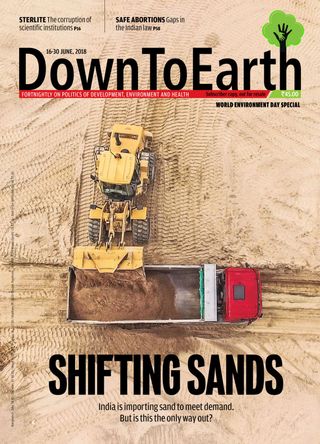

Bu hikaye Down To Earth dergisinin June 16, 2018 baskısından alınmıştır.
Binlerce özenle seçilmiş premium hikayeye ve 9.000'den fazla dergi ve gazeteye erişmek için Magzter GOLD'a abone olun.
Zaten abone misiniz? Oturum aç
Down To Earth'den DAHA FAZLA HİKAYE

Down To Earth
THINK TWICE BEFORE FELLING SAL TREES
Many trees considered to be affected by sal borer in the 1990s are still alive today

1 mins
February 16, 2026

Down To Earth
EDGE OF SURVIVAL
Caste divides deny marginalised communities land, resources and essential aid, leaving them more vulnerable to climate disasters
6 mins
February 16, 2026

Down To Earth
A WISH LIST?
Union Budget for 2026-27 conveys the impression of a roll-call of intentions and ambitious proposals, with little detail on their formulation
6 mins
February 16, 2026
Down To Earth
Break down the gender wall
THE RULING National Democratic Alliance (NDA) government has been heavily invested in the goal to make India a developed economy by 2047.
2 mins
February 16, 2026

Down To Earth
MENSTRUAL HEALTH, NOW A FUNDAMENTAL RIGHT
In a landmark judgement, the Supreme Court has recognised menstrual health and hygiene as a fundamental right under Article 21 of the Constitution of India, which guarantees the right to life and dignity.
8 mins
February 16, 2026

Down To Earth
Of devolution and new disasters
The 16th Finance Commission pushes for changes in view of new fiscal and climatic conditions
11 mins
February 16, 2026
Down To Earth
Rising risks of plastics
NEGATIVE IMPACTS on human health due to emissions linked to the plastic lifecycle could double by 2040, according to a study published in The Lancet Planetary Health in January.
1 min
February 16, 2026

Down To Earth
GAP BETWEEN EPIDEMICS NARROWING
A watershed-based and landscape-level approach is needed to address forest degradation
2 mins
February 16, 2026
Down To Earth
WAITING TO STRIKE
Sal heartwood borer is considered the biggest threat to forestry in India, especially to the sal tree, where it lives and breeds.
11 mins
February 16, 2026
Down To Earth
A SPRING DELIGHT
Mustard flowers are not meant only for the eyes. Invite them to your plate once in a while
3 mins
February 16, 2026
Translate
Change font size