Denemek ALTIN - Özgür
Seeing the Solar System's future
BBC Sky at Night Magazine
|June 2022
Recent observations offer clues about whether the planets will survive our Sun's far-off fate of swelling out into the Solar System as a red giant. Colin Stuart investigates

AIl good things must come to an end, even stars. Eventually, all-stars - including the Sun - will die and the Universe will fade to black forever. For now, our star is able to persist by constantly churning hydrogen into helium. This process, called nuclear fusion, creates enough outwards pressure to resist the relentless force of gravity trying to collapse the Sun into oblivion.
Currently, the Sun is getting through 600 million tonnes of hydrogen every single second and there will come a time when there is no hydrogen left to burn. Despite its voracious appetite for this abundant element, astronomers estimate that the Sun has about 5 billion years' worth of fuel left. Once the hydrogen is exhausted, gravity will win and the Sun's core will begin to collapse. With solar material now considerably more compressed, the temperature in the core will climb to a staggering 100 million degrees. That compares to the 15 million degrees you'll currently find in there. Meanwhile, the pressure will reach over a trillion times the atmospheric pressure here on Earth.
Such crazy temperatures and pressures mean that helium becomes the ingredient rather than the product, and it gets pressed into carbon and oxygen. The Sun will get through the equivalent of 10 Earth masses of helium every second. This 'helium burning' happens at a much faster rate than the previous slow-and-steady hydrogen-burning phase. The delicate balance within the Sun is now upset the other way. The outwards pressure is so great that it trumps gravity and the Sun begins to bloat into a red giant. It will eventually swell to swallow Mercury and Venus, and it may engulf Earth as well.


Bu hikaye BBC Sky at Night Magazine dergisinin June 2022 baskısından alınmıştır.
Binlerce özenle seçilmiş premium hikayeye ve 9.000'den fazla dergi ve gazeteye erişmek için Magzter GOLD'a abone olun.
Zaten abone misiniz? Oturum aç
BBC Sky at Night Magazine'den DAHA FAZLA HİKAYE
BBC Sky at Night Magazine
The Giant Leap: Why Space is the Next Frontier in the Evolution of Life
“Earth is the cradle of humanity, but one cannot live in the cradle forever,” wrote Konstantin Tsiolkovsky in 1911.

1 mins
February 2026
BBC Sky at Night Magazine
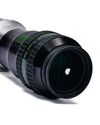
Tele Vue Nagler Type-7 series eyepieces
These premium optics were inspired by Apollo - and deliver a giant leap to your views
4 mins
February 2026
BBC Sky at Night Magazine
Once Upon a Time in Space
While the Space Race of the Cold War years was ultimately a geopolitical contest between the USA and the Soviet Union, the rivalry sparked rapid innovation and inspired multiple generations to look skyward.
1 mins
February 2026
BBC Sky at Night Magazine
The Multiverse: When One Universe Isn't Enough
The concept of a 'multiverse' – the idea that our Universe may be just one of many – is widespread in science fiction and a common thread of online discussions.
1 mins
February 2026
BBC Sky at Night Magazine
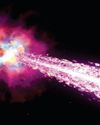
Q&A WITH A GAMMA RAY SPECIALIST
In 2025, astronomers detected a blast from space that lasted seven hours. Now they're uncovering the strange processes behind the exceptional outburst
3 mins
February 2026
BBC Sky at Night Magazine
Astronomy Photographer of the Year
The world-leading astrophotography competition returns. Could your image take the top prize of £10,000?
2 mins
February 2026
BBC Sky at Night Magazine
MOONWATCH
February's top lunar feature to observe
2 mins
February 2026
BBC Sky at Night Magazine
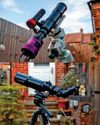
NOVAStar Scarlet A62Q 62mm f/8.4 quadruplet achromatic refractor
Well-built and capable, this beginner scope punches well above its bargain price
4 mins
February 2026
BBC Sky at Night Magazine
STAR OF THE MONTH
Rasalas, Leo the Lion's metal-rich crown
1 min
February 2026
BBC Sky at Night Magazine
Comet 24P/Schaumasse
Having reached perihelion on 8 January, comet 24P/ Schaumasse is now fading. Starting the month at a small-telescope-friendly mag. +10.5, it dims throughout February to below 12th magnitude.
1 min
February 2026
Translate
Change font size