
Magzter GOLD ile Sınırsız Olun
Sadece 9.000'den fazla dergi, gazete ve Premium hikayeye sınırsız erişim elde edin
Denemek ALTIN - Özgür
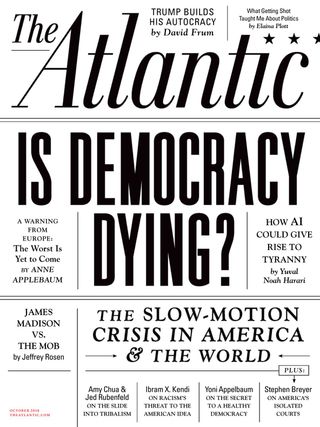
How AI Could Give Rise To Tyranny
The Atlantic
|October 2018
Artificial Intelligence could erase many practical advantages of democracy, and erode the ideals of liberty and equality. It will further concentrate power among a small elite if we dont take steps to stop it.

I . THE GROWING FEAR OF IRRELEVANCE
There is nothing inevitable about democracy. For all the success that democracies have had over the past century or more, they are blips in history. Monarchies, oligarchies, and other forms of authoritarian rule have been far more common modes of human governance.
The emergence of liberal democracies is associated with ideals of liberty and equality that may seem self-evident and irreversible. But these ideals are far more fragile than we believe. Their success in the 20th century depended on unique technological conditions that may prove ephemeral.
In the second decade of the 21st century, liberalism has begun to lose credibility. Questions about the ability of liberal democracy to provide for the middle class have grown louder; politics have grown more tribal; and in more and more countries, leaders are showing a penchant for demagoguery and autocracy. The causes of this political shift are complex, but they appear to be intertwined with current technological developments. The technology that favored democracy is changing, and as artificial intelligence develops, it might change further.
Information technology is continuing to leap forward; biotechnology is beginning to provide a window into our inner lives—our emotions, thoughts, and choices. Together, infotech and biotech will create unprecedented upheavals in human society, eroding human agency and, possibly, subverting human desires. Under such conditions, liberal democracy and free-market economics might become obsolete.

Bu hikaye The Atlantic dergisinin October 2018 baskısından alınmıştır.
Binlerce özenle seçilmiş premium hikayeye ve 9.000'den fazla dergi ve gazeteye erişmek için Magzter GOLD'a abone olun.
Zaten abone misiniz? Oturum aç
The Atlantic'den DAHA FAZLA HİKAYE

The Atlantic
STRUCK
What getting hit by lightning does to the body and mind

15 mins
April 2026

The Atlantic
LEAVING THE UNITED STATES BEHIND
The Cruz family spent years building a life in New York. Then the risks of staying became too great.
16 mins
April 2026

The Atlantic
MY SELF-DRIVING CAR CRASH
The Tesla was driving perfectly—until it wasn't.
8 mins
April 2026

The Atlantic
The Last Days of Franco
Montserrat Roig's classic novel captures Barcelona on the cusp of unimaginable change.
7 mins
April 2026

The Atlantic
INSATIABLE
Indoor rain, windows to nowhere, and reanimated nuclear reactors- how the race to power AI is remaking the physical world
16 mins
April 2026

The Atlantic
THE WOMEN OF AVENGER FIELD
THEY BRAVELY SERVED AS PILOTS IN WORLD WAR II. THEN AMERICA FORGOT THEM.
15 mins
April 2026

The Atlantic
The Unbearable Lightness of Signalgate
Nearly a year after a national-security scandal erupted on my iPhone, no one in the Trump administration has faced serious consequences.
14 mins
April 2026

The Atlantic
Robyn Is Still Dancing On Her Own
The queen of poptimism takes up motherhood and midlife desire.
5 mins
April 2026
The Atlantic
The College-Educated Working Class
Can a generation of graduates frustrated by their economic prospects change American labor politics?
13 mins
April 2026

The Atlantic
THAT 1930s FEELING
How dark fringes reached the center of the Republican Party
10 mins
April 2026
Translate
Change font size