Denemek ALTIN - Özgür
Heritage Hampi: Splendour Of Ruins
FRONTLINE
|October 25, 2019
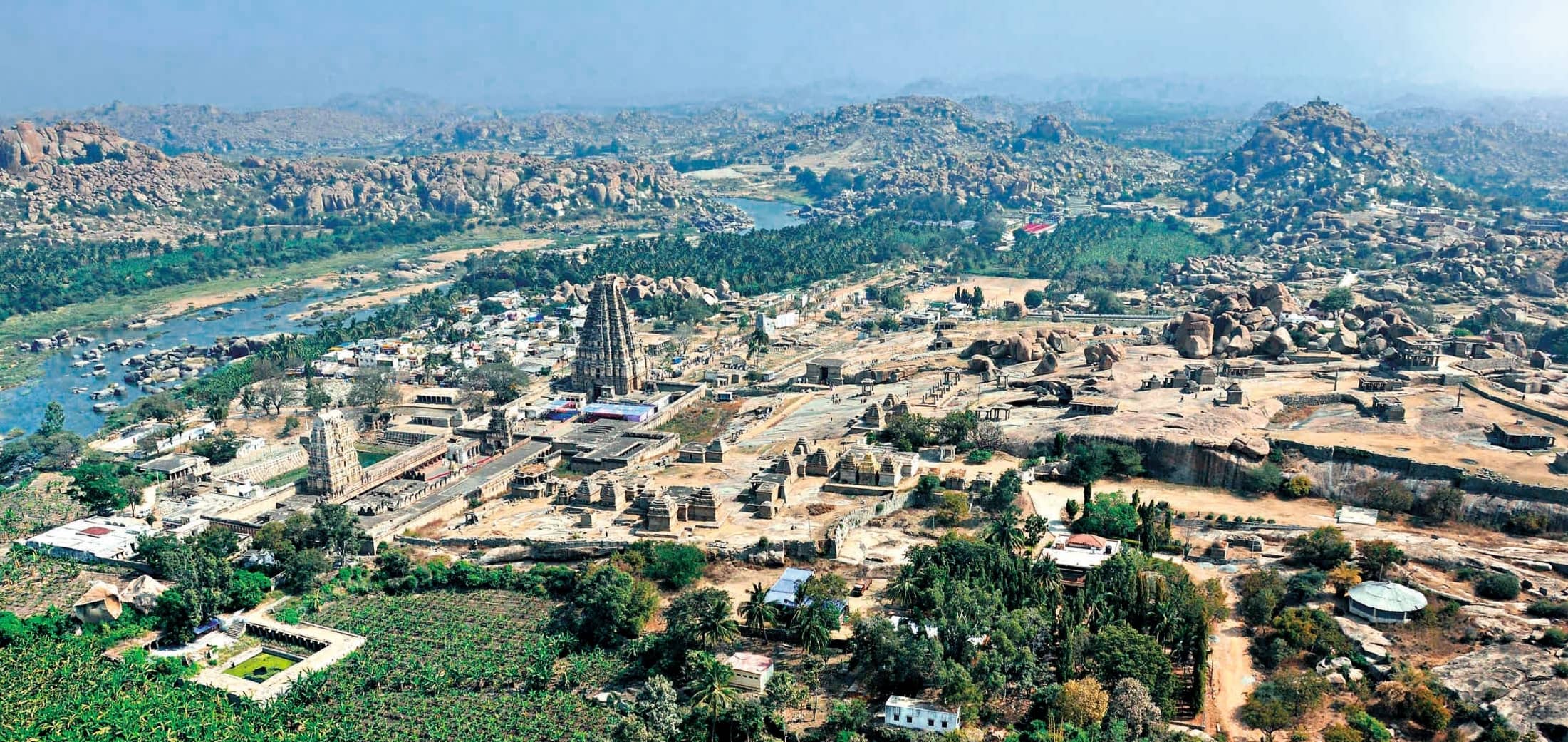
Hampi, with its temple complexes, palaces and fortresses, epitomised the rich historical, architectural-cultural and cosmopolitan legacy of the Vijayanagara Empire, which flourished on the banks of the Tungabhadra for more than 200 years from the mid 14th century. It is second on The New York Times list of 52 places to visit in 2019.

Hampi is a village situated on the banks of the Tungabhadra river in Bellari district of Karnataka. Declared a UNESCO World Heritage site in 1986, it served as the imperial capital of Vijayanagara, arguably the largest, wealthiest and most powerful kingdom in south India and the greatest Hindu empire in the medieval period. Hampi was known by various names at different points of time: Hosapattana (New City), Vijayanagara (City of Victory), Vidyanagara (City of Learning) or Hampe, Pampa-kshetra and Pampa-pura—after the local goddess Pampa, who was worshipped even before the seventh century C.E.
Before it became part of Vijayanagara, the area around Hampi was ruled by several Hindu dynasties: the Kadambas, the Chalukyas of Badami, the Rashtrakutas, the Chalukyas of Kalyani, the Hoyasalas, the Yadavas and the Kampili chiefs. Most such Hindu kingdoms in the Deccan, constantly fighting amongst themselves, were overrun by the Delhi Sultanate in the early 14th century. The weakening hold of the Sultanate in the region together with the resistance offered by the local chieftains led to the emergence of two kingdoms around the mid 14th century: the Vijayanagara Empire (1336) based around Hampi and the Bahmani Sultanate (1347) centred around Gulbarga and Bidar. Both these kingdoms were continuously at war with one another.

Bu hikaye FRONTLINE dergisinin October 25, 2019 baskısından alınmıştır.
Binlerce özenle seçilmiş premium hikayeye ve 9.000'den fazla dergi ve gazeteye erişmek için Magzter GOLD'a abone olun.
Zaten abone misiniz? Oturum aç
FRONTLINE'den DAHA FAZLA HİKAYE

FRONTLINE
How Not To Handle An Epidemic
The lockdowns were meant to buy time to put in place appropriate health measures and contain the coronavirus’ spread, but they have failed to achieve the objective and heaped immense misery on the marginalised sections of society. India is still in the exponential phase of the COVID-19 infection and community transmission is a reality that the government refuses to accept.

9 mins
June 5, 2020
FRONTLINE
Tragedy on foot
As the COVID-19-induced lockdown cuts the ground beneath their feet in Tamil Nadu, thousands of migrant workers are trudging along the highway to the relative safety of their upcountry homes.
11 mins
June 5, 2020
FRONTLINE
Sarpanchs as game changers
Odisha manages to keep COVID-19 well under control because of the strong participation of panchayati raj institutions and the community at the grass-roots level under the leadership of Chief Minister Naveen Patnaik.
7 mins
June 5, 2020

FRONTLINE
Scapegoating China
As the COVID-19 death rate spikes and the economy tanks in the United States, Donald Trump and his advisers target China and the World Health Organisation with an eye to winning the forthcoming presidential election.
10 mins
June 5, 2020

FRONTLINE
New worries
Kerala’s measured approach to the pandemic and lockdown has yielded results. But it still has to grapple with their huge economic impact on its economy, which it feels the Centre’s special financial relief package does little to alleviate.
9 mins
June 5, 2020
FRONTLINE
No love lost for labour
Taking advantage of the lockdown and the inability of workers to organise protests, many State governments introduce sweeping changes to labour laws to the detriment of workers on the pretext of reviving production and boosting the economy.
8 mins
June 5, 2020
FRONTLINE
Capital's Malthusian moment
In a world that needs substantial reorienting of production and distribution, Indian capital is resorting to a militant form of moribund neoliberalism to overcome its current crisis. In this pursuit of profit, it is ready and willing to throw into mortal peril millions whom it adjudicates as not worth their means—an admixture of social Darwinism born of capital’s avarice and brutalism spawned by Hindutva. .
14 mins
June 5, 2020
FRONTLINE
Understanding migration
When governments and their plans are found to be blatantly wanting in addressing reverse migration, exercises such as the Ekta Parishad’s survey of migrant workers throughout India can be useful to work out creative long-lasting solutions.
10 mins
June 5, 2020

FRONTLINE
Waiting for Jabalpur moment
The Supreme Court’s role in ensuring executive accountability during the ongoing lockdown leaves much to be desired. Standing in shining contrast is the record of some High Courts.
15 mins
June 5, 2020

FRONTLINE
An empty package
The Modi regime, which has been unable to control the COVID-19 infection, restore economic activity and provide relief to millions exposed to starvation, trains its sights on Indian democracy, making use of the panic generated by fear and a lockdown that forecloses paths of resistance.
17 mins
June 5, 2020
Translate
Change font size