Denemek ALTIN - Özgür
Colorado's Great Sand Dunes
Rock&Gem Magazine
|March 2017
Visit North America’s Tallest Dunefield

The American Southwest has the greatest concentration of sand dunes on the North American continent, with more than two dozen notable dunefields. Many of these are national parks and monuments, state parks, or recreational areas that are managed by the federal Bureau of Land Management. Together, they attract millions of visitors each year. None of the Southwest’s dunefields are alike. New Mexico’s White Sands National Monument is famed for its glistening, white dunes of pure gypsum, while the dunes of Utah’s Coral Pink Sand Dunes State Park consist of distinctively colored, reddish sand derived from Navajo Sandstone. Some dunefields are only a few square miles in area, while California’s Algodones Dunes, the largest in the nation, cover 300 square miles.
One of the best known of these dunefields is in Colorado’s Great Sand Dunes National Park and Preserve. Its namesake attraction is the Great Sand Dunes—a 33-square-mile deposit of dramatically sculpted sand that is nearly devoid of vegetation. This dunefield is crowned by the continent’s tallest dune— Star Dune, which soars 755 feet from base to crest. And nestled at the base of a range of 14,000-foot-high peaks, the Great Sand Dunes are unmatched for scenic splendor.
But the Great Sand Dunes is far more than spectacular scenery. Constantly migrating, eroding and rebuilding, these dunes are a place where geology comes alive, where legends thrive, and where plain old sand takes on a whole new perspective.
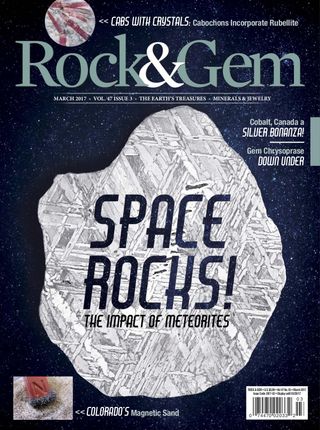

Bu hikaye Rock&Gem Magazine dergisinin March 2017 baskısından alınmıştır.
Binlerce özenle seçilmiş premium hikayeye ve 9.000'den fazla dergi ve gazeteye erişmek için Magzter GOLD'a abone olun.
Zaten abone misiniz? Oturum aç
Rock&Gem Magazine'den DAHA FAZLA HİKAYE
Rock&Gem Magazine
A New Amber Locality Fills a Gap
A sandstone quarry in central Ecuador has yielded the first significant deposit of Mesozoic amber from South America.

1 min
January / February 2026
Rock&Gem Magazine
Did "Left-Handed" Fish Leave Water Earlier than Thought?
Fossil evidence suggests that fish (or \"fishapods\") dragged themselves onto land during the middle Devonian Period.
1 min
January / February 2026

Rock&Gem Magazine
"Lab Quakes” Produce Surprising Results
When faults let loose and earthquakes result, the main effect we mortals experience is the violent shaking.
1 min
January / February 2026
Rock&Gem Magazine
This Egg is No Spring Chicken
How to date a dino egg
1 min
January / February 2026
Rock&Gem Magazine
Have we Already Mined the Critical Minerals We Need
Then why are we throwing them away?!
1 min
January / February 2026
Rock&Gem Magazine
One Toxic Worm
A critter that creates & tolerates orpiment!
1 min
January / February 2026
Rock&Gem Magazine
ROCK & GEM FIELD GUIDE: Silver
Silver (Ag) is a native element and one of Earth's most prized precious metals.
2 mins
January / February 2026
Rock&Gem Magazine
DINOSAURS OF THE HELL CREEK MUSEUM
In the Badlands of South Dakota, just outside the small town of Belle Fourche—pronounced “Bell Foosh”—a new attraction has taken shape that every dinosaur enthusiast should see. The Dinosaurs of the Hell Creek Museum is part hands-on exhibit, part science center and part active research lab.
3 mins
January / February 2026
Rock&Gem Magazine
The Lost Twins of Kongsberg
A Silver Story Resurfaced
3 mins
January / February 2026
Rock&Gem Magazine
Switzerland's ICE PALACE
Walk Inside a Glacier at The Top of Europe
7 mins
January / February 2026
Translate
Change font size