
Magzter GOLD ile Sınırsız Olun
Sadece 9.000'den fazla dergi, gazete ve Premium hikayeye sınırsız erişim elde edin
Denemek ALTIN - Özgür
Haiti's Royal Past
Archaeology
|July/August 2018
An early 19th-century palace is a reminder of the ambitious monarchy that rose from the ashes of the Haitian Revolution

TWO MONUMENTAL STRUCTURES in Haiti—a palace called Sans-Souci and an enormous fort called the Citadel—mark a dramatic turning point in the history of the island nation once ruled by France. In the early nineteenth century, Henry Christophe, a former general who had helped lead Haiti to victory over France in a long and brutal revolution, formed a kingdom in the country’s north. In a move both prideful and pragmatic, he took the title of King Henry I and established a hereditary monarchy, with newly minted counts, dukes, and barons assigned to oversee his realm. His personal coat of arms featured a phoenix and the motto Je renais de mes cendres, or “I rise from my ashes.” As part of a mission to establish Haiti as a center of civilization and a major player on the world stage, Christophe embarked on a wildly ambitious building program. “Winning Haiti’s freedom involved massive destruction,” says historian Laurent Dubois of Duke University, “and now Christophe was trying to build something glorious in the midst of it.”
Sans-Souci was erected in the village of Milot, 10 miles south of the northern port city of Le Cap. Today, portions of the palace lie in ruins, reduced to rubble by an 1842 earthquake. It is still clear, however, why it was known in its time as the Versailles of the Caribbean, where the Haitian king presided over elaborate court protocol, opulent dinners and dances, and popular festivals. It consisted of a three-story main building that stood some 80 feet tall and measured 170 by 80 feet, along with a number of other structures surrounding the Cour Caimitier, a large courtyard that hosted military reviews, plays, and other outdoor gatherings.
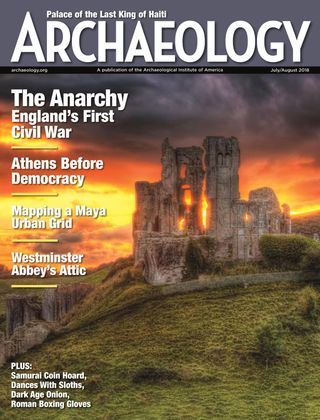

Bu hikaye Archaeology dergisinin July/August 2018 baskısından alınmıştır.
Binlerce özenle seçilmiş premium hikayeye ve 9.000'den fazla dergi ve gazeteye erişmek için Magzter GOLD'a abone olun.
Zaten abone misiniz? Oturum aç
Archaeology'den DAHA FAZLA HİKAYE
Archaeology
THE EGYPTIAN SEQUENCE
Until now, the earliest Egyptians to have even part of their DNA sequenced were three people who lived between 787 and 544 B.C.

1 mins
November/December 2025
Archaeology
SOURCE MATERIAL
As early as 40,000 years ago, some hunter-gatherers in southern Africa ventured long distances to procure special types of stone to make their tools.
1 min
November/December 2025

Archaeology
Secrets of the Seven Wonders
How archaeologists are rediscovering the ancient world's most marvelous monuments
13 mins
November/December 2025
Archaeology
ACTS OF FAITH
Evidence emerges of the day in 1562 when an infamous Spanish cleric tried to destroy Maya religion
12 mins
November/December 2025
Archaeology
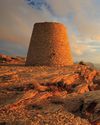
OASIS MAKERS OF ARABIA
Researchers are just beginning to understand how people thrived in the desert of Oman some 5,000 years ago
8 mins
November/December 2025
Archaeology
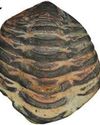
FOSSIL FORCE
One of the planet's most successful arthropods, trilobites, abounded in the oceans from about 520 million to 250 million years ago.
1 min
November/December 2025
Archaeology
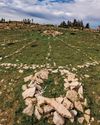
BIGHORN MEDICINE WHEEL, WYOMING
Perched almost 9,700 feet above sea level on Medicine Mountain in Wyoming's Bighorn Range, the Medicine Wheel is an 80-foot-diameter circular structure made from limestone boulders.
2 mins
November/December 2025
Archaeology
ANCIENT LOOK BOOK
A young woman buried in China's Tarim Basin some 2,000 years ago went to the afterlife accompanied by the height of fashion.
1 mins
November/December 2025
Archaeology
A FAMILIAR FACE
In the early eleventh century, a landslide on the island of Ostrów Lednicki in western Poland caused a hillfort to collapse and slip to the bottom of Lake Lednica.
1 min
November/December 2025
Archaeology
Temples to Tradition
A looted cache of bronzes compels archaeologists to explore Celtic sanctuaries across Burgundy
13 mins
November/December 2025
Translate
Change font size