
Magzter GOLD ile Sınırsız Olun
Sadece 9.000'den fazla dergi, gazete ve Premium hikayeye sınırsız erişim elde edin
Denemek ALTIN - Özgür
GAUL'S UNIVERSITY TOWN
Archaeology
|November/December 2021
New excavations have revealed the wealth and prestige of an ancient center of learning

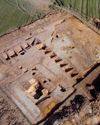
THE ROMAN ORATOR AND rhetorician Eumenius delivered a speech to the Roman governor of Gallia Lugdunensis in a.d. 298 advocating for the restoration of the famous schools called the Maeniana in the city of Augustodunum, at the center of the province. At the time of Eumenius’ speech, the once-thriving city had fallen on hard times. In a.d. 269, its residents had taken sides against Victorinus, the emperor of the ill-fated breakaway state now known as the Gallic Empire (ca. 269–271 a.d.), and the city was besieged for seven months. Access to the high level of culture and education that had been central to Augustodunum’s identity fell victim to a combination of circumstances, perhaps including damage to the Maeniana, funding diverted to the conflict, or a diminished student population.
Augustodunum (modern Autun) had been founded around 13 b.c. by the emperor Augustus (r. 27 b.c.–a.d. 14) as a new capital for the Aedui, a Celtic tribe that was—mostly—allied with the Romans. By 121 b.c., the tribe had been awarded the title of “brothers and kinsmen of Rome.” The Aedui largely supported Julius Caesar in his campaigns in Gaul, with the exception of a brief defection in 52 b.c. when they joined an unsuccessful rebellion led by Vercingetorix, the doomed chief of the Arverni tribe. The capital of the Aedui had been located at the settlement of Bibracte, but when the tribe became a civitas foederata, or allied community, of Rome, it was moved 15 miles east to its new location. It was given a name that combined its Roman and Gallic identities: Augusto- for Augustus, and -dunum, the Celtic word for “hill,” “fort,” or “walled town.”

Bu hikaye Archaeology dergisinin November/December 2021 baskısından alınmıştır.
Binlerce özenle seçilmiş premium hikayeye ve 9.000'den fazla dergi ve gazeteye erişmek için Magzter GOLD'a abone olun.
Zaten abone misiniz? Oturum aç
Archaeology'den DAHA FAZLA HİKAYE
Archaeology
THE EGYPTIAN SEQUENCE
Until now, the earliest Egyptians to have even part of their DNA sequenced were three people who lived between 787 and 544 B.C.

1 mins
November/December 2025
Archaeology
SOURCE MATERIAL
As early as 40,000 years ago, some hunter-gatherers in southern Africa ventured long distances to procure special types of stone to make their tools.
1 min
November/December 2025

Archaeology
Secrets of the Seven Wonders
How archaeologists are rediscovering the ancient world's most marvelous monuments
13 mins
November/December 2025
Archaeology
ACTS OF FAITH
Evidence emerges of the day in 1562 when an infamous Spanish cleric tried to destroy Maya religion
12 mins
November/December 2025
Archaeology
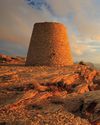
OASIS MAKERS OF ARABIA
Researchers are just beginning to understand how people thrived in the desert of Oman some 5,000 years ago
8 mins
November/December 2025
Archaeology
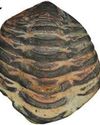
FOSSIL FORCE
One of the planet's most successful arthropods, trilobites, abounded in the oceans from about 520 million to 250 million years ago.
1 min
November/December 2025
Archaeology
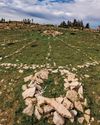
BIGHORN MEDICINE WHEEL, WYOMING
Perched almost 9,700 feet above sea level on Medicine Mountain in Wyoming's Bighorn Range, the Medicine Wheel is an 80-foot-diameter circular structure made from limestone boulders.
2 mins
November/December 2025
Archaeology
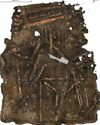
ANCIENT LOOK BOOK
A young woman buried in China's Tarim Basin some 2,000 years ago went to the afterlife accompanied by the height of fashion.
1 mins
November/December 2025
Archaeology
A FAMILIAR FACE
In the early eleventh century, a landslide on the island of Ostrów Lednicki in western Poland caused a hillfort to collapse and slip to the bottom of Lake Lednica.
1 min
November/December 2025
Archaeology
Temples to Tradition
A looted cache of bronzes compels archaeologists to explore Celtic sanctuaries across Burgundy
13 mins
November/December 2025
Translate
Change font size