
Magzter GOLD ile Sınırsız Olun
Sadece 9.000'den fazla dergi, gazete ve Premium hikayeye sınırsız erişim elde edin
Denemek ALTIN - Özgür
Swargadeo Rudra Singha: An Architect Of Ancient Assam
neScholar
|Volume 3, Issue 4 2017
THE Ahom dynasty that entered into the then Assam (Pragjyotishpur) in 1228 CE is considered as the torchbearer of new evolutions on the bank of the mighty Brahmaputra through their state-of-the-art skills in ruling the subjects, in convening new social systems, in building architectural heritages, in enriching the economic and political systems and in bringing a cultural revolution. The Ahom kingdom that was first established by Swargadeo Sukapha was later expanded and enlarged by Swargadeo Pratap Singha and it was Swargadeo Rudra Singha who added the charm of a cultural influence into the state and its subjects. It was this influential king of the Ahom dynasty who had first attempted at building a cultural and social bridge with other Indian states to introduce new dimensions into the Assamese culture. There had always been an effort to invest time and efforts to bring a fruitful outcome in the Ahom rulers and carrying this tradition forward. Rudra Singha too tried to select the best of the culturally promising artisans from among his subjects and engage them in the practice and production of notable artistic and cultural outputs.

The naturally generous character of Swargadeo Rudra Singha encouraged his subjects to cooperate in his endeavour and to put in their best efforts to produce results in terms of the architectural creations. As a culturally successful ruler of the state, Swargadeo Rudra Singha left numerous notable architectural heritages in different parts of Assam to be still wondered and appreciated by the succeeding generations of the land. In addition to building several royal palaces, temples, lakes, ponds and roads; he had also built three significant bridges during his rule. For ensuring superior quality outcome in the building of the memorials, he even imported particularly skilled artisans from Bengal. It was under his rule and supervision, Karenghar was built in Rangpur which is being admired and wondered by tourists and historians since years. 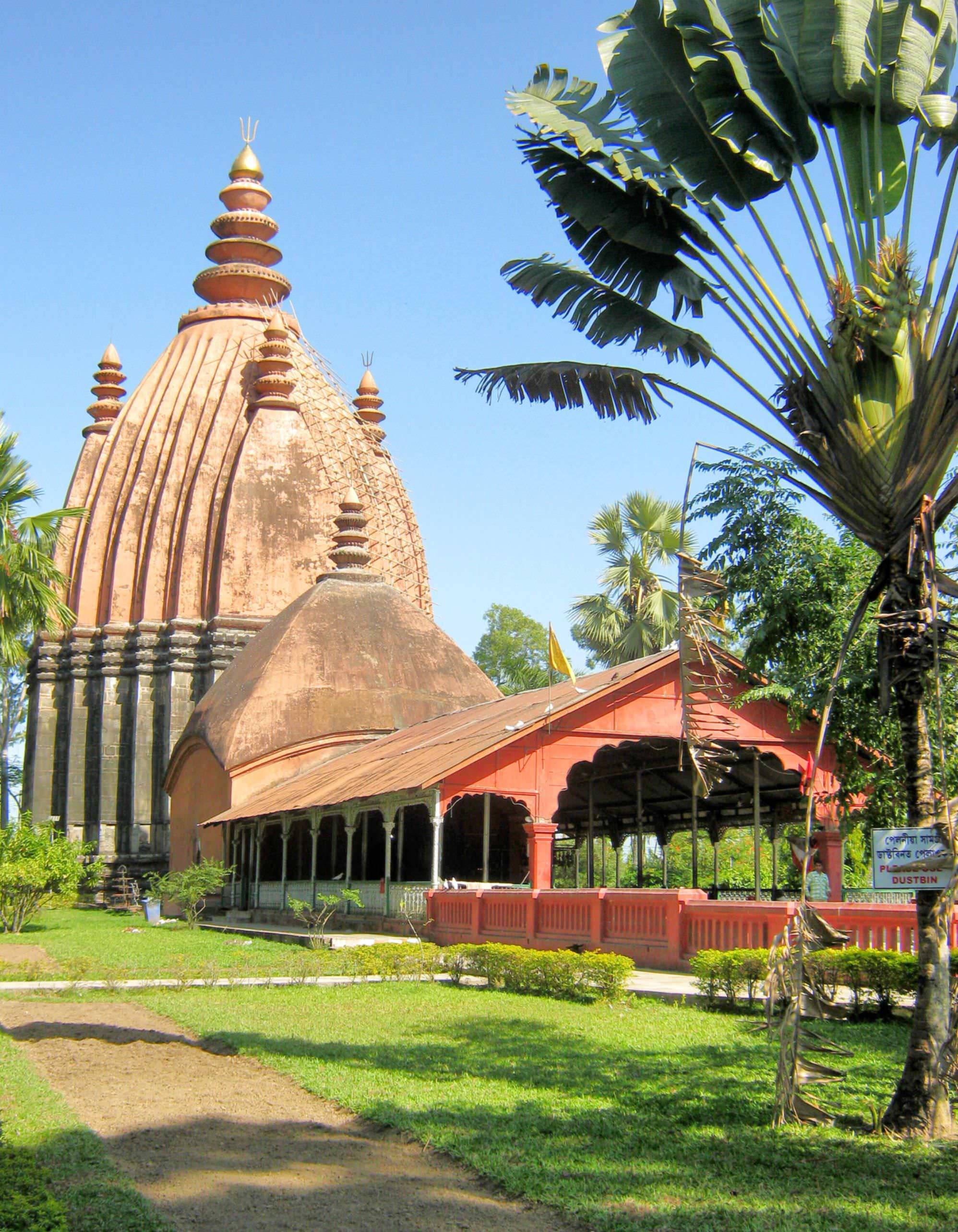


Bu hikaye neScholar dergisinin Volume 3, Issue 4 2017 baskısından alınmıştır.
Binlerce özenle seçilmiş premium hikayeye ve 9.000'den fazla dergi ve gazeteye erişmek için Magzter GOLD'a abone olun.
Zaten abone misiniz? Oturum aç
neScholar'den DAHA FAZLA HİKAYE

neScholar
The Transforming Face Of Villages In North East
A man, riding a bullock cart on a muddy, cow-dung laden road with paddy fields and greeneries all around, directs the bullock, hurr hurr tete tete into his house.

4 mins
Volume 3, Issue 4 2017

neScholar
Venus
Venus is the second planet from the sun and our closest planetary neighbor.
7 mins
Volume 3, Issue 4 2017

neScholar
Snakes: The Predator, The Prey And The Pest Control
Snakes are natural form of pest control. They play an important role in the balancing of nature and their absence from an area indirectly impacts the health of an ecosystem.
5 mins
Volume 3, Issue 4 2017

neScholar
Ooti Ashangba/Chagem Ooti Manipuri Green Rice Porridge
OOTI Thongba (Thongba means cooking) is a classic vegetarian dish of Manipur usually made with rice, pulses and different type of vegetables with baking soda.
2 mins
Volume 3, Issue 4 2017

neScholar
Swargadeo Rudra Singha: An Architect Of Ancient Assam
THE Ahom dynasty that entered into the then Assam (Pragjyotishpur) in 1228 CE is considered as the torchbearer of new evolutions on the bank of the mighty Brahmaputra through their state-of-the-art skills in ruling the subjects, in convening new social systems, in building architectural heritages, in enriching the economic and political systems and in bringing a cultural revolution. The Ahom kingdom that was first established by Swargadeo Sukapha was later expanded and enlarged by Swargadeo Pratap Singha and it was Swargadeo Rudra Singha who added the charm of a cultural influence into the state and its subjects. It was this influential king of the Ahom dynasty who had first attempted at building a cultural and social bridge with other Indian states to introduce new dimensions into the Assamese culture. There had always been an effort to invest time and efforts to bring a fruitful outcome in the Ahom rulers and carrying this tradition forward. Rudra Singha too tried to select the best of the culturally promising artisans from among his subjects and engage them in the practice and production of notable artistic and cultural outputs.
4 mins
Volume 3, Issue 4 2017

neScholar
Locals, Cultural Practices And Biodiversity- Attending The Close Links From Wetlands And Rivers
Mayanglambam Ojit Kumar Singh Assistant Professor in Zoology and Life Science Ramjas College, Delhi University
7 mins
Volume 3, Issue 4 2017

neScholar
Knowledge Corner
The tattoos on our hands, neck or arms may catch some attention, but they come with risks.
2 mins
Volume 3, Issue 4 2017

neScholar
The Thirst Integrity For The Quenched Unity
Coordinator, Center for Research and Advocacy Manipur (CRAM)
7 mins
Volume 3, Issue 4 2017
Translate
Change font size