
Magzter GOLD ile Sınırsız Olun
Sadece 9.000'den fazla dergi, gazete ve Premium hikayeye sınırsız erişim elde edin
Denemek ALTIN - Özgür
Rodents In Poultry Housing: A Multi-Faceted Plan Of Attack
Stockfarm
|May 2021
Three different rodent species are usually encountered on a poultry farm. They are Rattus rattus or the roof or black rat, Rattus norvegicus or the brown or sewer rat, and Mus musculus or the house mouse.

Rats and mice are carriers of lice, mites, fleas and other parasites, and can transmit at least 50 possible diseases to chickens and humans, such as Newcastle disease or avian influenza – these diseases can even be transferred via the bait stations used to protect one’s farm.
Stockfarm asked two experts for advice on how to prevent these critters from partying among one’s chickens and what it involves to proactively manage an existing problem.

A proper pest control system
According to Lee Ashford at Scientific™ Supa-Kill, voluntary and involuntary movement can have a major influence on why rodents suddenly appear:
• Voluntary means rodents were prevalent in the area, but have outgrown or fled the environment due to either a fire, harvesting of crops, intensive downpours, or breeding.
• Involuntary means they were imported onto the farm by truck (feed delivery) or other means.
According to Ashford, it is crucial to think of a poultry house as a pest control system. “Pest control encompasses many aspects, from application techniques to record-keeping,” he says. “For example, if one’s chicken house is close-walled and 80% rodent proof, around 20% pest control will likely be required. Should it be an open-sided chicken house, then pest control will be 100%.”
The correct bait in a bait station and a willing and trained staff member are essential to a productive pest control programme. If one of these steps were to fail, it will create a gap for rodents to take over. A bait station is designed to give the rodent a sense of safety while eating a lethal dose of poison.

Bu hikaye Stockfarm dergisinin May 2021 baskısından alınmıştır.
Binlerce özenle seçilmiş premium hikayeye ve 9.000'den fazla dergi ve gazeteye erişmek için Magzter GOLD'a abone olun.
Zaten abone misiniz? Oturum aç
Stockfarm'den DAHA FAZLA HİKAYE

Stockfarm
World School Milk Day: A national celebration of dairy
The Department of Basic Education (DBE), in partnership with Milk SA's Consumer Education Project (CEP), marked the national celebration of World School Milk Day (WSMD) at Mandlomsobo Primary School in Bronkhorstspruit on 26 September.

2 mins
January 2026

Stockfarm
A breed that you like will work with you
Data can't fix what selection broke, and your grandpa knew it.
4 mins
January 2026
Stockfarm
2025 Santam Agriculture Silage Competition: Wet conditions, winning silage
Plaas Media's twelfth Santam Agriculture National Silage Competition once again showcased impressive expertise among its participants.
4 mins
January 2026
Stockfarm
Unravelling the regulations for dairy and imitation dairy products
Regulation R1510 of 22 November 2019, which governs dairy and imitation dairy products, recently took centre stage during a webinar hosted by the Dairy Standard Agency (DSA). Thabang Rampa, manager of regulatory affairs at the DSA, provided a technical interpretation of key sections of the regulation, aimed at improving industry's understanding of the prescribed minimum compositional and labelling requirements.
3 mins
January 2026

Stockfarm
2025 ARC National Master Dairyman Awards: Top dairy farmers honoured
The Agricultural Research Council (ARC) announced the winners of its 2025 National Master Dairyman Awards during a ceremony held in November at Lanzerac Estate in Stellenbosch.
2 mins
January 2026
Stockfarm
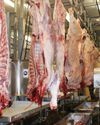
Abattoirs: The hidden pulse of meat safety
In conversations regarding the meat supply chain, the first and final links tend to take prominence, while the work performed by the middlemen often goes unnoticed. Yet every link plays a vital role. The real question is: Do we truly understand the value each link adds? Or has ‘value addition’ become shorthand for 'price addition, leaving producers and consumers feeling the financial strain?
5 mins
January 2026
Stockfarm
Silage equipment you can't do without
Silage is an invaluable resource on many livestock farms but producing it is not always simple or cheap.
3 mins
January 2026
Stockfarm
The value of a vaccination programme for cattle
Vaccination is essential for any cattle operation, especially given the increasing risk of disease outbreaks. According to Dr Paul Reynolds, a veterinarian at the Warden and Vrede Animal Hospitals, vaccines are never developed arbitrarily. Each exists because a specific disease threat warranted it.
4 mins
January 2026
Stockfarm
Silage competition winners: Key success factors
The Santam Agriculture National Silage Competition once again delivered impressive results, maintaining its high standards and enthusiastic participation. This year’s judging spanned six key categories: nutrient composition, fermentation quality, aerobic stability, top-layer losses, compaction or density, and visual assessment.
2 mins
January 2026
Stockfarm
Why use a silage inoculant?
Producing high-quality silage is critical for any livestock operation, especially in regions where seasonal forage shortages are common. One of the most effective ways to improve silage fermentation and preservation is with a silage inoculant.
2 mins
January 2026
Translate
Change font size