Denemek ALTIN - Özgür
'Shock and Awful'
Newsweek
|March 18 - 25, 2022 (Double Issue)
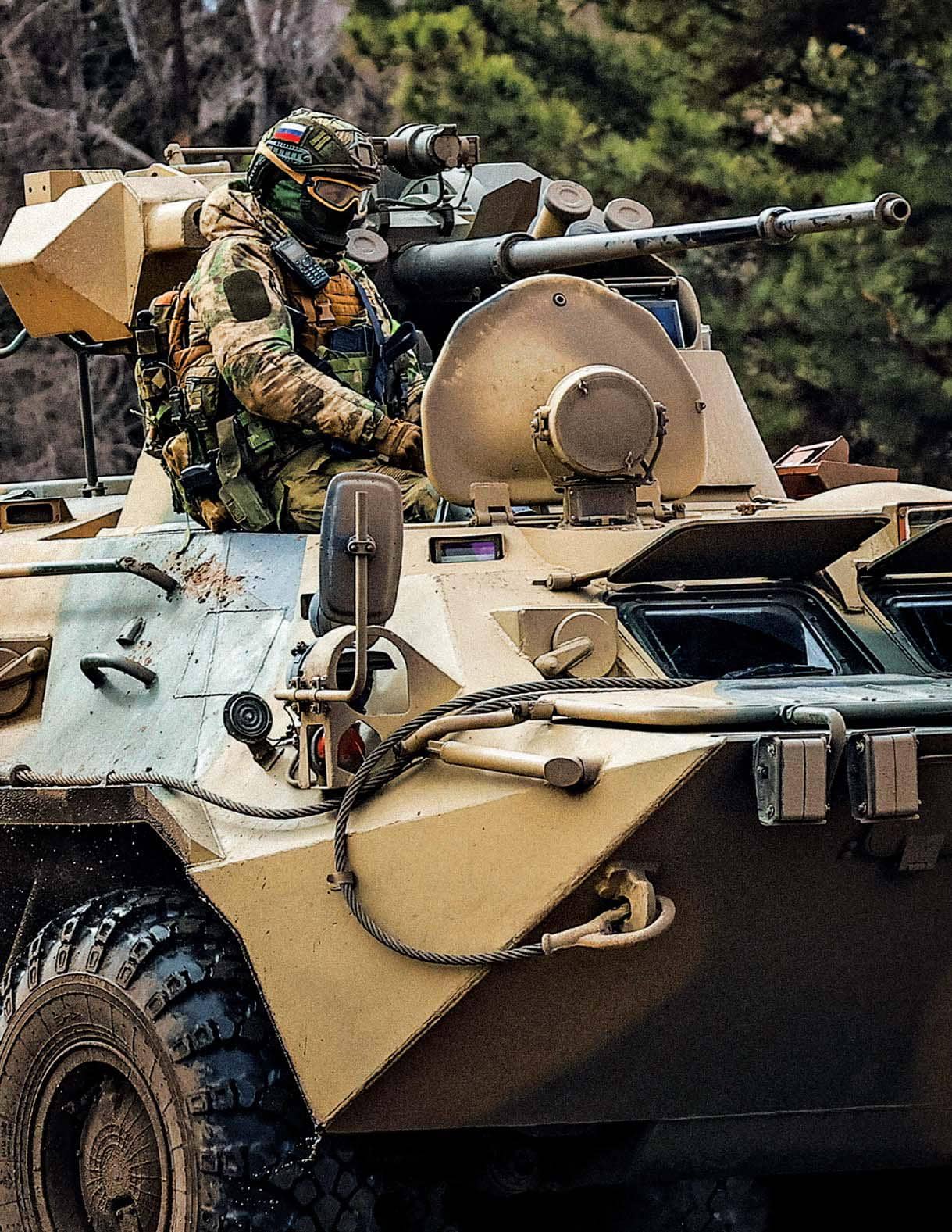
Russian forces, fully prepared and operating from Russian soil, were able to move just tens of miles into an adjoining country. What Putin's military weakness means for the west.

Russia's military is weak and backwards. Vladimir Putin's invasion of Ukraine produced this paradigm-shifting surprise one that should transform the West's view of Russia's prowess, the threat that the country represents and the Kremlin's future in the global arena.
After just one day of fighting, Russia's ground force lost most of its initial momentum, undermined by shortages of fuel, ammunition and even food, but also because of a poorly trained and led force. Russia began to compensate for the weaknesses of its land army with more long-range air, missile and artillery strikes. And President Putin resorted to a nuclear threat—a reaction, U.S. military experts say, to the failure of Moscow's conventional forces to make quick progress on the ground.
Other military observers are flabbergasted that a Russian invasion force, fully prepared and operating from Russian soil, has been able to move just tens of miles into an adjoining country. One retired U.S. Army general told Newsweek in an email: “We know that Russia has a plodding army and that Russian military force has always been a blunt instrument, but why risk the antipathy of the entire planet if you have no prospect of achieving even minimal gains.” The Army general believes that the only explanation is that the Kremlin overestimated its own forces.


Bu hikaye Newsweek dergisinin March 18 - 25, 2022 (Double Issue) baskısından alınmıştır.
Binlerce özenle seçilmiş premium hikayeye ve 9.000'den fazla dergi ve gazeteye erişmek için Magzter GOLD'a abone olun.
Zaten abone misiniz? Oturum aç
Newsweek'den DAHA FAZLA HİKAYE

Newsweek US
Out of This World
Elon Musk has made orbital computing—operating data centers in space—central to the future of artificial intelligence, arguing that the next phase of AI will move large amounts of computing infrastructure off Earth.

1 min
February 27 - March 6, 2026

Newsweek US
A WAR OF INCHES
The conflict between Kyiv and Moscow has become one of attrition, analysts say, with both sides paying a high price for small gains
7 mins
February 27 - March 6, 2026
Newsweek US
NEXT-DOOR ENABLER
How Beijing's carefully calibrated support has helped sustain Moscow as it fights Ukraine—without crossing key red lines
4 mins
February 27 - March 6, 2026

Newsweek US
Can Ken Martin Save the Democrats From Themselves?
The party may be winning special elections and polling strongly, yet members remain anxious. A year into his reign, the DNC chair is betting on organizing and infrastructure—not insiders—to turn momentum into power
16 mins
February 27 - March 6, 2026

Newsweek US
WHO WILL STRIKE GOLD AT THE ACADEMY AWARDS?
If you're looking to win your friends' pool, here are our favorites to take home the trophies
3 mins
February 27 - March 6, 2026

Newsweek US
ONE OPINION AFTER ANOTHER
Two-time Oscar winner Sean Penn has always worn his politics on his sleeve. After gaining a sixth Academy Award nomination for One Battle After Another, the actor tells Newsweek about giving his statuette to Volodymyr Zelensky, how Nicolás Maduro should be in prison and why Donald Trump won in 2024
12 mins
February 27 - March 6, 2026

Newsweek US
Out of This World
Elon Musk has made orbital computing—operating data centers in space—central to the future of artificial intelligence, arguing that the next phase of AI will move large amounts of computing infrastructure off Earth. That logic underpinned the merger of SpaceX and xAI in a $1.25 trillion deal, aligning rocket launch capacity with the future needs of AI computing.
1 min
February 27 - March 6, 2026

Newsweek US
OSCARS EMBRACE THE DARK SIDE
With record-breaking nods for Sinners, 2026 marks a shift toward horror. The Academy Awards may have finally gotten over its fear of the macabre
4 mins
February 27 - March 6, 2026

Newsweek US
LOVE IN THE LINE OF FIRE
In Ukraine's front-line city of Kramatorsk, couples separated by war risk brief reunions as Russian forces close in
8 mins
February 27 - March 6, 2026

Newsweek US
Strength in Numbers
When Japanese Prime Minister Sanae Takaichi dissolved parliament just three months into her premiership and called a snap election in January, it was widely seen as a high-risk gamble. Her Liberal Democratic Party had been weakened by scandal, coalition fractures and years of voter fatigue. A loss would almost certainly have ended her leadership. Instead, the bet produced one of the most decisive mandates in modern Japanese politics.
1 min
February 27 - March 6, 2026
Translate
Change font size