
Magzter GOLD ile Sınırsız Olun
Sadece 9.000'den fazla dergi, gazete ve Premium hikayeye sınırsız erişim elde edin
Watch out for glyphosate contamination
Farmer's Weekly
|Farmer's Weekly 24 September 2021
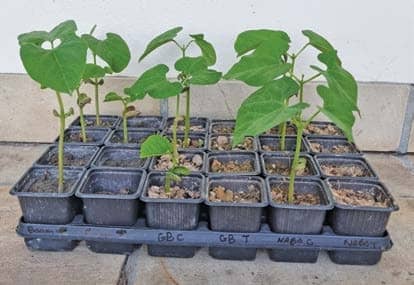
The repeated use of the herbicide glyphosate has been found to compromise fruit production. James Dick, co-owner of production consultancy DNS Crop Institute, spoke to Glenneis Kriel about this problem.

FAST FACTS
The herbicide glyphosate can build up in the soil and plant tissues.
Glyphosate contamination is mostly a problem in clay soils with low acidity.
Symptoms of contamination are numerous, ranging from production decline to increased susceptibility to diseases.
Glyphosate is considered an indispensable weed-management tool for both fruit and grain producers. However, it has recently become associated with a number of problems in crop production.
James Dick, co-owner of DNS Crop Institute, says that in certain Grabouw orchards, he has noticed a decline in production, as well as chlorosis and retarded growth in the apical reaches of some trees. Individual trees in orchards growing in heavier soils also exhibit typical symptoms of trace element deficiency.
While the exact cause of these problems is complex and uncertain, Dick suspects that glyphosate might be a major contributing factor.
“Glyphosate was originally developed by Stauffer Chemical in the 1960s as a chelating agent, which means it can bond to metal elements such as iron, manganese, zinc, calcium, nickel and copper. Monsanto then patented it as a herbicide in 1974,” says Dick.
Glyphosate kills plants by blocking a critical enzyme pathway known as the shikimic acid pathway. The enzyme is essential for plant respiration, so a plant that receives a full dose of glyphosate cannot survive unless it is engineered or evolves to be resistant. Glyphosate also weakens a plant’s defences against infectious organisms.


Bu hikaye Farmer's Weekly dergisinin Farmer's Weekly 24 September 2021 baskısından alınmıştır.
Binlerce özenle seçilmiş premium hikayeye ve 9.000'den fazla dergi ve gazeteye erişmek için Magzter GOLD'a abone olun.
Zaten abone misiniz? Oturum aç
Farmer's Weekly'den DAHA FAZLA HİKAYE

Farmer's Weekly
Christmas books to charm and delight
During the holiday season, one usually takes a well-earned break from the daily rutt, and there is no better time to catch up on some reading. Patricia McCracken has selected a wide spectrum of titles to tuck into.

4 mins
December 19-26, 2025

Farmer's Weekly
From chance to choice: a women's rise to farming success
Many raisin producers assume that retiring without a son to take over the farm means the end of the family business. Alcois Blaauw, this year's winner of the Raisins SA Female Producer Award, proves that assumption to be wrong. Glenneis Kriel reports.
4 mins
December 19-26, 2025

Farmer's Weekly
Grandparents below, and kids upstairs!
Dear Jonno,My wife and I want to escape to the countryside.
1 min
December 19-26, 2025

Farmer's Weekly
The Unseen Protector
The belief in the Unseen Protector or Unseen Shepherd endured for around 600 years, from the 13th century up until the 19th century. The farmer or his wife would provide a bowl of fresh cream and gruel to appease a spirit, whose blessing was imperative for a good summer harvest and animal health and fertility.
2 mins
December 19-26, 2025
Farmer's Weekly
THE HITCHING POST
I am a 67-year-old farmer residing on a farm near Harding in KwaZulu-Natal.
1 mins
December 19-26, 2025
Farmer's Weekly
Pet-friendly family accommodation in the Waterberg
With travel time of only a little over three hours from Johannesburg and 30 minutes from Vaalwater, guests will find Waterberg Cottages in Limpopo. Guests can plan a family-friendly holiday or weekend with plenty of activities to keep everyone occupied on this peaceful 2 500ha private game reserve.
4 mins
December 19-26, 2025
Farmer's Weekly
The Shuman legacy continues under the watchful eye of a fifth-generation farmer
Ken Shuman, co-owner of Hilson Shuman Farming, is committed to carrying on his father's towering legacy through innovation and adaptation.
9 mins
December 19-26, 2025
Farmer's Weekly
History's most famous musket
The Brown Bess musket was the standard issue firearm for British forces from 1722 to 1838. As Mike Burgess writes, this much-loved weapon contributed significantly to the consolidation of the British Empire that by 1922 was in control of a quarter of the earth's surface.
4 mins
December 19-26, 2025

Farmer's Weekly
Muddy soil can cause lameness due to footrot
It is important to clean legs and hooves and check for lameness in horses on a daily basis, especially when there is heavy rain
2 mins
December 19-26, 2025

Farmer's Weekly
The role of family farmers in sub- Saharan Africa
As part of the United Nations' recognition of family farming as a vital component of the global agricultural landscape, the decade between 2019 to 1928 was declared the Decade for Family Farming globally. Annelie Coleman compiled this report.
6 mins
December 19-26, 2025
Translate
Change font size