
Magzter GOLD ile Sınırsız Olun
Sadece 9.000'den fazla dergi, gazete ve Premium hikayeye sınırsız erişim elde edin
Counting The Cost Of Captive-bred Lion Hunting
Farmer's Weekly
|Farmer's Weekly 21 September 2018
Lizanne Nel, conservation manager for the South African Hunters’ and Game Conservation Association, says that hunting captive-bred lions is not good for the local hunting industry and will cost the country millions of rand in losses if allowed to continue.

There is increasing pressure on all forms of wildlife-based tourism and enterprises to become more sustainable and generate income and benefits without causing significant deterioration of the environment and natural resources. At the same time, the industry is expected to address social responsibility.
The latter directly affects the ‘social licence’ of an enterprise to operate, whether it is involved in photographic tourism, hunting, game ranching and breeding, or animal welfare. This is particularly important for the future of hunting, which is globally exposed to increased scrutiny.
It is critical that those organisations in the wildlife sector that support responsible wildlife utilisation nail their colours to the mast to demonstrate and improve their performance as responsible citizens.
TAKING A STAND
The South African Hunters’ and Game Conservation Association (SA Hunters), which represents primarily local consumptive hunters, is the country’s largest hunting and conservation organisation. It recently joined a newly formed association, the Custodians of Professional Hunting and Conservation (Custodians), in a presentation to the Parliamentary colloquium. Both organisations strongly oppose the shooting of captive-bred lions and regard it as morally and socially unacceptable, and stated to Parliament that the practice does not comply with the principles of fair-chase hunting and the requirements of hunting to be sustainable and socially responsible.
According to Custodians, the damage caused by the shooting of captive-bred lions in South Africa is detrimental to the wildlife industry and not worth the estimated 8% it contributes to the annual income generated from international hunting tourists. In addition, it forms a minute part of the R10,8 billion that the hunting sector in South Africa contributes to the country’s economy annually.
THE VALUE OF HUNTING


Bu hikaye Farmer's Weekly dergisinin Farmer's Weekly 21 September 2018 baskısından alınmıştır.
Binlerce özenle seçilmiş premium hikayeye ve 9.000'den fazla dergi ve gazeteye erişmek için Magzter GOLD'a abone olun.
Zaten abone misiniz? Oturum aç
Farmer's Weekly'den DAHA FAZLA HİKAYE
Farmer's Weekly
Infrastructure, policy, and finance will be the African continent's growth drivers
Africa's agricultural potential is vast, but inefficiencies in infrastructure, trade policy, and finance limit growth. Investments in transport, cold storage, irrigation, and digital trade systems, among others, are key to unlocking faster, cheaper, and more efficient agricultural trade.

3 mins
January 2-9, 2026

Farmer's Weekly
SAPPO Academy showcases skills development and small business success
The South African Pork Producers' Organisation (SAPPO) Academy, a training organisation that promotes animal, environmental, and public health in the pig industry through knowledge transfer, recently hosted a mini development symposium in Pretoria. The event included an afternoon of meaningful dialogue, strategic learning, and leadership exchange, effectively bridging academic insight with real-world industry innovation.
3 mins
January 2-9, 2026

Farmer's Weekly
Backing for SA Canegrowers as sugar imports soar
Coenie Snyman, winemaker and founder of Rock of Eye Wines, was named the 2025 Diners Club Winemaker of the Year for his Rock of Eye Cabernet Sauvignon 2022, while Marnich Aucamp, assistant winemaker at Stellenbosch Vineyards, won the Young Winemaker of the Year award for his Stellenbosch Vineyards Credo Chenin Blanc 2024 at a gala dinner near Kleinmond in the Western Cape.
1 mins
January 2-9, 2026

Farmer's Weekly
New or used? A practical guide to second-hand farm equipment
Second-hand farm machinery can deliver excellent value, if you know what to look for. Western Cape equipment broker Debbie Smit gave Lindi Botha practical advice to help farmers decide when to buy new, when pre-owned is the smarter choice, and how to avoid the costly pitfalls that often catch buyers off-guard.
4 mins
January 2-9, 2026
Farmer's Weekly
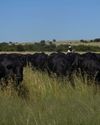
The story of the Drakensberger beef cattle breed's evolution in Africa
The Drakensberger cattle breed has been part of the South African landscape for ages. So-called black indigenous cattle existed in South Africa as early as the 15th and 16th centuries and formed the foundation of the current Drakensberger beef cattle breed.
4 mins
January 2-9, 2026
Farmer's Weekly
Man vs machine - which works best in SA's farming sector?
South African farmers have embraced both mechanisation and staffing solutions to improve farm level efficiency. Sabrina Dean investigated the pros and cons of both and filed this report.
9 mins
January 2-9, 2026
Farmer's Weekly
SA's poultry industry must be more inclusive and sustainable
In spite of great progress made over the past 30 years in South Africa's poultry value chain, setbacks such as avian influenza and trade restrictions are calling for official intervention
2 mins
January 2-9, 2026
Farmer's Weekly
An introduction to forward contracts and commodity futures for South African farmers
The agriculture sector is notoriously volatile, but producers can find stability using financial derivative tools. This article clearly defines and differentiates between two key instruments: forward contracts and futures contracts.
3 mins
January 2-9, 2026
Farmer's Weekly
Less tillage, more life: the machines and techniques behind soil recovery
Soil health is the foundation of global food security, environmental quality, and agricultural sustainability. According to expert Dr Hendrik Smith, reversing the cycle of soil degradation requires the continuous application of regenerative conservation agriculture principles, with no-tillage cultivation being nonnegotiable.
4 mins
January 2-9, 2026

Farmer's Weekly
Five Joburg hotels that make business a pleasure
Even with its well-documented problems, Johannesburg remains the centre of business in South Africa. And unlike some cities with their mountains and oceans, you'll get value and quality for a fraction of the price at these hotels. There are also great views in the mix. By .
6 mins
January 2-9, 2026
Translate
Change font size