
Magzter GOLD ile Sınırsız Olun
Sadece 9.000'den fazla dergi, gazete ve Premium hikayeye sınırsız erişim elde edin
The digital craze bringing big bucks - and big problems
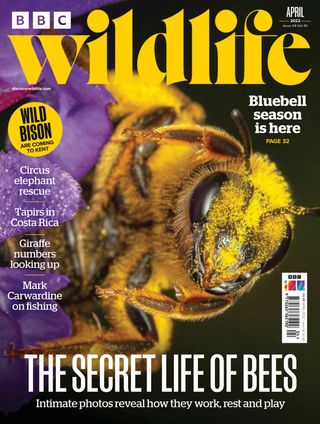
BBC Wildlife
|April 2022
NFTs are raising cash for conservation. But what on earth are they? And what are the downsides?

ABOUT THE AUTHOR
Graeme Green is a British photographer, journalist and travel writer. He has travelled the world for the last 15 years and his work has appeared in The Guardian and National Geographic. Graeme is also the founder of the New Big 5 wildlife photography project. Find out more at newbig5.com.
THE WORLD WASN'T CRYING OUT for a turtle-cat hybrid. But the arrival of "Turtle-cat' in 2018 proved such a hit that someone forked out US$25,000 for it. What they paid for wasn't a new-to-science discovery, a genetic experiment, a toy, or even an astounding work of art, but what is rather catchily known as a 'non-fungible token' (NFT).
If you're lost at the words 'fungible' or 'token', you're not alone. NFTs are a bewildering subject. Essentially, they're a digital trading system. “Non-fungible tokens are similar to cryptocurrencies, like Bitcoin," explains Peter Howson, senior lecturer in international development at Northumbria University. “The big difference is that, whereas individual Bitcoins all have the same value and are interchangeable, NFTs are more like antique baseball cards: each has a different value. Fungible means ‘mutually interchangeable' and 'of identical value'.
Anything digital can be represented as an NFT. They're crypto-collectibles rather than cryptocurrency. You collect and trade them with other people who share your interest.”
Turtle-cat, also known as Honu, was created by online blockchain game CryptoKitties, and was auctioned to raise money for marine conservation. It was a sign of things to come - NFTs now sell for ludicrous sums of money, and are proving a significant source of revenue for charities.

Bu hikaye BBC Wildlife dergisinin April 2022 baskısından alınmıştır.
Binlerce özenle seçilmiş premium hikayeye ve 9.000'den fazla dergi ve gazeteye erişmek için Magzter GOLD'a abone olun.
Zaten abone misiniz? Oturum aç
BBC Wildlife'den DAHA FAZLA HİKAYE
BBC Wildlife
"I was terrified the elephant would ram us"
African elephant in Kenya

2 mins
January 2026
BBC Wildlife
ALL YOU EVER NEEDED TO KNOW ABOUT THE Fennec fox
THE FENNEC FOX IS THE SMALLEST fox in the world, with a body length that can be as little as 24cm.
3 mins
January 2026
BBC Wildlife
INTO THE PLASTISPHERE
A unique synthetic ecosystem is evolving in our oceans – welcome to the plastisphere
7 mins
January 2026
BBC Wildlife
“More than half of all animal life exists in a parasitic relationship, and all life lives in symbiosis”
Our survival depends on species evolving to live together - but some relationships take dark turns
7 mins
January 2026
BBC Wildlife
Are animals able to dream?
SLEEP IS A MYSTERIOUS THING. FOR A long time, we weren't sure why we do it.
1 mins
January 2026
BBC Wildlife
Does a cuckoo know it's a cuckoo?
ABSURD LITTLE BIRDS ACROSS THE world lay their eggs in the nests of other species, leaving the hapless parents to raise a changeling at the expense of their own offspring.
2 mins
January 2026
BBC Wildlife
Orcas killing young sharks
Juvenile great whites are easy prey for orca pod
1 mins
January 2026
BBC Wildlife
Ocean goes on tour
Acclaimed film touring the UK, backed by live orchestra and choir
1 min
January 2026
BBC Wildlife
Feisty bats hunt like lions
Winged mammals use a 'hang and wait' strategy to take down large prey
1 mins
January 2026

BBC Wildlife
SNAP-CHAT
Richard Birchett on magical merlins, wily coyotes and charging deer
2 mins
January 2026
Translate
Change font size