Prova GOLD - Gratis
TOOR TOUR
Down To Earth
|June 16, 2026
What makes pigeon pea so ubiquitous across cuisines in India
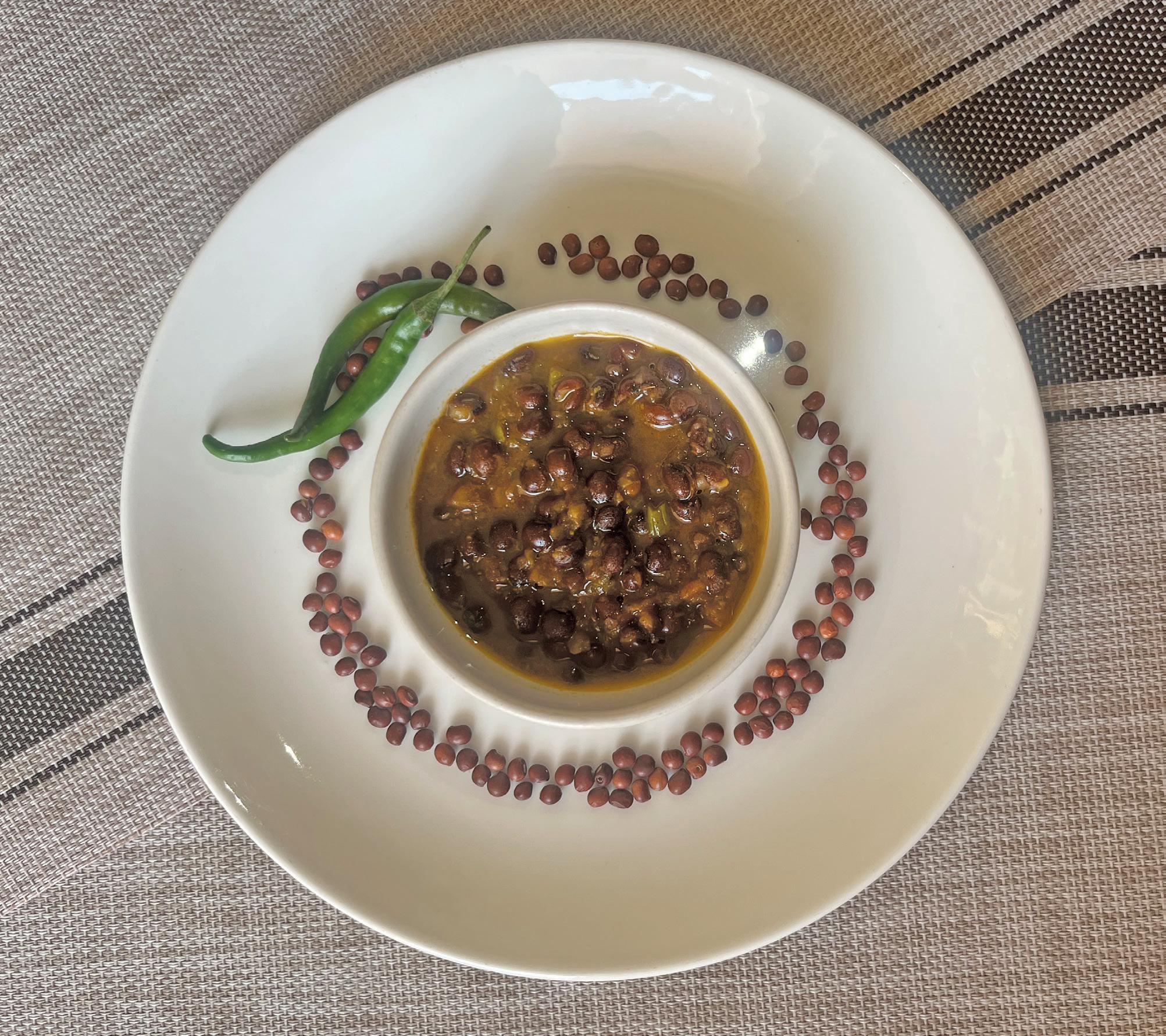
DURING A trip from Dehdraun to Chamoli in Uttarakhand, I stopped at a small stall for a cup of tea. Next to it was a farmer selling produce. Among his offerings were small, brown-red seeds, which he called pahadi tor (local pronunciation for toor). I bought a small packet for ₹50. This happened in March 2022. At the time, I and most probably the farmer, were not aware that efforts were underway to get this legume a Geographical Indication (GI) tag. The official application was submitted the next month by SEWA Koshish Kisaan Utpadak Swayatt Sahkarita, a farmer-producer organisation (FPO) in Tehri Garhwal, with support from the state's organic commodity board, department of agriculture and farmers welfare and National Bank for Agriculture and Rural Development.
A GI tag is a form of an intellectual property right, given to produce with a distinct geographical origin, reputation or characteristics inherent to that location. Debates could arise on whether the pahadi toor fits the bill; in scientific lexicon, the legume is called Cajanus cajan, exactly the same as the common pigeon pea or arhar found across the plains. However, according to the FPO, the toor's uniqueness lies in the fact that it can grow even at elevations of 2,000 metres as a short-duration variety, and in its drought tolerance, which makes it suitable for cultivation as a rain-fed crop. Pahadi toor is grown across Uttarakhand, but Chamoli, Almora, Tehri Garhwal, Nainital, Pithoragarh and Champawat districts are the main production areas. As it is grown organically in an unpolluted environment, it has a distinct rich, earthy flavour, claimed the GI tag application.
The FPO's bid was successful, and the Geographical Indication Registry in Chennai awarded the toor a GI tag in November 2023.


Den här artikeln är från utgåvan June 16, 2026 av Down To Earth.
Prenumerera på Magzter GOLD för att få tillgång till tusentals kurerade premiumartiklar samt 10 000+ tidskrifter och dagstidningar.
Redan prenumerant? Logga in
FLER ARTIKLAR FRÅN Down To Earth
Down To Earth
MAJESTIC SARUS STAGES COMEBACK
Involvement of farmers in conservation helps the sarus crane population soar in eastern Uttar Pradesh over the past decade

5 mins
June 16, 2026

Down To Earth
Global resistance to AI data centres hardens
India must learn how to regulate environmentally disastrous data centres that guzzle more water and power than entire nations
4 mins
June 16, 2026

Down To Earth
SUMMER SMOG
Ground-level ozone is one of the national capital's least appreciated public health threat
1 mins
June 16, 2026

Down To Earth
A FOREST IN WAIT
For five decades, Abujhmad in Chhattisgarh was closed to the country. Now, as the region opens up, ANIL ASHWANI SHARMA travels to villages in its dense forests to see how isolation has impacted the people and development
6 mins
June 16, 2026

Down To Earth
DON'T WASTE THE FUTURE
Policymakers may need to focus less on expanding programmes and more on improving their effectiveness and reach, suggests the latest NFHS-6 data
3 mins
June 16, 2026
Down To Earth
NEED A FOREST TRIBUNAL
A tribunal will provide people a dedicated independent forum where they will have a statutory right to approach
2 mins
June 16, 2026
Down To Earth
Moment or movement
ONE DEFINITION of the word metamorphosis in the dictionary is “a striking alteration in appearance, character, or circumstances”.
2 mins
June 16, 2026

Down To Earth
El Niño, amplified
As a possible super El Niño looms in 2026, scientists warn of devastations that may extend into 2027
6 mins
June 16, 2026

Down To Earth
A mindless denial
District level bodies are increasingly refusing tribal population's rights over resources guaranteed by the forest rights Act
5 mins
June 16, 2026

Down To Earth
TOOR TOUR
What makes pigeon pea so ubiquitous across cuisines in India
4 mins
June 16, 2026
Listen
Translate
Change font size