Prova GOLD - Gratis
Beyond Outrage: Rethinking Great Nicobar
TerraGreen
|June 2026
A Call for Consistent Focus
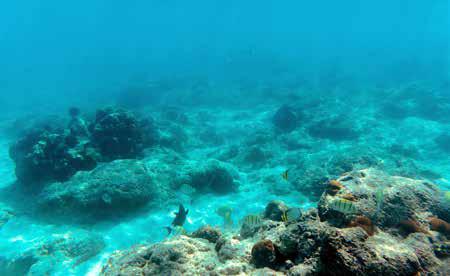
The article by Gajanan Khergamker examines the debate around the Great Nicobar development project, suggesting that much of the public reaction has been short-lived and surface-level.
While acknowledging legitimate concerns about environmental impact and tribal rights, it stresses the need for consistent, long-term attention rather than episodic outrage. The piece highlights the importance of balancing development with ecological protection and social responsibility, arguing that meaningful progress depends on careful oversight, scientific evaluation and transparent decision-making rather than momentary public attention. A famous politician's visit to Great Nicobar in April 2026 was framed as a moral intervention against ecological destruction and tribal displacement. Standing amid the dense tropical landscape of Campbell Bay, he described the proposed infrastructure project on the island as among the gravest assaults on India’s natural and indigenous heritage. The political timing of the visit, however, carried its own unmistakable significance. The outrage that followed travelled through the predictable circuitry of digital activism with extraordinary speed. Social media accounts that had displayed little prior engagement with the geography, ecology or strategic significance of the Andaman and Nicobar archipelago suddenly discovered a deeply performative environmental conscience.
The Great Nicobar Island Development Project is neither a small undertaking nor an uncomplicated one. Spread across more than 166 square kilometres, it involves the construction of a transhipment port, an international airport, a township and associated power infrastructure. The scale of forest diversion involved has triggered concern among environmentalists, scientists, and tribal rights advocates. Those concerns deserve rigorous attention because projects of this scale alter ecological systems permanently and reshape demographic realities for generations.


Den här artikeln är från utgåvan June 2026 av TerraGreen.
Prenumerera på Magzter GOLD för att få tillgång till tusentals kurerade premiumartiklar samt 10 000+ tidskrifter och dagstidningar.
Redan prenumerant? Logga in
FLER ARTIKLAR FRÅN TerraGreen

TerraGreen
World Environment Day 2026 A Renewed Call for Climate Action
Observed annually on June 5, World Environment Day (WED) has evolved into the world’s largest global platform for environmental awareness and action.

4 mins
June 2026

TerraGreen
New Solar Desalination Breakthrough Makes Fresh Water without Toxic Brine
According to the United Nations, 2.2 billion people still do not have access to safely managed drinking water.
1 min
June 2026

TerraGreen
Homes that Nurture Nature and Togetherness
Rethinking Homes through Conservation and Community
8 mins
June 2026

TerraGreen
Treethane in the Caulosphere
Unexplored Mechanisms and Climate Implication
5 mins
June 2026

TerraGreen
Rewriting the Plastic Story
For a Sustainable Climate Future
7 mins
June 2026
TerraGreen
India Launches First Wind Supply-Chain Platform
To strengthen the country's wind-energy ecosystem, the Ministry of New and Renewable Energy, Government of India, has launched WT-MARUT, India's first digital platform dedicated to wind-energy supply-chain management.
1 min
June 2026

TerraGreen
Nagpur Launches Major Lake Restoration Drive
The Nagpur Municipal Corporation intensified efforts to restore Ambazari Lake ahead of the monsoon, removing invasive water hyacinth and addressing untreated sewage inflows.
1 min
June 2026

TerraGreen
Electrification Emerges as Key Climate Strategy at Bonn Talks
Electrification became a central theme at the Bonn climate negotiations, where policymakers discussed replacing fossil fuels in transport, industry and buildings with clean electricity.
1 min
June 2026

TerraGreen
Rising Temperatures
Drivers, Implications, and the Way Forward
7 mins
June 2026
TerraGreen
Beneath Our Feet Lies a Fungal Superhighway Stretching 68 Quadrillion Miles
Beneath the ground, vast networks of fungi quietly support plant life and play an important role in regulating the planet's climate by helping move carbon into soils.
1 min
June 2026
Listen
Translate
Change font size