Poging GOUD - Vrij
The Emerging Wonderland Of 'LIVING' COMPUTER SYSTEMS
Electronics For You
|November 2025
What if the future of computing is not silicon but living brain cells? Inside laboratories today, scientists are building machines that think, grow, and learn like life itself.

Living computers, also known as biocomputers, are not yet a part of everyday technology. Like quantum computers, they are still mostly experimental, existing in laboratories and research models. But the idea behind them is powerful: instead of using transistors to process information, biocomputers use living neurons.
Throughout history, humans have found many ways to process information, leading to the dominance of digital computing today. But every time a new method of computing emerges, it brings the potential to change what we can do. Biocomputing is one such unconventional path, offering possibilities that digital systems may never reach. In that way, it is similar to quantum computing, which promises to solve particular problems that digital computers cannot handle.
Biocomputers use much less energy. Neurons are a million times more energy-efficient than silicon for the same computation. Neurons do not grow on a chip—they are grown beforehand in the laboratory. Scaling neurons is easier than silicon because we can multiply them in the laboratory and then place them on hardware to build a biocomputer. And unlike electronic components, neuron-based systems can be composted at end-of-life, reducing pollution.
There is also a deeper link to artificial intelligence. Most AI today works by simulating neurons, which are called artificial neurons. Systems like ChatGPT and DALL·E run on these digital approximations. But real neurons are far more complex. If we could build AI using real neurons, we might unlock even greater capabilities, while also using far less energy. That is a rare engineering scenario: achieving better performance while simultaneously reducing power consumption.
Of course, biocomputing comes with its own challenges. But the potential gains—in both capability and sustainability—are strong reasons why researchers are still exploring this unusual but promising direction.


Dit verhaal komt uit de November 2025-editie van Electronics For You.
Abonneer u op Magzter GOLD voor toegang tot duizenden zorgvuldig samengestelde premiumverhalen en meer dan 9000 tijdschriften en kranten.
Bent u al abonnee? Aanmelden
MEER VERHALEN VAN Electronics For You
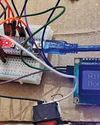
Electronics For You
Smart Air Quality MONITORING SYSTEM
Air pollution is a critical concern in modern living environments, particularly in enclosed spaces such as homes, offices, factories, and laboratories, where prolonged exposure to harmful gases presents serious health risks. Continuous air quality monitoring is therefore essential to maintain safe and healthy indoor conditions. Here we detail the design and implementation of a compact, low-cost, smart air-quality monitoring system based on the Arduino Nano platform.

3 mins
February 2026

Electronics For You
"We Are Strengthening Supply Chains, Automation, And Talent To Drive Scalable, Sustainable Manufacturing Growth"
In an interaction with EFY’s Nitisha Dubey, Jayaramu N, from Aimtron Electronics shares insights into key government initiatives, sector challenges, and the company’s strategic growth and expansion plans.
2 mins
February 2026

Electronics For You
"We Are Growing At 30-40% Annually And Plan To Go For An IPO By 2027"
Is managing diverse customers easy in the EMS sector? In a conversation with EFY's Nitisha Dubey, Ashvin Navadia of Vinrox Technologies discusses how EMS companies address customer complexity and high-mix, variable-volume production.
2 mins
February 2026
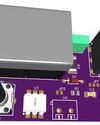
Electronics For You
Low-Cost 40A, 1200V SOLID-STATE RELAY And VOLTAGE CONTROLLER
Relays are essential components in electronic systems and are widely used in IoT and AC-powered applications to control loads using sensor outputs or low-voltage DC signals. Conventional electromechanical relays rely on a mechanical plunger that physically connects or disconnects AC contacts to perform switching.
5 mins
February 2026

Electronics For You
"Investment In Talent And Automation Is Central To Building Scalable Manufacturing"
Is the Gujarat government supporting the growth of the electronics industry? How does Mefron manage skilled manpower and talent challenges? In an interaction with EFY's Nitisha, Hiren Bhandari of Mefron Technologies India Pvt Ltd discusses government support for the electronics sector and Mefron's approach to skilled manpower challenges.
2 mins
February 2026
Electronics For You
IndusAlexa And Google Assistant-Enabled IoT CONTROLLER
AI smart speakers and AI-enabled home automation devices are widely adopted and continue to see strong demand. However, achieving seamless integration with a high level of customisation remains challenging, particularly when adding sensors, lights, switches, relay actuators, fans, and bulbs to meet specific requirements.
6 mins
February 2026
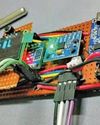
Electronics For You
DIGITAL GAUGE And SUPER ELEVATION MEASURING System For Railway Tracks
Railway track laying, construction, and maintenance demand precise measurement of the gauge between two parallel tracks and superelevation, that is, the height difference between rails.
5 mins
February 2026
Electronics For You
Musical TEMPERATURE ALARM
Monitoring temperature is essential across many applications, from protecting sensitive electronic equipment to maintaining comfortable room conditions. Conventional temperature alarms typically use buzzers or LEDs, providing only visual, monophonic alerts. Here we present a musical temperature alarm that generates a pleasant melody, rather than a simple beep, when a preset temperature threshold is exceeded.
3 mins
February 2026
Electronics For You
THE WIDE SCOPE OF AI: Everything Everywhere!
What exactly should AI do for a business? Where does it stop? How do we define the scope? This lack of definition is the problem.
5 mins
February 2026
Electronics For You
OVERCURRENT/IDMT RELAY Using Arduino Nano And ACS712 Current Sensor
Overcurrent relays with inverse definite minimum time (IDMT) characteristics are widely used in power systems to protect electrical feeders and loads from overheating under abnormal operating conditions.
4 mins
February 2026
Listen
Translate
Change font size