Poging GOUD - Vrij
Marie Curie
The Week Junior Science+Nature UK
|Issue 71
Find out the amazing story of the woman who changed science.
-
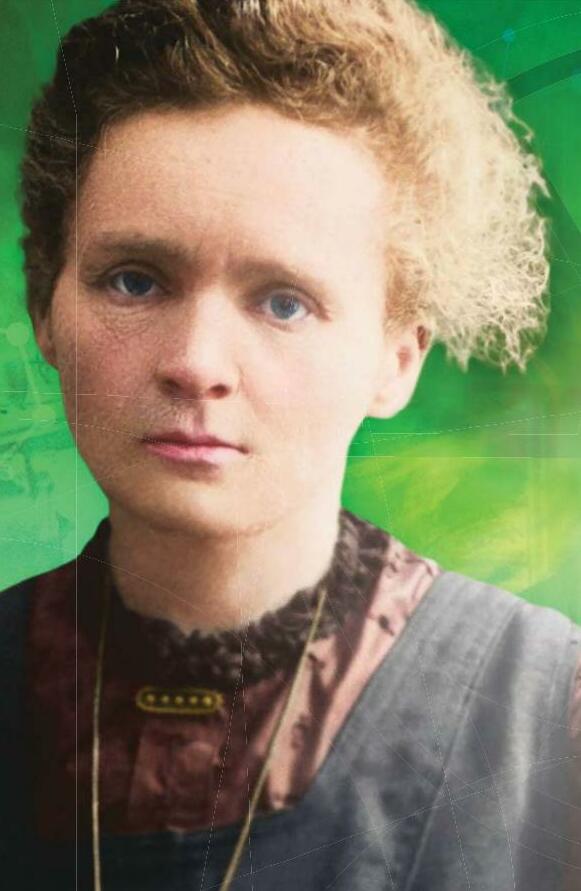
Marie Curie might have lived a long time ago, but she is still inspiring people today. This superstar scientist won two Nobel Prizes and discovered two new chemical elements. She was also one of the first researchers to investigate radioactivity and organised mobile X-ray units during the First World War (1914–1918). Curie did this just a few years after women were first allowed to study at universities. To mark the International Day of Women and Girls in Science on 11 February, let’s take a look at this remarkable scientist’s life story.
Secret schooling
In 1867, when Maria Sklodowska (as she was then known) was born, Poland was part of the Russian Empire. Around the world, women were only just beginning to be accepted into universities. The first French woman to gain a degree graduated in August 1861. In 1868, the first women were admitted to university in Britain. In Poland, however, women were not allowed to enrol in universities, so the young Maria took lessons with the Flying University, a secret college that gave lessons in changing locations such as private houses around the country.

Dit verhaal komt uit de Issue 71-editie van The Week Junior Science+Nature UK.
Abonneer u op Magzter GOLD voor toegang tot duizenden zorgvuldig samengestelde premiumverhalen en meer dan 9000 tijdschriften en kranten.
Bent u al abonnee? Aanmelden
MEER VERHALEN VAN The Week Junior Science+Nature UK

The Week Junior Science+Nature UK
Make a smoothie bowl
Use left-over fruit and veg to whip up this breakfast treat.

1 min
May 2026
The Week Junior Science+Nature UK
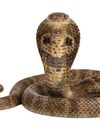
Indian snakes travel by train
King cobras - the world's longest venomous snakes - are slithering on board trains across India, researchers have revealed.
1 min
May 2026

The Week Junior Science+Nature UK
Carr House Meadows
The UK's wildflower meadows are often brimming with life, colour and sound. As these habitats are full of plant and animal species, they are very precious.
1 min
May 2026
The Week Junior Science+Nature UK
Did dragons ever exist?
These fire-breathing monsters have been flying into stories for centuries.
2 mins
May 2026

The Week Junior Science+Nature UK
Should big species return to the UK?
Would you be happy about large animals roaming our countryside - including predators?
1 mins
May 2026

The Week Junior Science+Nature UK
SAVING CORAL REEFS
Find out how scientists, conservationists and imaging experts are joining forces to discover more about corals and bring reefs back to life.
1 mins
May 2026
The Week Junior Science+Nature UK
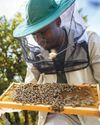
THE SECRET LIFE OF BEES
Step into a miniature world that quite literally buzzes with life.
1 min
May 2026
The Week Junior Science+Nature UK
Windermere Science Festival
On 9 and 10 May, Windermere Science Festival returns to Windermere Jetty Museum. Get ready for science-themed family fun, including roving robots and awesome virtual reality.
1 min
May 2026

The Week Junior Science+Nature UK
Aneeshwar Kunchala
Hear from a young TV star about his new series and his ambition to save wildlife.
3 mins
May 2026

The Week Junior Science+Nature UK
WORLD'S OLDEST COCKATIEL
Sonny, a family pet living in the US state of Illinois, has been officially recognised as the oldest of his species.
1 min
May 2026
Listen
Translate
Change font size