
Ga onbeperkt met Magzter GOLD
Krijg onbeperkte toegang tot meer dan 9000 tijdschriften, kranten en Premium-verhalen voor slechts
Poging GOUD - Vrij
A massive Moon mystery explained
The Week Junior Science+Nature UK
|July 2025
Space scientists now understand why the Moon's faces look so different.
-
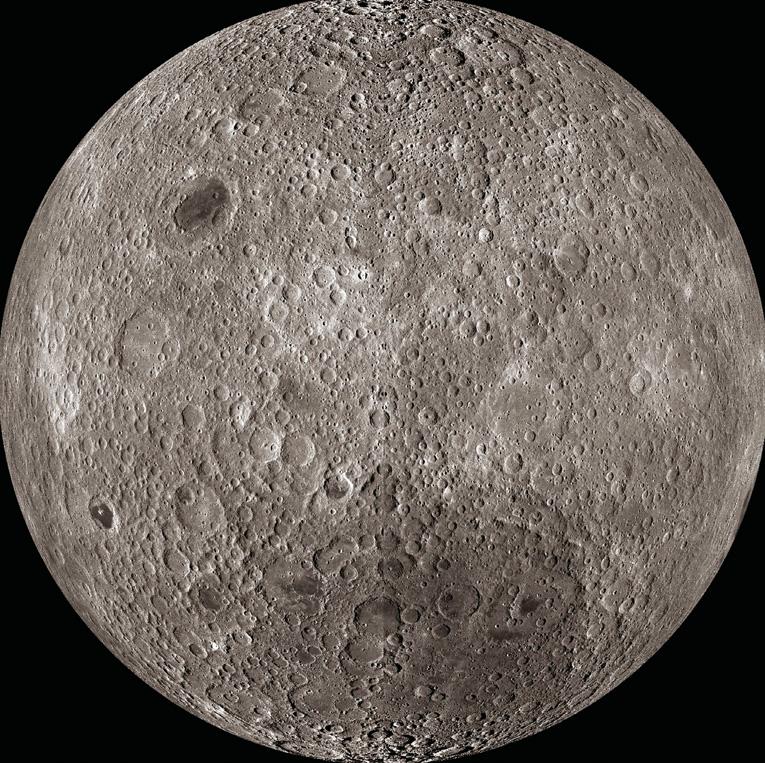
Scientists from the US space agency NASA have discovered new evidence that solves a long-standing mystery — and proves an old theory — about why the two sides of the Moon look completely different to one another. They have found that the side of the Moon that faces Earth is more bendy under the surface than the other side.
You can't see the Moon's far side from Earth because the same side always faces the planet. This is because the Moon takes exactly the same time to rotate as it takes to orbit Earth. The near-side face we see is covered with dark patches. These are giant plains of ancient lava from volcanic eruptions. The far side, facing away from Earth, is more mountainous, with fewer plains, and is covered in craters. Scientists have long suspected that the Moon's mismatched faces may be linked to differences deep within its interior, and now they have found evidence to prove it.

Dit verhaal komt uit de July 2025-editie van The Week Junior Science+Nature UK.
Abonneer u op Magzter GOLD voor toegang tot duizenden zorgvuldig samengestelde premiumverhalen en meer dan 9000 tijdschriften en kranten.
Bent u al abonnee? Aanmelden
MEER VERHALEN VAN The Week Junior Science+Nature UK

The Week Junior Science+Nature UK
Make a smoothie bowl
Use left-over fruit and veg to whip up this breakfast treat.

1 min
May 2026
The Week Junior Science+Nature UK
Indian snakes travel by train
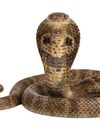
King cobras - the world's longest venomous snakes - are slithering on board trains across India, researchers have revealed.
1 min
May 2026
The Week Junior Science+Nature UK
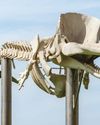
Carr House Meadows
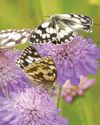
The UK's wildflower meadows are often brimming with life, colour and sound. As these habitats are full of plant and animal species, they are very precious.
1 min
May 2026
The Week Junior Science+Nature UK
Did dragons ever exist?
These fire-breathing monsters have been flying into stories for centuries.
2 mins
May 2026

The Week Junior Science+Nature UK
Should big species return to the UK?
Would you be happy about large animals roaming our countryside - including predators?
1 mins
May 2026

The Week Junior Science+Nature UK
SAVING CORAL REEFS
Find out how scientists, conservationists and imaging experts are joining forces to discover more about corals and bring reefs back to life.
1 mins
May 2026
The Week Junior Science+Nature UK
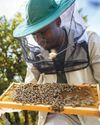
THE SECRET LIFE OF BEES
Step into a miniature world that quite literally buzzes with life.
1 min
May 2026
The Week Junior Science+Nature UK
Windermere Science Festival
On 9 and 10 May, Windermere Science Festival returns to Windermere Jetty Museum. Get ready for science-themed family fun, including roving robots and awesome virtual reality.
1 min
May 2026

The Week Junior Science+Nature UK
Aneeshwar Kunchala
Hear from a young TV star about his new series and his ambition to save wildlife.
3 mins
May 2026
The Week Junior Science+Nature UK
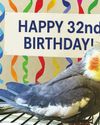
WORLD'S OLDEST COCKATIEL
Sonny, a family pet living in the US state of Illinois, has been officially recognised as the oldest of his species.
1 min
May 2026
Listen
Translate
Change font size