Poging GOUD - Vrij
Mondays Really Are More Stressful
Scientific American
|January 2026
The start of the workweek can be a biologically measurable stressor, with consequences for long-term health that can stretch into retirement
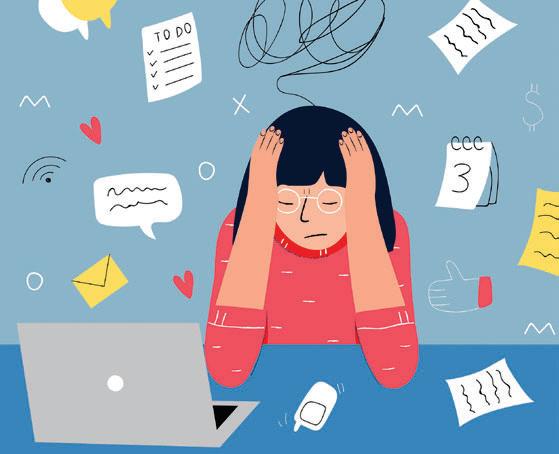
FOR DECADES THE TERM “MONDAY BLUES” has been shorthand for the collective groan that greets the start of each workweek. It’s also well documented in medical statistics. Mondays come with higher rates of anxiety, stress and even suicide compared with other days. Studies on the phenomenon across entire countries have found a 19 percent increase in the chance of sudden cardiac death from confirmed heart attacks and other cardiovascular events on Mondays, affecting both men and women across age groups.
It now turns out that the effect of Mondays can extend well beyond fleeting fluctuations in mood. One of us (Chandola) recently discovered that people who report feeling anxious on Mondays show evidence of heightened activity in the body’s stress-response system over months. More surprising, this effect persisted among older adults who were no longer in the workforce, suggesting that, for some people, the stress of Mondays is a lifelong burden.
The biological underpinnings of the “Monday effect” have long been unclear, however. Is the type of stress and anxiety experienced on Monday biologically distinct? And could it be leaving a mark on the body even after people stop working?
To answer these questions, Chandola focused on the stress hormone cortisol. The hypothalamic-pituitary-adrenal axis, a central stress pathway linking brain and body, manages much of people’s response to stress. When we experience a stressor—whether it’s something psychological, such as a looming deadline, or physical, such as a biting cold morning—our brain triggers the release of cortisol. The hormone helps us manage short-term stress by mobilizing energy and sharping focus. But chronically high levels of cortisol disrupt the brain and bodily systems, impairing immune function and increasing the risk of anxiety, depression, cardiovascular disease, diabetes and obesity.

Dit verhaal komt uit de January 2026-editie van Scientific American.
Abonneer u op Magzter GOLD voor toegang tot duizenden zorgvuldig samengestelde premiumverhalen en meer dan 9000 tijdschriften en kranten.
Bent u al abonnee? Aanmelden
MEER VERHALEN VAN Scientific American

Scientific American
Probiotic Hope and Hype
Despite their popularity, supplements with billions of \"good\" microbes help only a few illnesses, research shows

3 mins
January 2026
Scientific American
Mondays Really Are More Stressful
The start of the workweek can be a biologically measurable stressor, with consequences for long-term health that can stretch into retirement
4 mins
January 2026

Scientific American
Tiny Display
An e-paper breakthrough brings extremely high-resolution color
2 mins
January 2026
Scientific American
Fine-Feathered Snack
A bat's tracker documents a dramatic midair hunt
2 mins
January 2026

Scientific American
OUR ROBOTIC PICTURE
Will mechanical helpers ever be commonplace at home, at work and beyond?
11 mins
January 2026

Scientific American
"Use Your Words" Can Be Good for Kids' Health
Writing or expressing feelings can help adults mentally and physically. Kids are no different
5 mins
January 2026

Scientific American
Distant Diplomacy
Unrelated species “talk” and understand one another to avoid threats
2 mins
January 2026

Scientific American
Behind the Nobel
A 2025 winner reflects on the mysterious T cells that won him the prize
5 mins
January 2026

Scientific American
A Suite of Killers
Heart ailments, kidney diseases and type 2 diabetes actually may be part of just one condition. It's called CKM syndrome
10 mins
January 2026

Scientific American
Static Launch
Tiny worms leap toward their fruit fly hosts with an electric “tractor beam”
3 mins
January 2026
Listen
Translate
Change font size