Poging GOUD - Vrij
Brain Washing
Scientific American
|September 2025
Cleaning waste from the brain is an essential function of sleep—and it could help ward off dementia
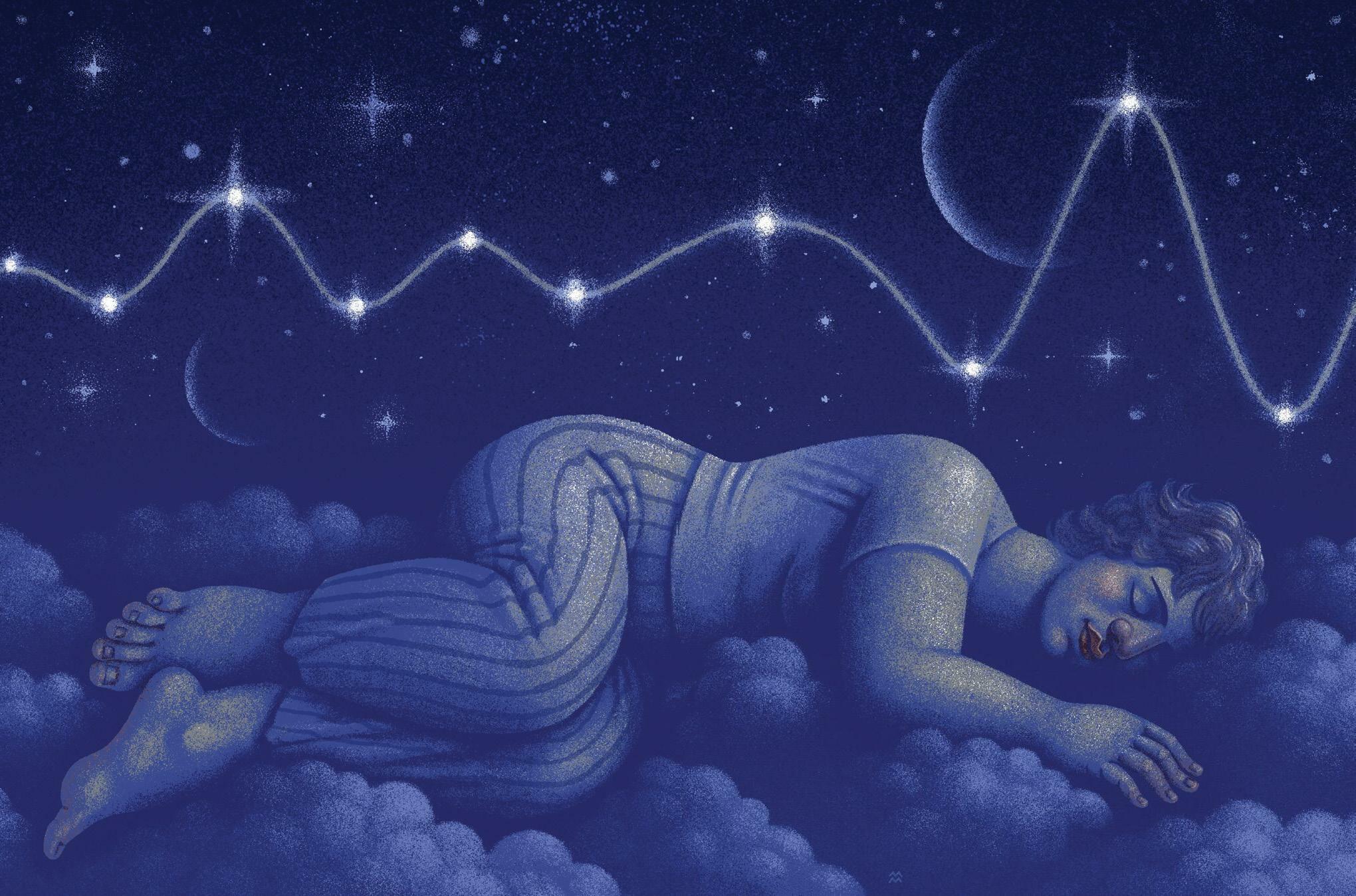
YOU CAN SEE IT COMING in right there, that little spot,” says neuroscientist and engineer Laura Lewis.
A remarkably bright pulsing dot has appeared on the monitor in front of us. We are watching, in real time, the brain activity of a graduate student named Nick, who is having an afternoon nap inside an imaging machine at the Massachusetts Institute of Technology, where Lewis has her laboratory.
The bright spot first appears toward the bottom of the screen, about where Nick’s throat meets his jaw. It moves slowly upward, fades and then is followed by another bright dot. “It really comes and goes,” says Lewis, who is also affiliated with Massachusetts General Hospital. “It’s in waves.” This moving dot depicts something few people have ever seen: fresh cerebrospinal fluid flowing from the spinal cord into the brain, part of a process that researchers are now learning is vital for keeping us healthy.
For decades biologists have pondered a basic problem. As human brains whir and wonder throughout the day, they generate waste—excess proteins and other molecules that can be toxic if not removed. Among those proteins are amyloid beta and tau, key drivers of Alzheimer’s disease. Until recently, it was entirely unclear how the brain takes out this potentially neurotoxic trash.
In the rest of the body, garbage removal is handled initially by the lymphatic system. Excess fluid and the waste it carries move from tissue into the spleen, lymph nodes and other parts of the system, where certain particles are removed and put into the bloodstream to be excreted. It was long thought that the brain can’t use the same trick, because the so-called blood-brain barrier, a protective border that keeps infections from reaching critical neural circuitry, stops the transport of most everything in and out.


Dit verhaal komt uit de September 2025-editie van Scientific American.
Abonneer u op Magzter GOLD voor toegang tot duizenden zorgvuldig samengestelde premiumverhalen en meer dan 9000 tijdschriften en kranten.
Bent u al abonnee? Aanmelden
MEER VERHALEN VAN Scientific American

Scientific American
War in Plain Sight
Near-real-time satellite coverage means militaries can no longer hide. So they are learning to lie better

4 mins
June 2026

Scientific American
A Bridge-Crossing Puzzle Led to New Math
Are you smarter than an 18th-century Prussian?
5 mins
June 2026
Scientific American
Nocturnal Navigation
These ants use a sophisticated lunar compass
2 mins
June 2026
Scientific American
Early Plates
Scientists found the oldest direct evidence for Earth’s tectonic motion
3 mins
June 2026

Scientific American
Mating Arm
Reproduction in octopuses is even weirder than you think
3 mins
June 2026

Scientific American
Battleship Science
Game-playing AI can show us how to do science better
2 mins
June 2026
Scientific American
WHAT’S A QUANTUM COMPUTER GOOD FOR, ANYWAY?
Quantum computing promises profound power in cryptography, materials design, telecommunications, and much more. But those dreams won’t become reality overnight—if ever
11 mins
June 2026
Scientific American
Atomic Snowflakes
Could each atom in the universe be unique?
2 mins
June 2026
Scientific American
The New Moon Race
The triumphant Artemis II mission marks a new era of lunar exploration and science. Here’s how it went down and what comes next
7 mins
June 2026

Scientific American
What’s Wrong with Quantum Mechanics
A 100-year-old theory might explain the confusion
6 mins
June 2026
Listen
Translate
Change font size