
Ga onbeperkt met Magzter GOLD
Krijg onbeperkte toegang tot meer dan 9000 tijdschriften, kranten en Premium-verhalen voor slechts
People that use AI likely overestimate their abilities
How It Works UK
|Issue 211
When asked to evaluate how good we are at something, we tend to get that estimation completely wrong. It's a universal human tendency, with the effect seen most strongly in those with lower levels of ability. Called the Dunning-Kruger effect after the psychologists who first studied it, this phenomenon means people who aren't very good at a given task are overconfident, while people with high ability tend to underestimate their skills. It's often revealed by cognitive tests that contain problems to assess attention, decision-making, judgment and language.

But now, scientists at Finland's Aalto University, together with collaborators in Germany and Canada, have found that using artificial intelligence (AI) all but removes the Dunning-Kruger effect - in fact, it almost reverses it. Their research showed that when using common chatbots to solve problems, everyone tended to put too much faith in the quality of the answers, with the most experienced AI users doing so the most.
As we become more AI-literate thanks to the proliferation of large language models, the researchers expected participants to not only be better at interacting with AI systems, but also better at judging their performance in using them. “Instead, our findings reveal a significant inability to assess one's performance accurately when using AI equally across our sample,” said Robin Welsch, an Aalto University computer scientist who coauthored the report.

Dit verhaal komt uit de Issue 211-editie van How It Works UK.
Abonneer u op Magzter GOLD voor toegang tot duizenden zorgvuldig samengestelde premiumverhalen en meer dan 9000 tijdschriften en kranten.
Bent u al abonnee? Aanmelden
MEER VERHALEN VAN How It Works UK
How It Works UK
SPACE MINING UNCOVERED
Asteroids rich in rare elements could be harvested for their valuable contents, but the real worth may be in using them as interplanetary fuel stations

2 mins
Issue 211
How It Works UK
WHY THINGS ROT
How dead plants and animals decay, and how living organisms rely on this natural process to survive
3 mins
Issue 211

How It Works UK
BOOZE, BEANS AND YOUR BODY
Caffeine and alcohol are two of the world's most common drugs. But what effects does drinking them have on our brains and bodies?
5 mins
Issue 211
How It Works UK
HOW TO CLEAN A SKYSCRAPER WINDOW
Discover how skilled window cleaners with nerves of steel tackle these towering glass facades
2 mins
Issue 211
How It Works UK
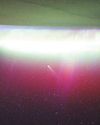
ASTRONAUTS SEE COMET LEMMON 'ABSORBED' BY AURORAE
For skywatchers, scientists and even the astronauts on the International Space Station (ISS), the skies have been active. The Sun has released its largest eruptions of 2025, sparking a series of aurorae that have reached as far south as Mexico. While astronauts on the ISS had to take shelter during the recent solar storms to avoid potentially dangerous radiation, they did manage to capture this image of Comet Lemmon appearing near the aurorae on Earth.
1 min
Issue 211
How It Works UK
HOW TO MAKE MAPLE SYRUP
Your favourite pancake topping is much more than just a sugary treat made in a factory
1 mins
Issue 211

How It Works UK
A high-fibre diet may ‘rejuvenate' immune cells that fight cancer
Microbes in the gut can help the immune system fight cancer, and a fibre-rich diet may be the key to unlocking those benefits, a study in mice suggests. The immune system is a key player in the body’s battle against cancer. On the front line of this resistance are CD8+ killer T cells, a type of immune cell that marauds around tumours and then exterminates the cancerous cells. But after each successive battle, these cells become worn out and don’t find tumours as effectively. As such, treatments that provide the cells with enough pep to finish their job are in high demand.
2 mins
Issue 211
How It Works UK
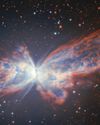
SEE THE BUTTERFLY NEBULA LIKE NEVER BEFORE
On 26 November 2025, the Gemini South telescope turned 25, and astronomers celebrated its birthday with a dazzling new image of the Butterfly Nebula.
1 min
Issue 211

How It Works UK
The Gulf of Suez is pulling apart
The Gulf of Suez, which partially divides Africa and Asia, may still be widening 5 million years after we thought it had stopped.
2 mins
Issue 211

How It Works UK
REMOTE ABILITIES
Infrared remotes are cheaper and more power-efficient than Bluetooth alternatives
1 mins
Issue 211
Listen
Translate
Change font size