
Ga onbeperkt met Magzter GOLD
Krijg onbeperkte toegang tot meer dan 9000 tijdschriften, kranten en Premium-verhalen voor slechts
Poging GOUD - Vrij
HOW THE REAL ATLANTIS SANK
How It Works UK
|Issue 212
The natural disaster that resulted in the prominent ancient Greek city of Helike being lost for centuries
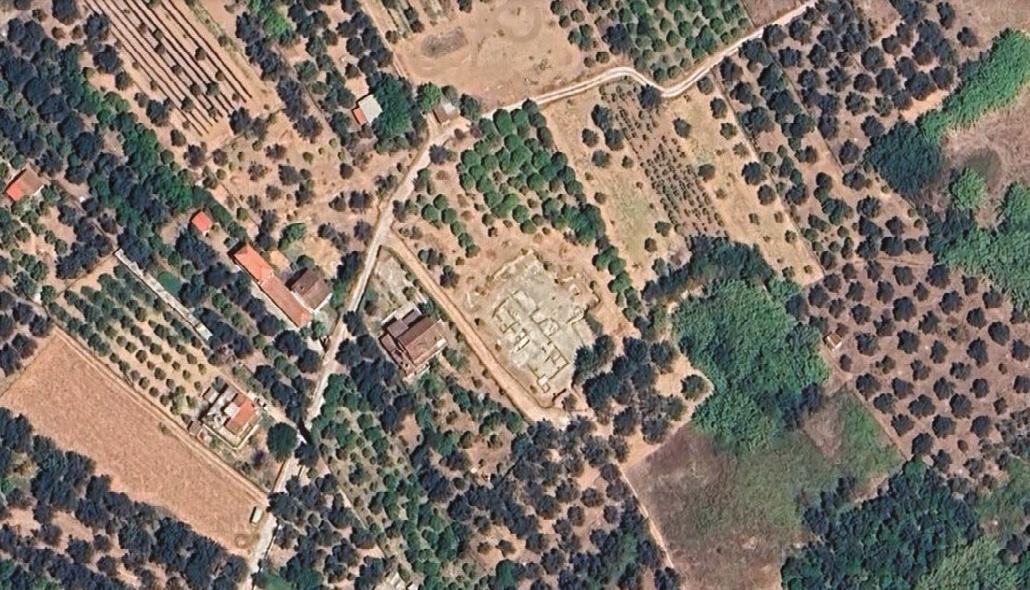
In 373 BCE, the Greek city-state of Helike disappeared beneath the waves. Claimed by a great tidal wave, the once-powerful city was confined to a watery grave, burying thousands of years of architecture while also taking the lives of all of the city's inhabitants. Originally founded in the early Bronze Age, somewhere around 3000 BCE, archaeological findings point to early Helike being a prominent and rich city with sophisticated and well-organised infrastructure. The early city-state is most notable, however, for its engagement in the Trojan War of the 12th or 13th century, with Helike described by the renowned Greek poet Homer in The Iliad as having made up part of King Agamemnon's mighty Achaean forces. A later settlement at Helike has been dated by archaeologists to the Mycenaean period of Greek history, and the area is believed to have been continuously inhabited until the Classical period, when the fateful disaster occurred.
Helike and its people were known to be linked with the sea god Poseidon, who was the city’s patron deity. At Helike, the temple of Helikonian Poseidon attracted people from across the Hellenic world who wanted to receive the blessings of the god and, according to some ancient sources, was almost as well known and important as the Sanctuary of Apollo at Delphi. The people of Helike are believed to have been extremely resilient, with evidence showing the city-state was regularly hit by earthquakes and tsunamis, roughly every 300 years.

Dit verhaal komt uit de Issue 212-editie van How It Works UK.
Abonneer u op Magzter GOLD voor toegang tot duizenden zorgvuldig samengestelde premiumverhalen en meer dan 9000 tijdschriften en kranten.
Bent u al abonnee? Aanmelden
MEER VERHALEN VAN How It Works UK

How It Works UK
WHY ANIMALS PLAY DEAD
These species have mastered faking their own deaths for several different reasons

1 min
Issue 214

How It Works UK
THE JAMES WEBB SPACE TELESCOPE MAPS 3D AURORAE ON URANUS
An international team of researchers has uncovered new insights into the upper atmosphere of Uranus, where ions swirling above the ice giant's clouds meet its magnetic field.
1 min
Issue 214
How It Works UK
LASERS BEAM 'ARTIFICIAL STARS' INTO CHILE'S SKIES
The European Southern Observatory has released a breathtaking photo of the Milky Way shining over Paranal Observatory in Chile as lasers create artificial 'guide stars' in the dark sky above.
1 min
Issue 214

How It Works UK
WHISKERS AT WORK
How long hairs on a cat's face fine-tune their senses
2 mins
Issue 214

How It Works UK
HOW AI IMPROVES CAR SAFETY
The vehicle technology that saves lives today - and the innovations that will soon make the roads safer for everyone
4 mins
Issue 214

How It Works UK
APOLLO 17: THE LAST CREWED MOON LANDING
It's been over 50 years since the final Apollo mission, so why haven't we put astronauts on the Moon since then?
4 mins
Issue 214

How It Works UK
WHAT IS LIMESCALE?
Why 'hard' water leaves chalky, flaky deposits wherever it settles
2 mins
Issue 214

How It Works UK
Astronauts describe the moment a crack was discovered on their spacecraft
Chinese astronauts have described what happened when they were nearly stranded in space last year after a suspected piece of space junk struck their return capsule.
2 mins
Issue 214

How It Works UK
The Vera C. Rubin Observatory found 800,000 objects of interest in a single night
The newly commissioned Vera C. Rubin Observatory has issued 800,000 astronomy alerts in just one night, a staggering number of nightly discoveries that's expected to grow nearly tenfold by the end of this year.
2 mins
Issue 214

How It Works UK
RETURN TO THE MOON
Project Artemis is accelerating its push to put humans back on Earth's orbital dancing partner before the end of the decade
5 mins
Issue 214
Listen
Translate
Change font size