Poging GOUD - Vrij
HOW STONEHENGE WAS BUILT
How It Works UK
|Issue 190
Who built this stone circle and how was this ancient feat of engineering pulled off?

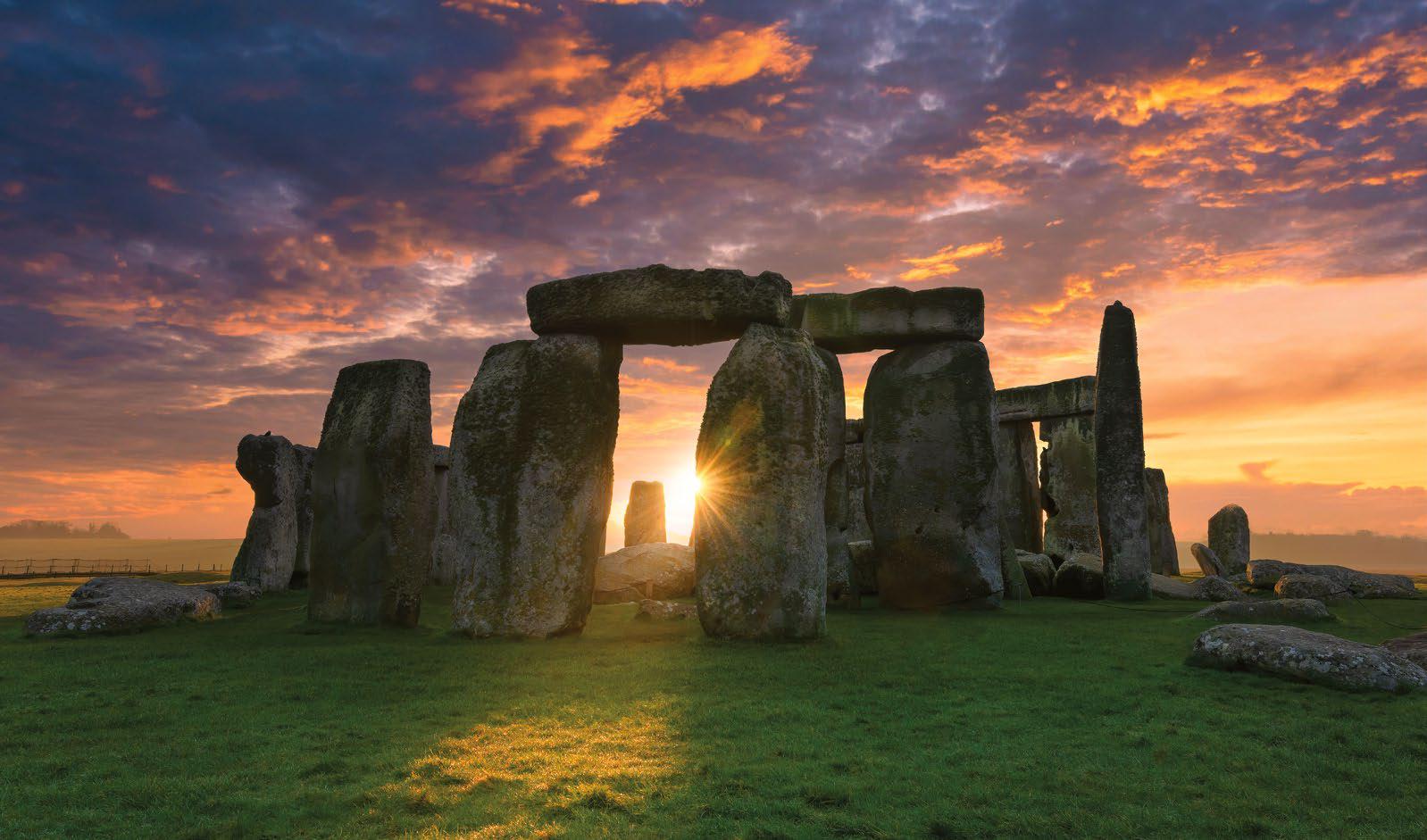
Over 4,500 years ago, people gathered at a cemetery in what is now Wiltshire in southwest England. Ringed by a circular bank, cremated bones had first been interred here 400 years earlier. But they were not congregating to administer burial rites. Instead, they were embarking on a project to transform the site into an architectural marvel. Today their work is celebrated as Britain’s most famous – and most mysterious – archaeological monument: Stonehenge. Working long before the dawn of writing in Britain, their motives have been lost for millennia – as have some of the techniques they used.
Over the centuries, the absence of hard facts has made Stonehenge a magnet for mythology. The earliest surviving legend, dating back to around 1136 CE, claims that the legendary figure Merlin shipped an Irish stone circle erected by giants back to Britain. Since then, Romans, Phoenicians, druids and even aliens have been cast as the masterminds behind this grand design.
It was only after the ‘radiocarbon revolution’ in the 1960s that the true architects of Stonehenge were unmasked. By measuring the levels of decay of radioactive carbon in organic material dumped when the stones were erected and then calibrating them against a set of dates derived from tree rings, the monument’s origins finally emerged.
Rather than having been moved by Merlin or created by Romans, Stonehenge proved to be much older. A date of around 2600 BCE for the first stone circle placed it firmly in the British Neolithic period, towards the end of the Stone Age.


Dit verhaal komt uit de Issue 190-editie van How It Works UK.
Abonneer u op Magzter GOLD voor toegang tot duizenden zorgvuldig samengestelde premiumverhalen en meer dan 9000 tijdschriften en kranten.
Bent u al abonnee? Aanmelden
MEER VERHALEN VAN How It Works UK

How It Works UK
FORMULA FAST
YOUR ULTIMATE GUIDE TO FORMULA ONE RACING

1 mins
Issue 212

How It Works UK
MY LIFE AS AN ASTHMANAUT
A CHILDREN'S BOOK ABOUT ASTHMA
1 min
Issue 212

How It Works UK
LYDIA LOVES BUGS
A SHORT AND SWEET STORY OF AN ENTHUSIASTIC ENTOMOLOGIST
1 min
Issue 212

How It Works UK
INSIDE A DRONE
Drones aren't just for the military any more. These flying marvels are now taking over our lives
3 mins
Issue 212

How It Works UK
WE CAN HEAR WITHOUT EARS
AND OTHER THINGS YOU DIDN'T KNOW WE PLANTS COULD DO
1 min
Issue 212

How It Works UK
DO GEESE GET GOOSEBUMPS?
Many animals experience a similar reaction when they feel cold or scared
2 mins
Issue 212

How It Works UK
SUBMARINES WITHOUT SAILORS
Dive into the world of autonomous submarines and discover the mission that will see one sail around the world
4 mins
Issue 212

How It Works UK
WHAT HAPPENS INSIDE A COCOON?
How certain species of insects transform from crawling caterpillars to flying moths and butterflies
3 mins
Issue 212

How It Works UK
HOW THE ROSE LOST ITS SCENT
From floral to fragranceless, there's a biological reason behind a rose's missing odour today
3 mins
Issue 212

How It Works UK
How many insects have been discovered so far?
The total number of named species is around a million.
7 mins
Issue 212
Listen
Translate
Change font size