Poging GOUD - Vrij
'This rocket launch will inspire youngsters to join the space sector'
Down To Earth
|January 01, 2023
On November 18, 2022, Hyderabad-based Skyroot Aerospace Pvt Ltd scripted history by becoming the first private Indian organisation to launch a rocket from Indian Space Research Organisation's (ISRO's) launchpad in Sriharikota, Andhra Pradesh. The launch of the rocket, named Vikram-S after Indian space scientist Vikram Sarabhai, was successful. In a conversation with ROHINI KRISHNAMURTHY, Skyroot Aerospace co-founder PAWAN KUMAR CHANDANA talks about the company's plans to establish itself as satellite launcher catering to the international market and the long-term goal of developing resuable rockets to ensure sustainabililty. Excerpts:

What are your plans with the launch of Vikram-S?
Launching the first private rocket into space is a significant milestone for any country. It is also a big symbol of what an Indian startup, and a small team like ours, can do. We are 200 people, of which 100 worked on Vikram-S directly and indirectly.
Vikram-S is sub-orbital. It reaches outer space and does not put satellites into orbit. Instead, it splashes down to the sea. It is just a 300-second flight. Our next launch is Vikram-1, which is an orbital vehicle. That means it puts satellites into orbit. We plan to launch Vikram-1 in a year. Very few companies in the world have launched a rocket into space; even fewer have launched satellites. We also have Vikram-2 and 3-orbital vehicles in the pipeline. All of them are 80 per cent the same.
Do you target serving the international market? Do you see competing with SpaceX?
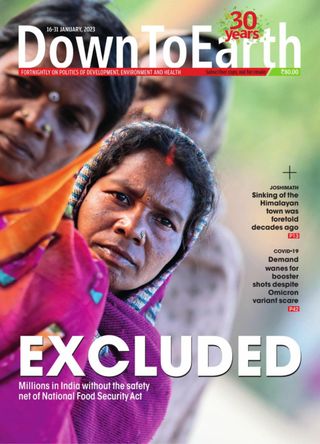

Dit verhaal komt uit de January 01, 2023-editie van Down To Earth.
Abonneer u op Magzter GOLD voor toegang tot duizenden zorgvuldig samengestelde premiumverhalen en meer dan 9000 tijdschriften en kranten.
Bent u al abonnee? Aanmelden
MEER VERHALEN VAN Down To Earth

Down To Earth
BEYOND COLLATERAL DAMAGE
Recent geopolitical conflicts are urging a reconsideration of what constitutes environmental harm in war and the limits of existing legal frameworks

3 mins
April 01, 2026
Down To Earth
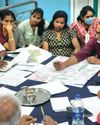
Masterstroke
Residents of a small Kerala town reject an inadequate state-led development blueprint and create their own master plan that prioritises protection of historic water systems and urban commons
4 mins
April 01, 2026

Down To Earth
Rethinking E20
It is pertinent to explore potential of ethanol as high-value industrial feedstock
4 mins
April 01, 2026
Down To Earth
Food in the age of climate change
WHEN WE eat, we contribute to climate change. But food is also about livelihoods, about nutrition and about nature.
3 mins
April 01, 2026

Down To Earth
FADING WINTER
India's winters are warming, becoming shorter, shifting and spilling beyond their traditional bounds. The consequences are already evident in meltwater availability, forest-fire intensity and changes in flowering cycles and insect behaviour.
20 mins
April 01, 2026

Down To Earth
War on Iran strikes India's pharmaceuticals sector
Shortages of critical raw materials and rising input costs for the drug industry will have global consequences
4 mins
April 01, 2026

Down To Earth
POWER IN AN AGE OF INSECURITY
Energy transition is no longer solely about emission reduction but also about energy security
3 mins
April 01, 2026
Down To Earth
Re-discovery of fuelwood
THE WEST Asia conflict has made visible a multi-billion dollar energy market in India.
2 mins
April 01, 2026

Down To Earth
A CASE THAT RESHAPED INDIA'S ENVIRONMENT
The case of MC Mehta v Union of India stands as proof that a proactive judiciary can accelerate action even when the executive drags its feet
4 mins
April 01, 2026
Down To Earth
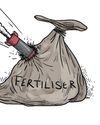
FOREVER DEPENDENT
India depends on global fertiliser supply chains for 70 per cent of its needs, leaving its food security exposed to geopolitical disruptions
6 mins
April 01, 2026
Translate
Change font size