Poging GOUD - Vrij
MUNSHI IN POLICY
Down To Earth
|May 16, 2025
Literature is more relevant now than ever, as the world gets alienated and isolated because of machinated realities
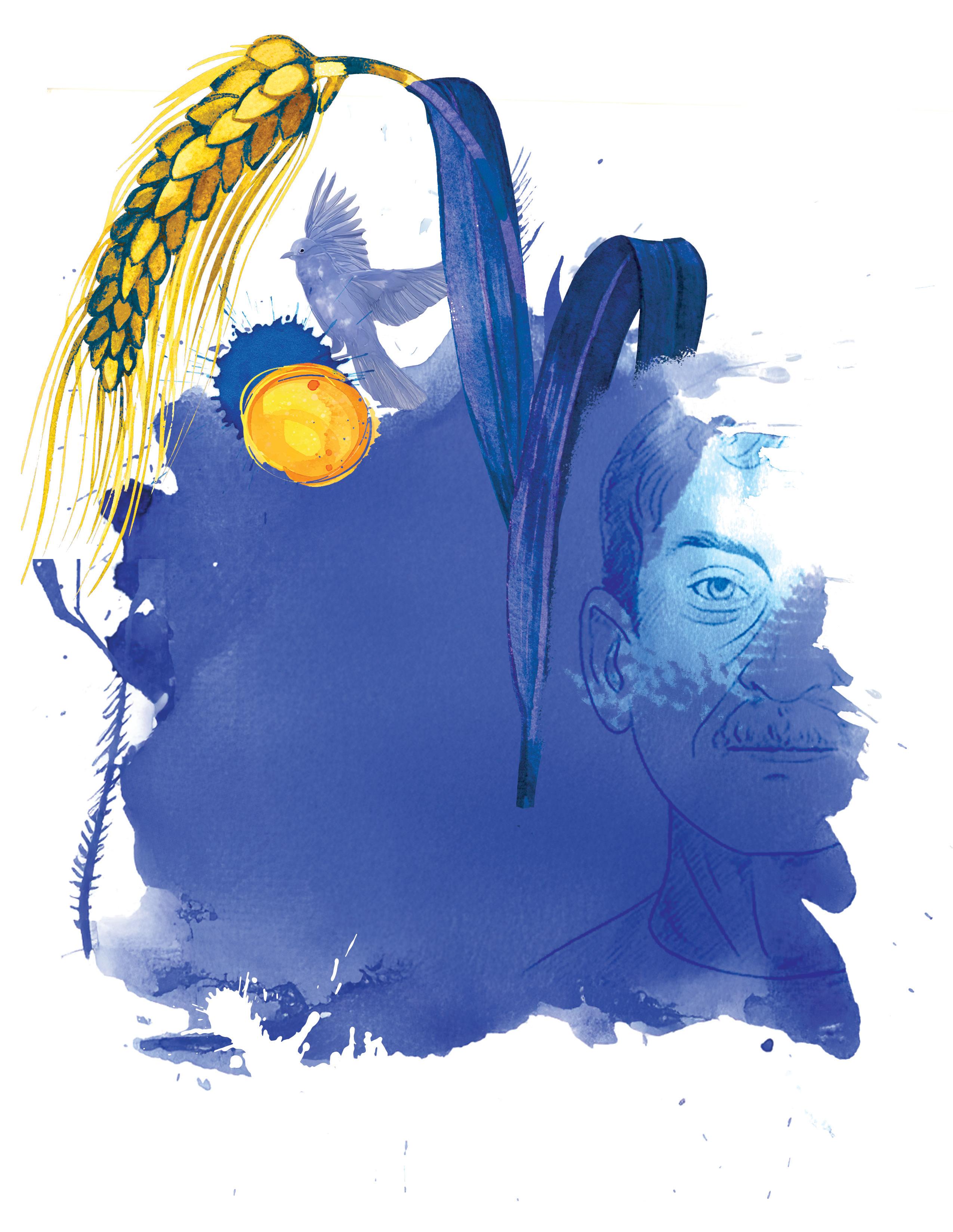
Munshi Premchand was a prolific storyteller and author, steeped in the realism of everyday life. He wrote in Hindi and Urdu and painted vivid images of colonial India and its rurality with an unrelenting willpower, often including a glimmer of romance for better times. His remarkable writing career spanned 300 stories, 14 novels, and other anecdotes and works.
Premchand narrated the social ills prevalent in pre-independent India with a succinct clarity that has characterised the longevity of his craft. Short stories such as “Sawa Ser Gehu”, “Poos Ki Raat”, and the novel Godan, among others, depict exploitative conditions in society, many of which tragically persist. From the importance of livestock to rural communities to the vicious trap of debt affecting farmers and agricultural labourers to present-day policy concerns on crop insurance emanating from a farmer's struggle to protect his fields from wildlife and natural disasters, gruelling agricultural conditions and caste discrimination—his body of work implores us to look deep within our value system.
An all-encompassing search for sensitivity and compassion in human interactions dominates the essence of his writings. It makes them even more relevant in a world alienated and isolated because of machinated realities. With a focus on kinship amid economic hardship and social discrimination, there is an underlying search for idealism and humanitarian ethos. For instance, he empathetically demonstrates the social conditions of widowed women and their status within families in “Boodhi Kaaki” and “Jyoti”. Similarly, in the classic “Sadgati”, which was also made into a movie by Satyajit Ray in 1981, and in “Thakur ka Kuan”, his narrative is centred around public utilities, caste-based discrimination and consequent ostracisation in the society.


Dit verhaal komt uit de May 16, 2025-editie van Down To Earth.
Abonneer u op Magzter GOLD voor toegang tot duizenden zorgvuldig samengestelde premiumverhalen en meer dan 9000 tijdschriften en kranten.
Bent u al abonnee? Aanmelden
MEER VERHALEN VAN Down To Earth

Down To Earth
BEYOND COLLATERAL DAMAGE
Recent geopolitical conflicts are urging a reconsideration of what constitutes environmental harm in war and the limits of existing legal frameworks

3 mins
April 01, 2026

Down To Earth
Masterstroke
Residents of a small Kerala town reject an inadequate state-led development blueprint and create their own master plan that prioritises protection of historic water systems and urban commons
4 mins
April 01, 2026

Down To Earth
Rethinking E20
It is pertinent to explore potential of ethanol as high-value industrial feedstock
4 mins
April 01, 2026
Down To Earth
Food in the age of climate change
WHEN WE eat, we contribute to climate change. But food is also about livelihoods, about nutrition and about nature.
3 mins
April 01, 2026

Down To Earth
FADING WINTER
India's winters are warming, becoming shorter, shifting and spilling beyond their traditional bounds. The consequences are already evident in meltwater availability, forest-fire intensity and changes in flowering cycles and insect behaviour.
20 mins
April 01, 2026

Down To Earth
War on Iran strikes India's pharmaceuticals sector
Shortages of critical raw materials and rising input costs for the drug industry will have global consequences
4 mins
April 01, 2026

Down To Earth
POWER IN AN AGE OF INSECURITY
Energy transition is no longer solely about emission reduction but also about energy security
3 mins
April 01, 2026
Down To Earth
Re-discovery of fuelwood
THE WEST Asia conflict has made visible a multi-billion dollar energy market in India.
2 mins
April 01, 2026

Down To Earth
A CASE THAT RESHAPED INDIA'S ENVIRONMENT
The case of MC Mehta v Union of India stands as proof that a proactive judiciary can accelerate action even when the executive drags its feet
4 mins
April 01, 2026
Down To Earth
FOREVER DEPENDENT
India depends on global fertiliser supply chains for 70 per cent of its needs, leaving its food security exposed to geopolitical disruptions
6 mins
April 01, 2026
Listen
Translate
Change font size