Poging GOUD - Vrij
A SLOW HEALING
Down To Earth
|September 16, 2025
Global action is mending the ozone layer, but unregulated short-lived chlorinated emissions by industries are delaying full recovery
FOUR DECADES of international action to ban chlorofluorocarbons (CFCS) have put the Antarctic ozone hole on a demonstrable path to recovery. Yet the win is partial, suggest two recent studies. One of the studies, led by the Massachusetts Institute of Technology, US, shows for the first time with high statistical confidence that the recovery owes overwhelmingly to declines in CFCs, a group of human-made long-lived ozone-depleting substances once widely used as refrigerants, propellants and solvents. The other study, by a group of researchers in Canada and the UK, identifies an obstacle to a faster rebound: increasing emissions of chlorinated very-short-lived substances (CL-VSLS) that are topping up stratospheric chlorine. CL-VSLS are chlorine containing gases used in solvents and industrial processes that have short atmospheric lifetimes of around six months. The two studies together suggest that the ozone layer is healing because of human action, yet human activity is also nudging the recovery off course.
Ozone is a naturally occurring gas within the Earth's stratosphere that acts as a sort of sunscreen, protecting the planet from the sun's harmful ultraviolet radiation. In 1985, scientists discovered a “hole” in the ozone layer over Antarctica that opened up between September and December. This seasonal ozone depletion was suddenly allowing UV rays to filter down to the surface, leading to skin cancer and other adverse health effects.
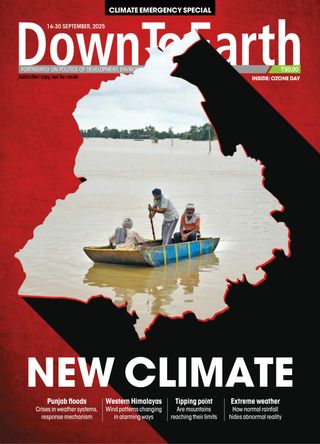

Dit verhaal komt uit de September 16, 2025-editie van Down To Earth.
Abonneer u op Magzter GOLD voor toegang tot duizenden zorgvuldig samengestelde premiumverhalen en meer dan 9000 tijdschriften en kranten.
Bent u al abonnee? Aanmelden
MEER VERHALEN VAN Down To Earth

Down To Earth
Bitter pill
THE WEB SERIES PHARMA EXPOSES HARSH TRUTHS OF THE PHARMACEUTICAL INDUSTRY, WHERE PROFIT OFTEN BECOMES MORE IMPORTANT THAN HUMAN HEALTH

3 mins
January 16, 2026
Down To Earth
CHAOS IN-DEFINITION
The Aravallis are perhaps India's most litigated hill range. More than 4,000 court cases have failed to arrest their destruction. The latest dispute concerns a narrow legal definition of this geological antiquity, much of which has been obliterated by mining and urban sprawl. While the Supreme Court has stayed its own judgement accepting that definition, it must see the underlying reality and help reconcile development and national security with conservation.
19 mins
January 16, 2026
Down To Earth
BITS: INDIA
Indore has recorded 16 deaths and more than 1,600 hospitalisations between December 24 and January 6.
1 min
January 16, 2026
Down To Earth
GUARANTEE EXPIRES
India's rural employment guarantee law is replaced with a centrally controlled, budget-capped scheme. Is this an attack on the right to work?
3 mins
January 16, 2026
Down To Earth
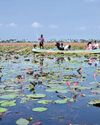
BLOOM OR BANE
Surge of vibrant pink water lilies in Kuttanad, Kerala, provides socio-economic benefits, but the plant's ecological impacts must be understood
4 mins
January 16, 2026
Down To Earth
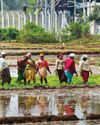
INVISIBLE EMPLOYER
Field and academic evidence shows sharp falls in casual agricultural employment at places where groundwater access declines
3 mins
January 16, 2026

Down To Earth
Schemed for erasure
Does the VB-G RAMG Act address structural weaknesses long observed in MGNREGA's implementation?
10 mins
January 16, 2026

Down To Earth
School of change
An open school in Panagar, Madhya Pradesh, aims to protect children of tribal settlements from falling into the trap of addiction
2 mins
January 16, 2026

Down To Earth
PULSE OF RESILIENCE
As a climate-ready crop, cowpea shows potential for widespread use in India
3 mins
January 16, 2026
Down To Earth
BITS GLOBAL
Britain recorded its hottest and sunniest year ever in 2025, the country's meteorological office said on January 2.
1 min
January 16, 2026
Listen
Translate
Change font size